
Prayer is lifting our hearts and minds to God—seeking and strengthening our relationship with Him. If prayer is intimate communication with God, why turn it into anything but a “me and Jesus” moment? In addition, what good is it to pray for someone else? God already knows what they need and He already knows what is going to happen. The answer to these questions from a Catholic perspective rests upon what it means to be a disciple of Jesus Christ and what love really means.
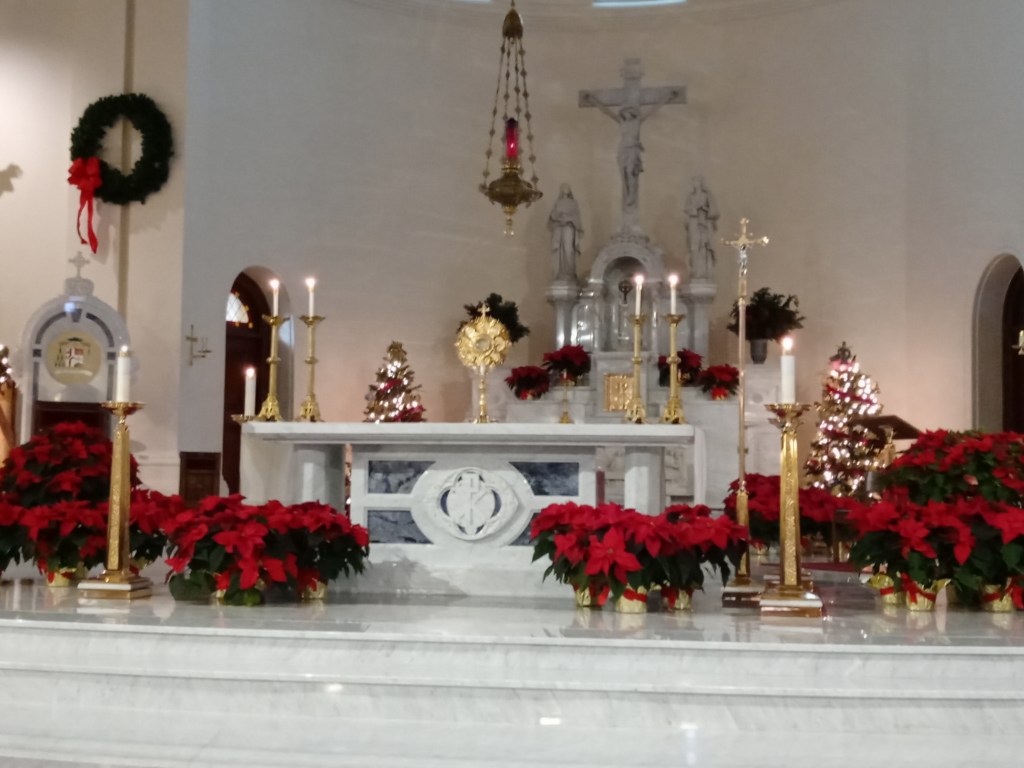
We pray for others because of the nature of life in Christ—one cannot be in love with Jesus and despise or ignore His Body. We gather to pray for each other because we are united to each other in the same way cells are in a body: interdependent. We pray for each other inside the mind and heart of God, within the Body of Christ, in the power of the Holy Spirit. St. Paul teaches us that when one member of the Body of Christ suffers, the Body suffers. When one member triumphs, the Body triumphs. The trials and suffering, the growth and victories of any one member of the Body of Christ resonate within the entire Body, inviting—indeed, requiring—a response from us all.
We don’t pray for others as a way to “gang up” on God and influence Him. God, our Father, is unlike our earthly parents who were probably capable of being “worn down” and capitulate to our childish whims if all the children in the family joined in the chorus of “pleases” initiated by one sibling. God is also not like the president of a club who gathers the opinions or votes of the members, seeking guidance on a course of action. No matter how many people we ask to pray for us in order to cast “votes” in our favor, God will not alter His holy will. In addition, God is not like a pagan god or emperor who may alter his evil designs against us if we would grovel, cower or pay him adequate homage. We do not pray to a god may be swayed from his malice if we placate him with our terror-stricken pleadings.
If God is not a pliable parent, domineering president, or bloodthirsty deity, who is He? God is our beloved Creator. He is the One who drew us into existence simply because He loved the idea of us so much that He had to make that idea into a reality: an incarnation from the mind, heart and will of God. God desires only our good—our ultimate, eternal good. God knows how to achieve that good based on the “raw material” of our humanity and the circumstances of life. God not only wants and knows our good, He is also powerful enough to bring it about. So, if all of this is true, why do we even ask Him for anything—either for ourselves or for others?
“You cannot imagine how much you interest God; he is interested in you as if there were no one else on earth.”
Julien Green (+1998)
We petition God because of the nature of free will and God’s loving providence. We don’t pray to change God’s mind about some course of action, we pray to open our hearts to recognize and receive the good God is offering. Our prayers prepare us to be agents of God’s will. Our actions and choices aren’t alternative causes to God’s will; they are instruments or conduits of God’s will. God usually prefers to shine His light by shining through others—using us in a manner similar to mirrors in a lighthouse that direct light beams in particular paths.
Praying for others gives us an opportunity to be open to how God wants us to respond to another’s need—for the good of the Body of Christ, for a blessing on the other, for our good as well. Our prayers in petition of someone else (this is intercessory prayer) awakens us to the reality of living as members of a Body. As brothers and sisters to each other, we cannot blithely travel through life, ignorant and unmoved by the suffering and trials of others. Even when our observations, judgments and petitions are incorrect, the act of interceding creates the only thing that lasts, the only thing that we carry into heaven with us: the love of God.
When I was a little girl traveling in my family’s station wagon to St. Joseph school in downtown Salem, we would pass a decrepit house set back from the road, with peeling paint and crumbling driveway. The sign on the house said “Elmer the Blind Man.” I studied that sign and reflected on it in silence in the back seat. How terrible, I thought, that poor Elmer’s blindness is announced to the world! Who put up that sign and why would his family allow it to be left up? My childish heart was moved with compassion for this poor, persecuted man. I prayed to the Lord for him every time I passed that house: “Lord, can you help this man see like you helped the blind man in the Gospels so he can take that sign down?”
It was only much later (much, much later I am ashamed to say!), that I realized that the sign “Elmer the Blind Man” had nothing to do with his vision but everything to do with a business selling window coverings! So what happened to my prayers? They were prayed with heartfelt compassion, interceding on behalf of someone who I believed truly needy help. Did those prayers die a quiet death, swept away into some heavenly dustbin as useless, uninformed petitions—with my heavenly Father rolling his eyes and sighing at being bothered by the prayers of a mistaken little girl? I don’t think so! God takes the compassion and mercy that moves our heart, and, like a little bit of yeast, uses it to expand the love in our souls. God knows the cry of our soul, our desire to unleash His grace into the world—and He accepts that intention and allows it to mature and bear fruit: but in ways that are actually real and necessary. Because God always responds, as a loving Father, to the questions of his beloved children, we can always ask. And in asking, we can be confident he’ll answer. This is why St. Paul instructs us to thank God in all things.
Christians pray for each other for this primary purpose: to allow the praise, thanks and glory of God to spread throughout the Body of Christ. No matter what God’s answer ends up being, we celebrate the way He brings good of all things—and we thank Him for being with us, even in the midst of suffering and sorrow, trials and crosses. We don’t thank Him for the sorrow and the evil that may befall us or others, but we do thank Him for bringing good from it and for being with us through it. We thank Him for the loving answer to every prayer—sometimes it’s an answer of silence, sometimes it’s “no,” sometimes it’s “just wait a bit,” sometimes it’s “you really need something else,” and sometimes it’s “absolutely, yes! And more besides!” No matter what, God answers our prayers, and we thank Him for His answer—because in the end we’ll realize it was just the answer we needed for our eternal salvation.
“God withholds what you are not yet ready for. He wants you to have a lively desire for his greatest gifts. All of which is to say, pray always and do not lost heart.”
St. Augustine, Semon 61, 6-7
In addition to God always making use of our prayers, praying for others is a perfect antidote to pride. In humbling ourselves and allowing ourselves to experience compassion, we grow more like God—who is meek and humble of heart. We learn, to our joy, that our littleness, our lack of vision, our misguided focus cannot limit the power of God’s love. In humility, we understand that usually (almost always?!) the things we pray for are not the best means (or even effective at all) at bringing about what we truly do desire for ourselves and every person we pray for: heavenly bliss. As we grow in humility, we pray for others so that they can become more like God and not so they can become more like us.
Humbling ourselves before God enlarges our vision about the way God works out our salvation through the words and actions of others. We can never know, this side of heaven, the impact our love has on those for whom we intercede. We also cannot know, this side of heaven, whose prayers aided our own admittance into heaven. This was brought home to me by the Holy Spirit’s correction of my prideful attitude about my own sanctity. I was walking to work, with wounded pride and rebellious heart, after a period of deep conflict and tension in my marriage. I mused and wondered about why I had to deal with all this, even as I served the Lord in ministry. Why did I have to be “yoked” to a husband who wasn’t as interested in being pious and active in his faith in the same way I was? Oh well, I sighed and thought with a bit of pious self-congratulation, at least it might be by my hand that he would be able to enter heaven someday.
“No!” thundered back the Holy Spirit into my heart, “It is by his hand that you will be able to enter heaven!” I can still picture the exact place where God’s words came to my heart—under a Pin Oak at the end of Randall Street. I stopped, came to my senses, and I sought forgiveness for my prideful, judgmental heart. I realized I had been praying for Matt to become more like me—for my convenience and ego, rather than praying for God’s Spirit to bless Matt with what he needed.
It left me on a different track in my musing as I continued to work: what if the only way I would enter heaven was to reach out and allow the person(s) whom I most overlooked and rejected in this life to take my hand and lead me there? Would I give up eternal bliss because I didn’t want to humble myself and accept the help of someone I judged less holy, less valuable to the Lord than myself? Intercessory prayer prepares us to humbly give help and to humbly accept it—every intercession and petition we make here on earth is “money in the bank” for that hour where we will be completely dependent upon the love of Jesus Christ to lead us into heaven—and He seems to suggest that His love will come through the hands of the least of His brothers and sisters extended to us.
Our prayers of petition and intercession draw us into a deeper union with God if we humble ourselves. They do not (and we really don’t want them to) change God’s to be closer in harmony with our own ideas of what’s best for us or others. But in praying, persistently, for the needs we perceive, we grow closer and closer to the mind of God. We can begin to trust in the love of God to bring about good in all things. We also grow to trust in God’s love and patience with us even as we might initially struggle against the load and fight the yoke. Intercessory prayer has power and effectiveness through the love that fills our heart, not by our wisdom (sadly lacking) or understanding (incomplete) or right judgment (limited). So my prayers for Elmer the Blind Man struck a note into eternity that God, in His perfect wisdom, can place within the symphony of His creation in just the right place and in just the right time to further the song of salvation He is conducting. The only unanswered prayer is the one we refuse to pray.
I have been praying about the situations of some of my beloved family members for years. For some who no longer practice their faith. For others whose struggle with infertility is a source of great suffering, resentment, and grief. For another suffering from chronic pain and an interminable illness that is physically, emotionally, and financially draining. For some who are battling addictions that leave them ashamed, defeated, and isolated. I pray each day that they be freed from these crosses. Doing so comes from my love for them and my understanding of the goodness of God who desires good things for His children. These prayers have not been answered yet in the ways we hope for.
Does this mean God doesn’t care and wishes them evil? Absolutely not. Does this mean God is saying “no” to these heartfelt pleas? I am not sure. And that is not important to my persisting in my prayers. God is working out our good—in ways and in a time that He knows is best. What do we do in the meantime? Stop praying? No. The prayers themselves are a means by which God changes, heals, breaks, and enlarges hearts. I continue to offer these prayers in confident, trusting, dim-sighted faith.
We persist because our persistence is not about convincing God to care. It’s not about making God relent and change His mind about disliking someone. We don’t have to win Him over to our side, because we know better than Him. When we experience or witness horrors, evils and innocent suffering, we can count on the truth that God does not desire these things for His beloved children. He allows what He does not desire in order to bring about a greater good. This we can count on. It is a mystery, usually incomprehensible to us, that invites abandonment to the love of God.
The time in darkness and sorrow, the “tomb” time, becomes “womb time” as God prepares us for a greater good that will come at the time God knows is best. Our prayers for those enduring these times can carry then through to the joy and victory God promises will come. “In the world you will have troubles,” Jesus said. “But be of good cheer, for I have conquered the world.” (John 16:33)
I pray for my loved ones to be freed from the cross of their addictions, for example, but their struggle may very well be the cross that prepares them for heaven. What will a soul look like, what capacities will be unleashed, in a person has persisted in the battle and resisted against despair until the very final moments of their earthly life? I don’t know (and I don’t wish the battle on anyone), but I have a feeling that from heaven’s perspective, my loved one will look back and cry out in exultation, “Thank God for that cross! It has won for me a crown of imperishable beauty!”
God encourages us to ask Him for good things and to trust in His plan. Until we know His will, it is not wrong to ask God for healing, or a job, or conversion of heart, or any other good thing. To not ask would risk becoming despairing and self-centered (“why bother, God has it in for me/them”) or presumptuous and lazy (“God’s going to do good for me/them anyway, so why make the effort to ask”). We ask for what we judge to be good for ourselves and others, and then we wait for God to show us the better way/the greater gift if He chooses not to grant what we ask. Through our asking, He is loving us and creating in us capacities we can’t even comprehend. If true love (willing the good of the other) is at the foundation of our prayer, and if we use the time of waiting to grow in faith and hope, then our prayer is effective. Enduring faith and hope, blossoming into love, is the answer to prayer God can always grant—and the power of this faith, hope and love will see us all the way to heaven.
“God wants us to be happy always. He knows us and He loves us. If we allow the love of Christ to change our hearts, then we can change the world.”
Pope Emeritus Benedict XVI, 3/23/2012
One of the most distressing attitudes I encounter in fellow Christians is the person who shares a difficult situation and then, with a sigh, exclaims, “Well, I’ve tried everything and nothing has worked. I guess there’s nothing I can do now but pray about it.” What the heck?! Praying is the most powerful thing we can do! As Christians, prayer comes first—and it is the fertile ground from which any effective action will come from.
Why is prayer so powerful? When we pray, the Holy Spirit moves within the Body of Christ. He unites our hearts and minds in the bonds of God’s love. This unity, which avoids uniformity and enriches diversity, builds up the energy of harmony—an energy that is powerful and effective. That energy unleashes creativity and possibility. The Holy Spirit motivates and moves us, breathing on us as He did on the waters of creation and bringing new life, new order out of the emptiness and chaos. The One who explores and knows the very mind and heart of God is guiding us. The One who is our advocate empowers us. The One who enables us to accomplish Jesus’ mission Jesus directs us.
When we pray for others, we open our hearts and minds to the Holy Spirit. We become powerful agents, no longer victims or bystanders or observers. We join in the game, we act in the play, we fight in the battle. And God is overjoyed to make use of us: not because He needs us to effect His will, but because He invites us to be instruments of His Divine Providence. When God shares His love and mediates it, it doesn’t diminish that love—it enriches and multiplies it. The love of God, by its nature, is fertile—it is meant to be given and received. Praying for others brings us “onto the grid” of God’s “love power”—and the current of His love can travel through us.
Never think that your prayers are the weakest way you can help another person. No, connected to the divine furnace of love, your intercessory prayer gains a power that makes the demons of hell jealous and fearful. You are intimately united to the One Mediator, the One who God always hears, whose prayers on our behalf rise eternally to the throne of God, the One whose power to save is absolute. Perhaps God is whispering into our hearts as we plead with Him for help and beg Him to answer, “I have answered them already in the most powerful way I possibly can: I have allowed your prayers to unite you to Myself. Can you trust me to work all the rest out for your good and for the good of those you pray for?”
Think of who is the most powerful human being that has ever existed on our planet. It was not a Roman Emperor or other ruler, not an influencer of others, nor a billionaire. The most powerful person on our planet is a young, poor, Jewish woman who had the audacity to declare herself God’s handmaid and allow Love Incarnate to be conceived in her womb. When Our Blessed Mother Mary prays, Satan trembles and flees. When she intercedes, God’s perfect and holy will is accomplished.
The perfection of God’s power is manifested through our human weakness. Is this why the heartfelt prayers of the child, the marginalized, the rejected and the suffering will become the glorious stones used to build the eternal Temple of God in heaven? God draws you into this creative power of love—and condescends to using your ideas, your dreams, your cries, your tears as instruments in His divine plan. When we arrive in heaven, we will see the effect of our prayers of petition and intercession—and we will rejoice that God’s will was done, rather than our own. I suspect we will thank God most for all the prayers that He did not answer in the way we wanted—for we will see what great, beautiful, eternal good He caused to come from those situations.
So pray with confidence. Approach the throne of grace and plead for mercy. Know that your prayers, your requests, your vision of what’s best does not offend or bother God—and know, with joy and peace, that He will always answer the real prayer we make every time we pray in the name of His Son, Our Lord and Savior Jesus Christ: Thy will be done. Amen, thank God! Thy will be done, Lord—for You will only our good and the good of those we pray for.
 Flourish Catholic