Catholic churches are called by various names: parishes, cathedrals, basilicas, oratories and more. Understanding the use of these different names leads us to explore the Catholic vision of authority and leadership in the Church—which is a critical issue within our faith.
Let’s begin with some of the terms. A parish is defined by a designated geographic area. The parish is a basic unit of organization within the Catholic church. It used to be the case that Catholics had to register in the parish in which they lived—with very few exceptions. Nowadays in the United States, most Catholics feel free to register at whatever parish they feel best fit their worship style and interests. The pastor is a priest in charge of the people within the geographic boundary of the parish—not just the Catholics who are registered at the parish, but every soul. Being a pastor is a huge responsibility!
A parish church exists within the larger boundaries of a diocese or archdiocese. (An archdiocese is a special designation for some dioceses that are either have a very large number of Catholics or are significant in some historical or cultural way.) A diocese or archdiocese is the area under the leadership of a bishop or archbishop. The bishop is a successor to the apostles who is charged with shepherding the local church. The bishop is ultimately responsible for the sacramental life, the education, the evangelization and the service within the diocese. All who serve in the Diocese do so under his authority; a bishop’s special responsibility is to the priests who are ordained to minister with him to the people of God.
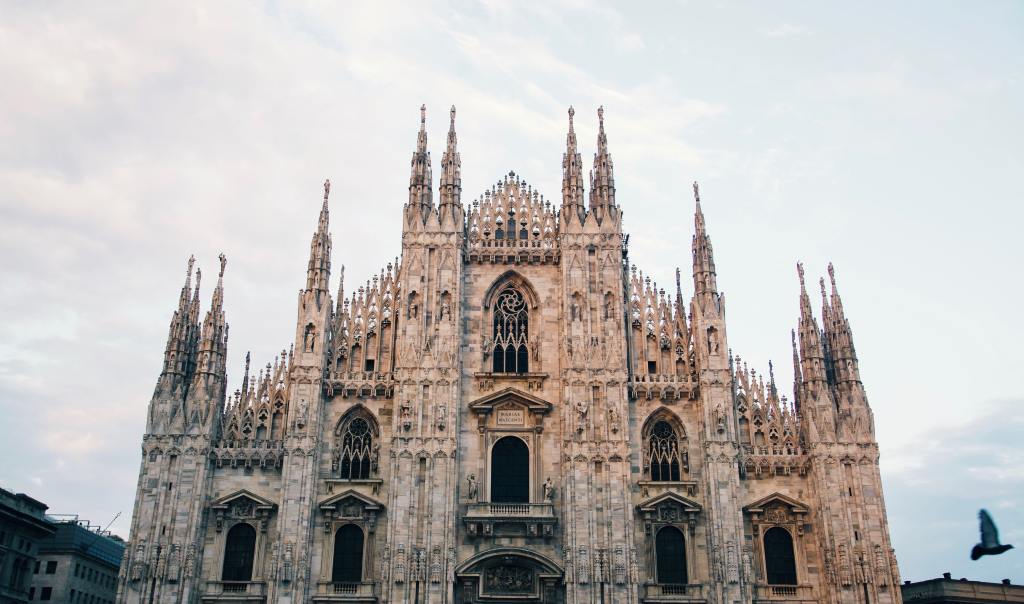
A cathedral is the church in the diocese or archdiocese that contains the cathedra, or chair, of the bishop. As such, it is the “Mother Church” for all the Catholics within the diocese. The cathedral is the location for celebrations of the entire diocese, including special Masses, ordinations and other events. A Cathedral is usually located in the city from which the diocese takes it name (hence, the Archdiocese of Portland in Oregon). The archbishop is the pastor of the Cathedral, but the priest who is actually in charge of the day-to-day work of the Cathedral is given the title “rector.”
Some cathedrals are also called Basilicas. Only the pope can name a church to be a basilica. A basilica is an historically or culturally important church that houses the remains of an important saint (or saints) or is the location of an appearance of Mary or because of some other miraculous or momentous event in the Church. The name “Basilica” originally only referred to the seven main churches of Rome (these are now termed the “major basilicas”). As the Church grew and spread, churches in other countries and continents were designated as basilicas, a term which literally means a “palace” for the king. Our basilicas are special places to honor “King Jesus” all over the world—these basilicas named “minor basilicas” to differentiate them from the 7 original basilicas of Rome. A basilica is a special place of pilgrimage and is often built over the tomb of a martyr. While some cathedrals are also named a minor basilica, not all basilicas are cathedrals (housing the cathedra, or chair, of the bishop). There are almost 1,700 basilicas around the world, and about 85 in the United States. There are other terms used for places of worship, including: chapel, oratory and shrine. These are all places where the faithful gather for worship, but are not a parish church (or, by extension, a cathedral or basilica).
For the Catholic, our liturgical life revolves around our parish church and our diocesan church, the cathedral. Every parish church has a “presider’s chair” where our parish priest (or other priest celebrating the Mass) sits while leading us in liturgical worship. The presider’s chair in every church is a symbol of the priest’s authority to lead us in worship—especially the Mass. The cathedra, or bishop’s chair, in the cathedral is a symbol of the bishop’s authority to teach, worship and govern with the authority of an Apostle.
Just as in the early Church, each diocese is shepherded by one ordained man who can trace their authority all the way back to the 12 men formed by Jesus Christ as the foundation stones of His Church, the Body of Christ. The twelve Apostles, as they preached the Gospel and founded churches throughout the known world, appointed men to be leaders of each local Church and ordained them in what would become known as the Sacrament of Holy Orders. As the original Apostles were martyred, their successors were appointed to continue in perpetuity the leadership set in place by Jesus Christ. Each bishop has the authority to ordain new priests to assist him in serving the people of his diocese, but only the Pope (the Bishop of Rome) can name new bishops.
The cathedra of the bishop is symbolic of the special authority he has received from Jesus Christ. His authority, however, is limited and temporary. The bishop has authority to interpret doctrine and apply doctrinal principles for his people. He does not have special authority to govern in matters not related to doctrine in the Church. For example, the bishop can lay down the principles by which every Catholic voter should judge candidates for election, but the bishop cannot command his people to vote for a particular candidate. In addition, the bishop’s authority does not give him the ability to reject or revise doctrine of the Catholic Church. The bishop is the guardian and servant of the truth of the Church—not its creator or editor.
Only the Bishop of Rome can speak from the fullness of authority symbolized by the cathedra. When the Pope speaks “ex cathedra,” or from the chair of Peter, he is defining a doctrine or declaring an infallible (free from error) interpretation of a doctrine. This charism, or gift, of the Holy Spirit is given to the Church to preserve her from teaching error. Again, it does not mean that the pope is always correct in all of his beliefs, actions or statements. The doctrine of infallibility only applies to a pope (or an ecumenical council of the world’s bishops) who is intending to define or apply doctrine. In these situations, the pope speaks in unity with the entire Body of Christ—with the legacy of the Church through the ages called Apostolic Tradition and with the entire People of God alive on earth who are seeking to know and follow the will of God.
When declaring or defining dogma, the pope announces that he is speaking “from the chair” of St. Peter—with the authority given by Jesus Christ to Peter and his successors for the good of the Church. A proclamation of this sort is a rare occurrence. The last official doctrine defined by a Pope was when Pope Pius XII declared the Assumption of Mary to be a doctrine of the Church in 1954. Saint Pope John Paul II spoke infallibly about applying doctrines regarding taking innocent human life to include the prohibition of abortion and about the interpretation of the doctrine of the priesthood to be for men only. These were not declarations of new doctrines, but affirmations of the church’s age-old ways of interpreting doctrinal matters. These affirmations essentially give the boundaries of discussion and differences of opinion—they declare what opinions or interpretations would be outside the teachings of the Church with regard to abortion and the priesthood, for example.
Why should the lay faithful (those not ordained in Holy Orders or professing vows within a religious community) care about the cathedra and the teaching authority of the bishops? Because they are safeguards meant to protect us and guide us. Knowing that the Holy Spirit is protecting the Church from teaching doctrinal error means that we can relax and trust the teachings of the Church. It does not, of course, mean that our leaders (or us lay faithful) always follow the doctrine and live exemplary holy lives! But the ideal presented to us and the vision of what we strive to uphold is sound—even when many fall short of it. The norm, the standard, doesn’t shift just because it’s hard to achieve—the Church doesn’t “grade on a curve” in matters of morality. We work hard to discern what is the truth from God, and then we stick to it.
The cathedra is a sign of Jesus’ care for the Church. The cathedra is a sign that the mission of Jesus has a foundation and a guidance system. We are being led by those who shepherd under the authority of the One, true Shepherd. They are and will be held accountable to a higher standard because of the authority given them. And we, the lay faithful, are a primary means by which Jesus Christ holds his shepherds accountable. We are not members of the Body of Christ so that we can simply “pray, pay, and obey” our leaders. We are the ones for whom the hierarchy is established—we are the beneficiaries of the gifts of the Holy Spirit given to those who lead. We, the lay faithful, have every right to demand orthodoxy from our leaders, to require them to be faithful to the Gospel they profess, and to be the kind of shepherds who would lay down their lives for their flock.
We are in a dynamic, fruitful and interdependent relationship with our bishops and their assistants, the priests and deacons. The hierarchy is designated as such because of different roles and responsibilities, not in terms of value or “ranking”—remember that in the Church, leadership does not mean “better” or “higher”! Jesus was absolutely clear about that point! He was also absolutely clear on our responsibility to obey our leaders and to pray for them. We exist as one Body of Christ—with complementary and interdependent roles, all striving to follow the lead of our Head, Jesus Christ. We lay people do not have to take on “pseudo-priestly” roles in order to gain more value or importance in the Body of Christ—we are of inestimable value already, by virtue of our great mission to consecrate the entire world to Christ. Our mission, importance, and value does not rest upon us taking on more roles within the Church—in fact, it’s just the opposite! As we bring the faith to the world, we take on an aspect of the Church’s mission that, I would argue, is in many respects more difficult and more vital to the spreading of the Gospel than the work of those ordained to Holy Orders.
It is difficult for us fallen humans existing within a secular culture that exalts independence, pride, rebellion and novelty, to truly develop the virtues of obedience and respect toward our leaders. It is also true that in this age, as in every age of the Church, there are leaders who are neither deserving of respect nor acting in ways we should emulate. Why does the Lord allow this? Perhaps part of the reason is to help us all grow in humility and compassion—and by our crying to God for His justice, to allow the Holy Spirit to penetrate deeply within the Body of Christ to purify, cleanse and heal us all. The endurance and resilience of the lay faithful—either because of or in spite of their leaders—is a sure sign of the work of the Holy Spirit within us who will bring good from all circumstances. We should urgently pray for our bishops, priest and deacons and all who are called to leadership in the Church—Satan works extra hard to seduce, confound and discourage our leaders so as to inflict great harm on the Church. If by destroying the sanctity of one church leader, countless lay people also leave the Church and stop practicing their faith, who is the real winner?
So how can the average lay Catholic foster a healthy and productive relationship with the hierarchy as it impacts their spiritual journey? Register in a parish and become an active member of it! Support and pray for your pastor and let him know of your prayers. Develop and foster relationships within your parish community—prayer, faith-sharing, worship, education—that support your vital work to bring Christ to the world (to your little corner of it).
I encourage all Catholics who live within a reasonable distance, to make a pilgrimage to their diocese’s cathedral—perhaps once a year? Make it a point to pray for your bishop each day and to recommit to living as a loyal son or daughter of the Church who is so wounded, so beautiful, so cherished and so invaluable. Perhaps the greatest gift we can offer the Lord is to love His Bride, “warts and all” this side of heaven, and contribute through our own sanctity to the day when she will be presented to the Bridegroom, as the pure and spotless Bride of the everlasting wedding banquet of heaven.
 Flourish Catholic