As Catholics, we are “both-and” people. We are both citizens of heaven who stay laser-focused on our heavenly destiny and people who live in the world and seek to work out our salvation in this world through our service to others. We want to avoid the attitude of just waiting around for God’s kingdom and ignoring the desperate need of those around us. We also want to avoid the attitude of seeing our work in this world as the sole purpose or main point of faith and religion. We are so much more than a service organization—and yet we feel compelled to serve in the name of Jesus Christ in order to glorify God and love our neighbor. Our Catholic faith encourages us to be real agents, real mediators of the love of God during our time on this planet.
Service to others is summarized by the “works of mercy”. These come from the instruction and example of Jesus Christ, and we organize them into two categories. Corporal works of mercy are those aimed at addressing the bodily needs of those around us, and their foundation is the parable of the sheep and the goats found in Matthew’s 25th chapter. The corporal works of mercy include feeding the hungry, giving drink to the thirsty, caring for the sick, visiting the imprisoned, clothing the naked, sheltering the homeless and burying the dead. The spiritual works of mercy aim at addressing the spiritual, intellectual, and emotional needs of others. They include instructing the ignorant, counseling the doubtful, admonishing sinners, comforting the afflicted, forgiving wrongs, patiently bearing wrongs, and praying for the living and the dead. The goals in offering these works of mercy are twofold: to increase the thanksgiving and glory given to God and to acknowledge the dignity and inestimable worth of every human being we encounter.
The Catholic Church has a long history of taking care of the needy, the marginalized, and rejected in our human family. We consider it a privilege to share what the Lord has given to us with those who have less. We also consider it an honor to receive from the Lord through the generosity of those who have more. Giver and receiver are not placed in opposition to one another. Neither should the giver consider themselves more powerful, more important or more blessed because they have the opportunity to share from their excess. The giver is only doing what God has commanded and they are only giving what they themselves have received. Each of us is not, in the ultimate sense, creators or possessors of what we own—we are stewards who are given charge of things in order to carry out God’s will and vision (see 1 Peter 4:10).
The writers in Roman society marveled at the fact that the Christians in their midst took care of the frail and weak and “unimportant” members of society—and did so regardless of whether those receiving their care were Christian or not. Wherever Christians traveled throughout the world, they were noticed for the distinctiveness of their worship, their morality and their service. It is through these visible behaviors that people come to wonder about the faith that motivates such behavior. Then Christians can share the beautiful truth and invitation to “repent and believe” in the Gospel of Jesus Christ. This is our joy; this is our command from Jesus Christ Himself.
Are we still known for our work in serving the poor? Yes. In fact, the Catholic Church is one of the largest distributors of human aid in the world, giving away far more resources than most countries to take care of the impoverished, the refuge, the sick and the hurting. The Catholic Church includes many organizations aimed at gathering and distributing resources to help the needy. We also are encouraged in our own apostolate (service) as lay people in the world—we do not have to work through institutions and organizations to notice and address the needs of those around us. In fact, our Catholic Church proposes the “principle of subsidiarity” to encourage alleviating problems at the most local level, closest to those in need.
Catholic Social Teaching gives additional guidance and direction about the manner and focus of our works of mercy. First, our primary goal is to honor the inestimable worth of every human person, regardless of their ability or potential contribution to society. All human persons are made in the image and likeness of God, and therefore possess a dignity and value due to their humanity, not due to their ‘works’ or potential contributions. This is true of the unborn baby, the frail elderly, the handicapped person and the severely mentally ill. In fact, in God’s reckoning, these souls seem to “rank” higher in the Kingdom of God than those of us who possess perfect health and fully functioning minds.
We consider every human being to be a potential “saint”—someone God has destined to live forever with Him in heaven. Nothing else on our earth is eternal. This means every human being is worth more than all the gold found in our universe; for the gold will one day disappear and eventually be unmade when this creation ends, but each human soul will live forever. The world, from our perspective, was created by God as a great “saint-making” machine. Nothing is more critical for us to consider than the impact of our decisions (individual and communal) on individual human souls. No human society, no matter how efficient or effective, is more important than the individual person. We cannot support or create systems that glorify the “state” or some human-created organization as greater than the human person—states, governments and organizations are intended to serve people, not the other way around.
“Whenever you find a brother in need, realize that you have found something more valuable than any treasure–the opportunity to care for another.”
St. John Chrysostom
The Holy Spirit convicted me of this truth back when I was taking care of my newborn daughter. One morning she was extra fussy—due to teething I suppose—and I was up before dawn comforting her and carrying her around the house. I decided to step outside as the sun rose, just for a break of scenery for both of us. I bundled her up in a blanket and opened the front door. The sunrise was glorious! It seemed the entire Eastern sky was ablaze with deep rose, tangerine, pink and lavender hues—with just enough cloud cover to lend drama and depth to it all. I held my breath, walked to the end of our driveway and stood there entranced by the spectacle. I offered God a prayer of thanksgiving for the beauty I was witnessing and grateful that I had happened to walk outside at just the right moment to see that gorgeous show. As I stood there, a woman walked by with her dog. I smiled at her and said “Good morning,” and we both exclaimed about the beauty of the sunrise. She walked on and I turned back toward the house.
As I walked through the door rehearsing how I would tell my husband about the sunrise I had just seen, I felt the Holy Spirit convicting my heart. Outside my house, right then, I had just met and talked with a woman who God destined for eternal glory, a person made with an immortal soul, made “little less than the angels,” and I couldn’t even picture what she looked like. I had overlooked her, looked over her, at an ephemeral sunrise and failed to appreciate the greater glory and beauty she possessed as a child of God. I enjoyed the sunrise even more than my own beloved daughter snuggled in my arms.
I could attribute it all to my introverted nature, to the exhaustion of parenting a newborn, to how the sunrise took me by surprise. Yes, I could. But I also accepted the Holy Spirit’s challenge to me. For so much of my life, I sought for and found God more in the intellectual, the natural and the artistic rather than in individual persons. I could say that I loved people, that I understood that people are made in God’ image and likeness, but did that really change how I reached out to and treated the individuals God sent into my life? Not always, maybe not even usually. Isn’t that a common problem we fallen humans face? We might say we love the poor, or love the needy, or love to serve, but observe how we are willing to treat the individual who dares cross our path on the wrong day, at the wrong time, or asking the wrong thing of us!
Catholic social teaching also highlights the importance of the family within our human society. It is the family that reflects the very nature of God as a communion of persons, united in love and expressing the creative force of love. The family is the foundational cell of human life and human society. This means that our decisions about service and works of mercy should support and defend the rights of the family—especially the right to worship and the freedom to seek what is good for the family (employment, safe housing, health care, etc.). Our Catholic wisdom, borne from experiencing the rise and fall of so many nations, teaches us that if a society does not protect and support family life, then that society will weaken and die. God formed human beings to live within a family, and God designed the family to spring from one man and one woman living in a covenant relationship for their lifetimes.
God’s design for marriage and the human family is the foundation that best supports the rearing of children; it is within the Christian family that Jesus Christ can best be proclaimed, lived and worshiped. Without this gift, children struggle to come to know the Lord and to find faith a natural and central part of life. Can it be overcome? Of course! Can children from strong Catholic homes grow up to reject their faith? Again, of course. But it is unwise to choose a course of action based on outliers and unexpected outcomes. Making the effort to develop and sustain a Christian home is still the most prudent option for Catholic couples. And it does take a great deal of effort, particularly when we reside within a world that ignores, mocks or actively persecutes those who live according to their Christian faith. The importance of the family also suggests that the most important location for us to exercise the works of mercy is within our own families—serving those closest to us.
If we fail in this regard, the service we do “outside” the family will be a hypocritical exercise that does further damage to those we fail to love who most rightfully deserve it. How many children of “good” Christian parents have been terribly wounded by parents who seek to serve the Lord in any setting or activity that takes them away from their own kids? I recall the terrible moment when I sat with the adult children of a recently deceased woman who had been renowned for her service to the poor throughout our entire city. I remarked to her children that they must be proud of their mom for having earned the recognition and praise of so many people in her great service to the poor and needy in our community. One of her daughters looked at me with a cold and cynical smile and remarked, “If only she would have cared about us in the same way she did about those who didn’t live with her.” It was a chilling realization—and one that led me to some real soul-searching about my own attitude toward the service I provided to my family. Was it offered with the same patience, compassion and good humor as I tried to present to those I served in the parish or wider community?
Our Catholic social teaching does not only focus on the smallest and foundational cells of human culture. Our teachings regarding social justice demand that we look at wider spheres as well—especially concerning ourselves with those who are marginalized, oppressed and persecuted. Justice is the virtue of giving others what is their due, what they deserve simply by the fact of their humanity and the rights God has given them (rights that are not up for negotiation and cannot be taken away by any government or society). To stive for justice is to seek ways that our human community can share out of our abundance so that all can find livelihood and peace. We strive to uphold the dignity of every human person, regardless of race, ethnicity, or culture. As the “catholic” Church, we uphold the truth that God offers the gift of faith and salvation to all peoples, of every nation. All are welcome and all are invited. This is our vision and the command from Jesus Christ. Of course it has not always been lived out; we are frequently reminded by others and by our own consciences to the ways in which we failed and still fail in this regard. Our failures are true sins against both God and other people. However, our sins do not keep us from trying again, and they certainly don’t excuse us from obeying God’s command to go to all the nations to preach and baptize in the name of Jesus Christ.
Part of our vision of justice is to care for God’s creation. Creation is God’s gift to us, but not just to those of us who happen to be living right now. We inherit the created world that has been impacted and affected by the humans who lived before us, and we pass on the created world that we have altered, for good and for bad. We do not subscribe to those who argue that creation would be better without human beings. God’s creative efforts culminated in human beings, whom He established as caretakers of all that He had created—it is not part of the Judeo-Christian worldview to see humans as “parasites” or “invaders” to the natural world.
God told us to “have dominion” over all creation—which does not imply domination, laying waste, or using up. To exercise dominion in the name of God is to bring all things to maturity and fruition. This was our task in the garden of Eden, and it remains our task today. God gave us the resources of creation to build families, communities, and peoples. God gave us the responsibility to care for the other creatures who inhabit this world and to care for the very world itself. Catholics understand that we are not “creators” in the same way that God is Creator—we cannot make something from nothing. We can only make use of the finite gifts given to us by God—and seek ways to serve the common good from them.
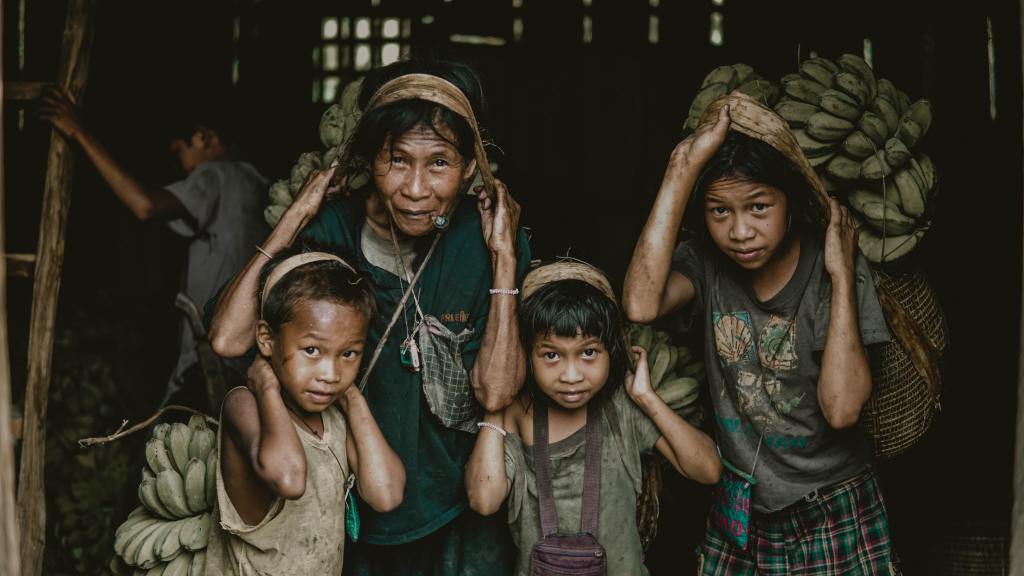
Care for creation requires Catholics to develop the virtues of detachment and poverty of spirit. Much of the destructive and unsustainable environmental practices that ravage our earth come from avaricious and unrestrained greed. Catholics are called to live in a different way—to seek spiritual wealth and the treasures of heaven rather than the stuff of this earth. Poverty and simplicity are so valued in our tradition—think of the saints whom we uphold as heroic examples for us all! Yet we Catholics succumb to the temptations to find security in temporal wealth and to find pleasure in the things that make life comfortable. As Catholics have moved from being marginalized and oppressed to living within the mainstream of modern society, our tendency is to “be like everyone else” in our behavior and choices. We can fail to even recognize how we become “conformed” to the values and ways of the world rather than conforming our hearts and minds to Christ. The damage to our spirit is incalculable: particularly in the ways we place power, pleasure, stuff, and affirmation as our primary goals. God is placed at the perimeter, seen as a means to these other ends, or else only sought when these other things fail to satisfy. We must we awakened from the subtle tyranny and devious distractions of this world! This is where our brothers and sisters who live in poverty can help us so much—they understand how, as we “first-worlders” cannot, to keep Christ first and foremost. They communicate the joy, the freedom, the energy that can result from not being weighed down, enslaved and diminished by the things of this world.
We Catholics must be careful not to over-sentimentalize poverty, of course—and we need to always be aware of the temptation to think it’s okay to keep other people in poverty because “it’s good for them” even while we maintain exorbitant and unsustainable lifestyles. This is madness, this is cruelty, this is unchristian! We also must be careful to watch how we strive to “spiritualize” the accumulation of stuff and the little comforts of life—just because things have an image of a saint on them or a Bible quote on them doesn’t mean we are justified in purchasing more than we need! I recall an experience I had at the Religious Education Congress down in Los Angeles quite a few years ago.
I was wandering through the exhibitor’s hall, overwhelmed by all the “religious stuff” on display for purchase. I overhead a small group of women standing in the booth in front of me. One of the women wanted to purchase a fairly large and expensive framed piece of art for her home. “Well,” she admitted with a giggle, “I just don’t feel like I have to check in with my husband before purchasing this, since it’s religious!” The others giggled and admitted to the same attitude. It’s so easy for us to justify and rationalize doing what we want! How much of our lives are spent looking at, desiring and plotting how to purchase things we don’t need, things that won’t make us happy, and things that replace God in our hearts. How much time would I have to worship the Lord and serve my neighbor if I refused to waste time scrolling through Amazon or leafing through magazines or walking down aisles looking at stuff I don’t need—and training my brain to try to figure out a use for it or a reason I might “need” to get it!
“What is superfluous for the rich is the necessity of the poor. When we have superfluous possessions, we possess objects that harm us.”
St. Augustine
The works of mercy, in the end, are not tools God has given us so that we feel better about ourselves! They are the ways and means for spreading God’s love to others and for glorifying the Lord by our lives. The softness and self-centeredness of those wealthy in the world’s things is so dangerous! We see everything as a means to lifting up our own spirits—so that prayer is valuable because it lowers our blood pressure. Giving monetary gifts is important because we get thanked and noticed and (if we have enough money) things get named in our honor. Serving the poor is important because we just feel better inside and feel superior about having the privilege of sharing with those who just aren’t blessed as we have been. We love the seats of honor, the obsequious expressions of gratitude, the satisfaction of seeing our efforts ‘pay off’ enough to allow us to justify our continued overconsumption and over-accumulation of wealth.
A charity group had its monthly meeting in the hall of the parish where I worked in Eugene. They met for a potluck luncheon and then conducted their meeting. They took up a collection for the poor and discussed the various service projects of their members. The ladies in this group were a force to be reckoned with. Our secretary was always run ragged by their frequent requests for assistance, veiled contempt at our facilities, and demands for extra time or extra space without extra charges. One of my friends at the parish witnessed the ladies entering the parish hall for their monthly meeting. They were greeted by one of the “lost souls” who frequented our parish—this homeless, mentally ill woman lived out of a small pick-up truck that was stuffed to the gills with all her earthly possessions. She dressed in layers of tattered garments and was filled with a demonstrative and energetic spirit—enthusiastically greeting everyone she encountered and sharing the messages she said she received from Our Lord. She was always eager to help and seemed to always know when Mass was being offered despite possessing no phone, no computer, and no newspaper. She was famous in the Archdiocese for always appearing where the Bishop would be presiding at Mass!
She had attended our morning Mass and noticed all the ladies driving into the back parking lot for the meeting of this charitable group. She decided it was her responsibility that day to greet everyone arriving. She held the door open and welcomed them all as if she was a noblewoman admitting guests to her castle—her infectious smile and joyful spirit were on full display.
My friend quickly noticed the universal response of every woman entering that hall for their meeting. “This is a closed meeting,” they would tersely say, usually without even looking the woman in the eye. They brushed past without thanking her for holding the door. After receiving this response multiple times, the woman looked over at my friend with a sad smile. “They like helping the poor,” she said, “but they don’t want to be with the poor.” My friend smiled at her in sympathy, and the two walked away. I think most of us who are not poor can admit to sometimes being the kind of people who want to feel good about helping the poor without the bother of actually being in relationship with them. We crave comfort, we crave reassurance, we crave stability, God forgive us, more than we crave to know and love another person.
“When we attend to the needs of those in want, we give them what is theirs, not ours. More than performing works of mercy, we are paying a debt of justice.”
Pope St. Gregory the Great
Catholic social teaching clearly demands from us a change in attitude. We are called to live the truth of our interdependence with one another. We are called to value solidarity and the common good. We are called to reject any “ism” that declares some people to be less valuable, less human, less worthy than others. Our love extends to every human being—and in a special way to the neediest and most forsaken. We see in these lost and struggling people the “lost sheep” that Jesus claims are worth seeking, worth rescuing, worth dying for. This is what moves a disciple of Jesus Christ to offer his life for another—to the point of martyrdom as in St. Maximillian Kolbe who exchanged his life for the life of another prisoner of war condemned to die in a concentration camp. This is what moves a disciple of Jesus Christ to spend her energies, fortune, and talents to serve those rejected and discriminated against—as in St. Katherine Drexel who established schools, hospitals and orphanages for the Native Americans and African Americans who lived in such abject poverty due to racist discrimination.
We seek to serve the lost, the rebellious, the dying—even those wrapped up in a lifestyle absolutely in opposition to God’s commandments. We will exercise compassion and seek relationships with people far removed from sanctity, enslaved to sin so that we can offer them the light, the healing, the life of Jesus Christ. We will not “water down” the Gospel, but we will offer the truth of the Gospel in small enough portions, even tiny droplets if necessary, for those unable to swallow the whole truth. Why? So that they, too, may one day experience the joy, the freedom, the everlasting delight, and fulfillment that comes from submitting to the Lordship of Our Savior, Jesus Christ. So that one day we can rejoice together as co-heirs to the Kingdom, citizens of heaven and members of one glorious Body. This is the hope that drives us. This is the love that animates us. This is the faith that inspires us.
 Flourish Catholic