“The fruit of righteousness is sown in peace for those who cultivate peace.” (James 3:18)
After high school, I made the decision to attend Oregon State University and major in horticulture. I had become captivated with growing flowers and vegetables through the gentle tutelage of my beautiful third grade teacher, Mrs. Pavelek, who led a 4-H horticulture group for kids. My father helped me dig a garden in our backyard, and my sister and I spent many happy hours selecting the plants, nurturing them and enjoying the fruits of our labor. One of my fondest memories of summer was getting a pot of water to boil on the stove, running outside in my bare feet to the garden and picking several ears of corn. Eating corn slathered in butter that had been growing in the warm summer sun 5 minutes ago is a true blessing. In high school I worked at a nursery in Salem, Oregon. I loved transplanting the seedlings and taking care of the plants. Well, I graduated with a Bachelor of Science in Horticulture, then promptly went to work for the Church! But I guess I am still in the business of nurturing—just faith, not flowers.
This Sunday’s Gospel brought all these memories flooding back to me. Jesus speaks to His apostles at the Last Supper about their role in God’s plan: “I am the true vine, and my Father is the vine grower. … you are the branches” (John 15:1, 5). We are connected to Jesus in the intimate, dependent way that branches are to the vine. The Father cares for us so that we can bear fruit. He “prunes” us, Jesus says, with His word—words that ‘snip out’ of our hearts the lies, the darkness, the temptations that make our lives unfruitful, unproductive. God is not interested in competing with us or in making us compete with each other for His love. No, God is seeking our good, God is glorified and magnified by our productivity. Everything we do is accomplished only because we are connected to Him, dependent on Him, united with Him. In fact, Jesus tells us bluntly: “without me you can do nothing” (John 15:5).
Don’t we just want to tell Jesus, “Wait, nothing? Without you we can do nothing? Can’t I accomplish anything on my own? Haven’t I proven that I can get by okay without you most of the time—I really just need to call on you when things get out of hand, right?” But Jesus speaks the truth. Jesus IS the truth.
Without Him, we can do nothing. Everything is grace. Everything we possess, everything we are, everything we desire to accomplish, is only possible because He gave us everything in the first place. But what do we consider good fruit? Perhaps the things we focus on in terms of bearing fruit for the kingdom is quite different from God’s perspective on fruitfulness. It’s worth pondering, isn’t it.
A dear friend has walked the Camino in Spain multiple times, having had the privilege of taking both of her adult girls with her and also traveling with dear friends. She told me a story that helped me understand God’s vision about us bearing fruit. She had finished her day’s walk and went to find food in the village. She struck up a conversation with a local gentleman. The man said he owned a small vineyard on the edge of town. My friend remembered walking by it on the pilgrimage trail. The man smiled at her and told her the vineyard had been in the family for generations. She commented to him how hard it must be to have the vines struggling so much, for they had appeared to be almost withered, with a sparse covering of leaves and small clusters of grapes. Was he worried that the vines would die? He laughed heartily and told her no, the vines looked exactly as they should appear. Then, with a twinkle in his eye, he told her, “It’s the struggling vines that produce the sweetest fruit.”
It’s the struggling vines that produce the sweetest fruit. What a different vision of productivity! What a different way to look at the role of the grower! Just like the owner of the vineyard, God isn’t interested in the lushness of soft growth that looks spectacular, but will whither and disappear with the first storm or frost. God doesn’t care how “big” and fast we grow to win the admiration of others. God wants fruit. God knows that the purpose of the branch is to bear fruit—and He is seeking fruit that is sweet and satisfying.
“Let us not grow weary in well-doing, for in due season we shall reap, if we do not lose heart.” (Galatians 6:9)
When we look at the lives of those we admire or seek to emulate, sometimes we are enamored about the wrong things—the “lush” growth that looks lovely, even if it supports no fruit. Isn’t that what our culture puts before us as the successful ones? We see those who are beautiful, those who are wealthy, those who have power, those who wield influence and win the admiration of other beautiful, wealthy and powerful people. That’s a fruitful life, we might think. Lose 25 pounds—that’s productive! Make more money than you need, and spend more money than you have—that’s productive! Wield your power to humiliate, demean and divide and so make yourself feel more powerful than those you attack—that’s productive!
And then we get judged by our fellow branches on the vine as well. What do you mean you haven’t memorized entire chapters of the Bible? You haven’t brought anyone new to Mass with you in how many weeks? Don’t you pray this prayer or haven’t you read this book or aren’t you a friend of this powerful leader? We compare ourselves, we come up short, we feel discouraged and unproductive and useless.
But what if it IS true that the struggling vines produce the sweetest fruit? What if the trials and crosses, the burdens and challenges, the weakness and struggles allow us to bear the fruit that God truly desires, by which “the Father is glorified” (John 15:8)? This puts a whole new perspective on where we seek for fruitfulness in our lives. We don’t have to apologize for our weaknesses—when we wanted to triumph like a hero but ended up feeling like the squeaking mouse. We don’t have to be embarrassed about our failures—when we wanted to do something great for God but it just fell flat. We don’t have to write ourselves off because we don’t have the talent, the courage, the support, the drive to be great and to do great things.
If we believe God, then we experience fruitfulness in places of weakness, vulnerability, and smallness. These are the places where we bear the sweet fruits of virtue, of holiness—the sweetest fruit God seeks from your life is love. He’s going to prune us. He’s going to allow us to struggle. But He’s going to keep us united with Him. And when we bear the sweet fruit of the Kingdom, the fruit of humility, peace, gentleness, meekness, modesty, mercy, goodness, faithfulness, purity, honesty, generosity, and more, we will have the incomparable delight of satisfying the hunger of God. What hunger of God could you possibly satisfy? God’s hunger for your love—the fruit He yearns for but cannot have without your permission. What fruit could be sweeter than to know that we bring delight to our Creator?
Never imagine that just because your life is best described as a struggling vine in God’s vineyard it means that you are not loved and cherished by God. That you have failed at your purpose, that you have failed Him in some way. No. He has pruned you so as to bear the sweetest fruit—so that “my joy may be in you and that your joy may be full” (John 15:11). Trust in the vine grower, remain connected to the Vine. Draw your nourishment and strength from God, don’t rely on your own resources. Offer the fruit of your life to glorify and delight the God who created you, the God who cares for you, the God who draws you into deeper union with Himself.
After the priest shows us Jesus in the Eucharist at Mass, he proclaims: “Behold the Lamb of God, behold him who takes away the sins of the world. Blessed are those called to the supper of the Lamb.” Then we pray: “Lord, I am not worthy that you should enter under my roof, but only say the word and my soul shall be healed.” What do we mean by Jesus entering under my roof?
This prayer of humility comes right out of a Gospel story—where Jesus is asked by a Roman Centurion to heal his sick servant at home. Jesus says he will go with him to his house and heal the man. The Roman Centurion responds, “Lord, I am not worthy to have you come under my roof; but only say the word and my servant will be healed.” (Matthew 8:8).
So as we prepare to receive Jesus—truly, really, and substantially contained in the Eucharist—into the “home” of our body, we confess our unworthiness with the Centurion’s words.
No one who presents themselves for Holy Communion is worthy to have the King of the universe, the incarnate Son of God, the Lord and Savior in all His glory, as food! All of us are unworthy—and yet we are invited to receive Him if we have prepared ourselves for Holy Communion. If we Catholics are in a state of grace, if we have kept the communion fast, if we have participated with true devotion and reverence in the Mass—then we are invited to come forward to receive Jesus “under my roof.” These preparations don’t make us worthy—nothing could!—but they do show our eagerness and readiness to be receptive to the Lord. To come before Him with an attitude of worship and supplication rather than entitlement and pride.
“I am awed by this mystery of love. Here is the Lord seeking to use my heart as a throne, committed never to leave me, provided I don’t run away.”
St. Josemaria Escriva, Christ is Passing By
So we are offering up a prayer recognizing that the Eucharist is truly gift—“Lord, I am not worthy”—and that Jesus Himself, by His own loving mercy, can heal us—“only say the word and my soul shall be healed.”
Okay… Let’s reflect now on the part of the prayer that equates our bodies as a home for the Lord—to welcome Christ under my roof means to welcome Him into my home, my body, my life. Because of our Baptism, we truly are re-created as a Temple of the Holy Spirit—a holy house for God!
So how do we welcome Him? What is our attitude as Jesus enters the home that is my body, my life?
I want to share six different attitudes toward the Lord as we prepare to receive Him in Holy Communion. We could have an attitude of welcoming a stranger, a home inspector, a boss or colleague, a repairman, a beloved friend, or the true homeowner.
First attitude: Welcoming the Lord under our roof as an intrusive stranger. We keep the stranger at arm’s length, stiffly polite and guarded, we wonder if he might be casing the house as a burglar, or if he is going to go into a sales pitch and try to sell us something we don’t want to buy. We might see the Lord’s visitation as an intrusion, an interruption, and we can’t wait for him to leave so we can get back to our real life. The Lord might want to say the word to heal us, but we aren’t buying it! The door slams, the grace fails to bear fruit as we end the visit as soon as possible and shoo the Lord back out the door.
Second attitude: Welcoming the Lord under our roof as we would a home inspector. We might imagine the Lord to be entering into our home with his clipboard and pen at the ready—in order to identify and point out all the faults, deficiencies and repairs that we need. We might let him enter and show him around, but we’re on our toes, ready to be defensive or to act “shocked and surprised” when we hear about all that’s needed to improve our house. Instead of treating the Lord’s visit as a welcome opportunity for healing, we are preparing the justifications, excuses, and rationale for why the place is such a mess. The Lord’s visit to our home never gets to the heart of our homes—and we sure hope he doesn’t ask us to open up that door! There are some rooms, some problems, that we just don’t want him to see! Jesus may be eager to bring us healing, but we can’t let him heal us—for our attitude is more about hiding and distracting and denying.
Third attitude: Welcoming Jesus under our roof as we would a boss or colleague that we want to impress. We want Jesus to visit us—wow! What an honor!—but we don’t want to see ourselves as unworthy of the visit or of being a lower rank than others in our social circle. We might feel the need to impress Jesus, to remind him of all that we have done or plan to do for him. We might want to subtly remind him of the failings and faults of our co-workers so we appear in a better light. We want to be natural with Jesus, we want to appear friendly, but our entire focus is really on ourselves—am I making a good impression? Is he suitably appreciative of who I am and what I’ve done for him? Will I make the cut and get ahead? If we have this attitude, we won’t settle down to actually focus on Jesus—and even if he says the word to heal our house, we are too busy pointing out the beautiful décor, the fancy and expensive trappings, to receive his help with the foundations.
Fourth attitude: Welcoming Jesus into our home as the repairman. We know we are not worthy—in fact, all we can notice is the chaos, disrepair and downright dangerous living conditions of our house! We desperately want Jesus to enter under our roof and fix that leak, shore up that wall, replace the flooring and bring in more light. We offer the Lord humility of a sorts, but we still want to think of ourselves as being in charge—we’re hiring him to do the repairs we feel are necessary. No need to gut the house, to bring it down to its foundations, to lift the roof—no, no, Lord! We really only want you to change the light bulbs! When we welcome Jesus into our house as a repairman, he can bring about a healing that we truly do need. But sometimes we fail to admit that a bigger repair is needed, or that the Lord is perfectly happy with the condition of our home and simply wants to hang out with us and enjoy the welcoming and loving atmosphere we can create—even if the windows are drafty or the shower head leaks!
Fifth attitude: Welcoming the Lord as a beloved friend or family member. We are eager to spend time with him. We can’t wait to visit and share life—to laugh or cry, to open up about what we are experiencing and to let him in to the deepest parts of our home—the cellar and the attic where few other people are allowed to enter. We see the Lord as supportive and compassionate—loving us no matter what and enjoying our company. Jesus calls us his friends because he wants to talk and share with us—revealing all that Father has said to him. We enjoy the conversation and hope that he feels welcome and comfortable under our roof. This is a great delight for our souls—and a true source of refreshment for us. But with this attitude, we still limit the Lord’s work in our lives—for when the day is done and we get tired, we yawn and stretch and walk him to the door and say good bye. Then we relax and rest with our good feelings and happy memories—we pick up and reorganize our house and get back to the way things were before the Lord’s visit.
Sixth attitude: So, the final—and most truthful—attitude we could have is to welcome him as the true owner of our house. We are caretakers, stewards, of the house he built for us—our body, our life is a gift from God. We are creations of God, not constructed by our own skill and effort—and being His disciple means we live a new life—HIS LIFE. What if we welcomed him in as the true owner, the Lord and Master of the home? What if we handed him the key to our house and gave him full reign—knowing that whatever he chose to do with our home would bring us life and unending joy? What if, in welcoming the Lord into our home—but seeing it truly as HIS home—we would now allow ourselves to breathe, to relax, to enjoy His company and never have to take up the silly and inconsequential duties of pretending to play the hostess, colleague, boss or even suspicious and protective homeowner?
“[The Holy Eucharist] is the center of existence for me; all the rest of life is expendable”
Flannery O’Connor
“Lord, I am not worthy that you should enter under my roof, but only say the word and my soul shall be healed.”
Maybe next time I prepare to receive our Lord, body and blood, soul and divinity, in Holy Communion, I will pray like this—
“Come, Lord, I welcome you into my house—my life, my body—and I acknowledge that all I have and all I am is gift from you and my gift to you. My life is yours to do with as you wish—for you created me, you sustain me, you know what is best for me.
I thank you for the great gift of my life—and for establishing me as caretaker, as steward, of your creation.
I thank you for the even greater gift of yourself. For entering under the roof of my house and abiding with me.
As you enter under my roof, I give you free reign. You are entering your home—do with me whatyou will.Amen
I chose St. Catherine of Siena as my patron saint at my Confirmation. I love her! Here is a lengthy quote I wish to share from her and a prayer I wrote to the Lord in response to her wisdom:
“God was in love with you before you even came to be. If He had not so fallen in love with you, He would never have created you. But because of the love He had for you as He saw you within Himself, He was moved to grant you being. He is our gentle God, and He has no need of us. He loved us before we loved Him and He gave Himself to us as a gift, not because He had to.”
God my loving Father: The time I spend searching for ‘true love’ and mourning the ways in which I am not loved as I desire by other people is, in many ways, a waste of time and it always is unfair to those from whom I expect perfection. I will never be loved in the way I desire by another human being–and I am already loved more purely, completely, and lavishly than I could ever desire and certainly more than I deserve. O Lord, open my heart to more fully receive the love you have for me. Help me receive what I do not deserve and could never earn. Help me to not search for the fullness of love away from you. Help me, Lord, to rest in You and You alone. Help me to love you completely–with all my heart, with all my mind, with all my soul and with all my being. Help me to see each person I encounter as another being loved into existence by you. I thank you, Father God, for the love that created me, the love that sustains me, and the love that draws me to my future with you in heaven. Amen.
“Fashion your attention on holiness, faith, love and peace.” (2 Timothy 2:22)
“As a deer longs for flowing streams, so longs my soul for you, O God. My soul thirsts for God, for the living God.” (Psalm 42:1-2a)
To Catholics, faith is rooted in having an intimate, profound, lively and maturing relationship with God. Faith resides within the will, in our choosing to believe in God and in the truth He has revealed to us, no matter how we are feeling or how our thoughts might mislead or confuse us. But sometimes we can struggle to maintain faith when our emotions and intellect provide no rewards for our efforts. If we don’t feel close to God, how can we keep the relationship going? If we don’t think clearly about God, how can we live according to those truths? During periods of stagnation and dryness, faith is truly tested. What can we do during these times?
First, it’s important not to despair. Not having a strong, positive emotional response to prayer or to matters of faith does not necessarily mean one has a poor or weak faith. Being confused, distracted and muddled in one’s grasp of the truths of faith does not condemn someone to being “in the dark” for their lifetime. If faith resides in the will, then the quality of our faith is not dependent upon the state of our emotions and intellect.
However, this does not mean we simply resign ourselves to the situation of stagnation/dryness and accept it as “just the way things are.” God truly desires a relationship with us as whole persons—He seeks to draw us into an intimate communion with Him that engages our will, intellect, emotions and body. That’s how he made us—as embodied souls. We are designed to be in harmony within ourselves and to allow our complete self to surrender to the love of God.
“You never go away from us, yet we have difficulty in returning to You. Come, Lord, stir us up and call us back. Kindle and seize us. Be our fire and our sweetness. Let us love. Let us run.”
St. Augustine
Sometimes, in order to call forth and purify our motives, God withholds the consolation of emotions and intellect for a period of time. That is something we can discern with the guidance and support of a good spiritual director. If God is using this period for your greater good, then God is inviting you to wait patiently for a sign from Him—for a “thawing” of the soul’s winter or a glimmer of light in the soul’s darkness. But, usually, I think God wants us to “work out” and “work through” these periods—taking an active role in the battle of the spiritual life. Here are some suggestions for how to respond to periods of stagnation and dryness.
My first suggestion is to consciously develop the capacity called “interiority” so that periods of stagnation and dryness can be recognized and diagnosed. When we are insufficiently aware of our interior state, we can go for days, months, even years without ever stopping to examine how we are doing in our walk with the Lord. Do we fill our days and nights with so much busy-ness and distraction that we fail to even notice the dryness, the stagnation, the lack of life within our souls? Do we face a crisis and then come to the startling realization that we have no spiritual resources to rely upon? So many people seem to go through life, refusing to face the truth that every person, no exceptions, will face trials, suffering and crises—God gives us the resources and admonishes us to prepare for these moments, but many of us never do.
I remember one of the most difficult phone calls I ever took was from a young man at the bedside of his dying father. He called the parish in a frantic state, and I happened to be in the office at lunch and picked up the phone. “Can you help me,” he exclaimed, “My father is dying and asked me to pray for him. I can’t remember the Our Father! I haven’t prayed it in years. He wants me to pray for him!” I led him through the prayer over the phone and assured him of my prayers for him and his father. I encouraged him to contact the chaplain at the hospital and he ended the call. I closed my eyes right then to pray for that young man, who discovered too late that he had failed to hold onto the faith that would see him through the hard times. I prayed to the Lord to give me the grace I needed to prioritize Him, so that when I faced a crisis I would have the bedrock faith to see me through it.
I wonder if our lack of interiority, and the distractions we allow to keep us from working on our relationship with the Lord, are the most effective tools the devil has for taking us off the narrow path to heaven. Most of us are probably incapable of having our souls filled with hatred of God and the rejection of His love. But might many of us be quite susceptible to being kept distracted, discouraged and defeated so that we fail to cling to God’s love? We may be on the path to hell by default, not by actively choosing it—but the fact remains that we are not making any effort to change directions, to get off the wide and easy path away from God. God’s love demands a choice because it is offered within a covenant relationship—we don’t “accidentally” commit to a covenant. It involves consent, sacrifice, and effort.
Developing interiority takes focused and conscious effort over a lifetime. It means making the hard decision to carve out times of silence and reflection. It means refusing to give in to the myriad distractions that threaten our peace and seek to dislodge God as first in our hearts. It means developing the maturity to admit that avoiding problems doesn’t make them go away. Interiority isn’t about peaceful meditations with candles and soft music.
“Build an oratory within yourself, and there have Jesus on the altar of your heart.”
St. Paul of the Cross
Interiority is about being comfortable and trusting enough with God that one can be still and listen. When we are afraid of hearing a hard truth, a challenging command or a life-changing diagnosis from God, we might be tempted to ‘fill the lines with chatter’—not letting God get a word in during our prayer. Then we wonder why prayer feels so empty and dry and unsatisfying. The truth is, we’re not praying at those times: we’re performing a soliloquy for our own amusement and justification. God mercifully withdraws to help us come to our senses and repent. In this situation, the resolution of stagnation and dryness comes about when we recommit to Christ—when we put Him first in our choices and actions, not just in vague promises to “do something about our faith” when we find the time.
Another common reason for periods of stagnation and dryness can be unconfessed sin. Our prayer life is intimately wound up in the life we actually lead. If we live the life of a hypocrite—saying we love God but choosing to act in ways that exalt self and reject His laws—then prayer becomes tiresome, odious and inconsequential. Prayer is intimate communication with God. The unrepentant sinner does not really want to hear from God, for that would require conversion of heart and mind and actions. If we don’t really want God to communicate to us, then prayer becomes an empty show, a “going through the motions” that skims over the surface of our lives.
God has called us into a covenant relationship with us so that He can give us new life, re-making us in the image of His divine Son. Sometimes we find out, to our horror, that God actually takes our relationship with Him seriously—so seriously that He is eager and willing to take away from us everything that keeps us from Him. Everything! “Wait a minute,” we might protest, “I didn’t want a wholesale makeover, God! I just want a bit of relief and pleasure and affirmation by praying to You—just slow down, Lord!” We might say we want to live as a true Christian disciple-until we realize that means giving up that favorite addiction, that recurring sin, that “freedom” to determine right and wrong for ourselves, that “control” over our life that gives us a sense of power. Rather than submit to all that, we might make our prayer time a time of self-congratulation, thanking God that we are “not like other men” we notice—the “Hey, I’m doing okay, I haven’t killed anyone recently” attitude. When we see God eagerly coming for us with hands outstretched, ready to undo, cleanse, purify and refashion—we back away. Better dryness and stagnation than repentance!
Sometimes the best way God can shake us out of this attitude is to allow our sins and vices to come to full fruit—so that we can see the horror we are making of our lives and the harm we are causing others. Then, we turn to God and cry out for help—the help He had wanted to give us from the very beginning of our downward spiral. Facing moral failings, vice and serious sin that harms our relationship with God can bring us out of a period of stagnation and dryness as we cooperate with His grace—and find, to our delight, that everything we clung to with such ridiculous tenacity was truly “rubbish” compared to the delight of loving and being love by God!
“When the sense of smell in one’s soul is healthy, then we can immediately perceive the stench from our sins.”
St. Augustine
In other cases, we might prayerfully discern that there is no serious sins or vices that we are withholding from the Lord; yet we still face dryness and stagnation in our prayer. It leaves us panting and crying out in thirst to the Lord. In these times, our task is to humbly wait for God’s initiative and leadership. This may very well be a period of maturation, purification and strengthening. God may be working deep within our souls, bringing about a healing of an old and serious wound. We can think of this time of dryness and stagnation as God the “Divine surgeon” mercifully “putting us to sleep” as He probes the wound and clears out the infection. We will awaken to new life and restored health when God discerns the surgery successful and completed.
What do we do during these times? Choose to persevere and endure in our devotions and practices of the faith. Our faithful endurance, when we receive no spiritual consolation or emotional benefit, can be like “rehab” after surgery—it’s no fun to go through, but we know it will bring us what we truly desire: restored functionality and thriving health.
It takes humility to accept God’s work “behind the scenes” of our own life. If we pridefully resent the fact that we feel “ignored” or not consulted, we can become susceptible to Satan’s temptation: “Your prayer is so stagnant because God is drawing away from you and doesn’t want what’s best for you, be careful! Protect yourself before you lose your identity and self-determination!” These lies from the devil can lead us to doubt God’s goodness and intentions—and even His very presence in us.
The truth is, God as our loving Father will never abandon us or leave us. He sent His Only-Begotten Son into the world so that we would know Him as “Emmanuel”—God with us. When we don’t “feel” His presence, then this is an invitation to change our perspective and deepen our trust. God didn’t leave us and isn’t further away from us, maybe He is so deep within us that we cannot sense His presence. In the very depth of our soul, deeper than we go, God might be working out a healing that we will only recognize later.
My undergraduate degree in Horticulture provides a useful analogy. In the Winter, it appears that deciduous trees (those that lose their leaves in the Fall) are in a state of inactivity akin to death. They aren’t “doing anything” that we can notice—and so we think of Winter as a time of stagnation and non-growth. Horticulturalists have actually discovered that Winter is a time of incredible growth for deciduous trees—but it’s all underground! Winter is the time trees engage in a tremendous amount of root growth—providing the tree with the means to gather up more water and more nutrients to support the growth of leaves, flowers and fruit in the Spring and Summer. This hidden growth supports visible growth later.
Perhaps our periods of apparent dryness and stagnation are like the “Winter” of our souls—when God causes hidden growth within us that will later blossom into active and fruitful discipleship. The key for us? Trust in God, abandonment to His Divine plan and methods and timing. Offer God frequent acts of trust and take the opportunity to “rest” in the Lord. These practices prepare us for “optimum growth” when Spring arrives in our souls.
The isolation and desolation we experience from these periods of dryness can purify our souls if we allow God to work through these times. Why do we believe? Why do we serve God? Who do we love? When God, in His mercy, sends us spiritual consolations and “mountaintop experiences,” they can inspire us to love more deeply and give more of ourselves to Him. At the same time, we can begin to cling to the emotional pleasure and the affirmation as if they were the ends of prayer. We can puff ourselves up with pride about the level of our devotion and intensity of our faith. We can seek out ever more powerful emotional “highs” as the purpose of our discipleship in Christ. Periods of stagnation and dryness provide a necessary corrective to these tendencies and temptations we all experience.
“It is easy to be consistent for a day or two. It is difficult and important to be consistent for one’s whole life. … Only a consistency that lasts throughout the whole of life can be called faithfulness.”
St. John Paul II, Address on Jan. 26, 1979
When we worship God whether it “feels good” or not, we can grow to love God more for His own sake. When we live our faith even when it seems to get a universal “ho hum” from God and those around us, we purify our motives and goal. We can truthfully say we seek to glorify God, not ourselves. We can truthfully say we love God as God, not for how He makes us feel. God doesn’t want us miserable, but He does want us perfect—and when we allow Him, He will do whatever it takes to achieve that goal. From the other side of that period of dryness and stagnation, we will rejoice at the growth, the healing, the perfecting of our souls that the Master has accomplished. God never ruins the vessel put in His charge: He knows what He is about.
Other times, periods of stagnation and dryness might be an invitation from God to pursue Him. He is the bridegroom of our soul, the Lover who romances us, His beloved. The dance and adventure of seduction is never one-sided. God initiates, of course, but He welcomes our participation—in fact, as a true “gentleman,” He waits for it. When our relationship with God seems to stall and become dry—perhaps it is God’s way of encouraging us to seek our heart’s desire, to go out and find our Love. Responding to this kind of dryness and stagnation involves seeking ways to ‘spark’ the romance—the “second honeymoon” in our relationship with God. Love diminishes and grows cold when it becomes a rut or crutch that leaves us only going through the motions. Familiar routines give comfort to our life, but they also can lead to staleness and boredom—this can be true in our relationship with God as well.
Love grows when we pursue the One we love, not the feelings of being in love. How do we pursue God and romance Him? By putting God first, by carving out time and activities that bring us into His Presence. By renewing, rediscovering, and recommitting to the covenant He made with us. By letting ourselves be loved, cherished, value and enjoyed by One who loves us. By being quiet and still and responsive to the God who loved us into existence and is loving us to eternity.
“…to be loved by God, not merely pitied, but delighted in as an artist delights in his work or a son–it seems impossible, a weight or burden of glory which our thoughts can hardly sustain. But so it is.”
C. S. Lewis
I had just this kind of “second honeymoon” experience during a holy hour. On my 2013 walking pilgrimage from Eugene to Salem, the halfway point was the city of Corvallis where I spent the night at St. Mary Church. During my stay, I went into the Blessed Sacrament chapel and knelt down in prayer before the Lord. I had been overwhelmed earlier that day with a realization of the wickedness and evil that had enslaved me in my past. I wept before the Eucharistic Presence, and expressed my heartfelt sorrow. I had been so careless with my faith, so presumptuous in my attitude, so prideful in my decisions. “Oh God, I am so sorry,” I spoke into the pregnant stillness of the room. I heard the Lord respond back, in the broken-open center of my heart, “Shh. Just let me love you. I loved you then. I love you now.”
Time stopped, my heart pounded, and I held my breath. I relaxed into the love of my Creator, exhausted and broken open, wounded and battered, and I realized in a way that had I never experienced before, that I was God’s beloved. He loved me so much as I knelt before Him with my contrite, repentant heart. But He didn’t love me any less those many years before when I was caught up in my sin and rebellion. His steadfast merciful love brought me to this moment—His love wasn’t a reward he withheld until I got my act together. I picked up my Bible. It fell open to Romans, chapter 8, and my eyes were drawn to the first verse: “There is no condemnation for those who are in Christ Jesus.” No condemnation. Just love. Just healing. Just Presence. I experienced a renewal, a re-awakening of my life with my Beloved—it began a “second honeymoon” in my faith that sustained me in future challenges.
The final lesson about periods of dryness and stagnation concerns our brothers and sisters in Christ. Perhaps God is leading us through a “desert” time in order to break through our attitudes of independence and self-sufficiency. Perhaps God is inviting us to be humble and ask for help. When God gave us new life at our Baptism, He didn’t just remake us into His beloved child. He also brought us into His family: the People of God, the company of disciples who follow His Son, Jesus Christ.
Membership in God’s family seems a rather important matter to God, not simply an efficient way of piling us all together so He can better keep track of us. He calls us members of the one Body of Christ—united to each other as cells in a body, not as separate grains of sand on the beach. We are designed for interdependence, for harmony, for cooperation. We are called to support one another, to call out the best in each other, to instruct and admonish one another. That all sounds good when we’re the ones doing the instructing and admonishing, but heaven help the person who tries to teach or correct us! We long for help, but we don’t want to admit that we need it!
Asking for and receiving the support of others can be both the sweetest and the most uncomfortable experience as a Christian. In that dynamic tension, humility grows. As humility flourishes, we can finally let go of the tiresome charades and “acts” we put on to impress others. We realize that no one who really knew us was convinced anyway—our “act” just hid us from ourselves! Now that we face the truth, we can find the joy both in serving and being served. In giving and receiving. And we finally can live in the love that unites giver and receiver in the depths of God’s great heart.
Periods of dryness and stagnation can be the impetus that moves us to call out for help. The support and guidance we receive from others—both those living with us on earth and those residing in the glory of heaven—is a mighty instrument of God’s grace. When we ask for help, God rejoices, the Body thrives and functions to a fuller capacity, and we are renewed. God affirms that the members of His body are not in competition with one another for His love or His glory. When we forget ourselves (this is the essence of humility: self-forgetfulness, not having a lower opinion of yourself), we can put away all these silly notions of competition, of being better or more important or more successful. Just as cells of the body do not compete with other to bring about vibrant, thriving health, so it is within the Body of Christ. Those cells that outcompete others in the human body are usually cancerous. The same is true in the Body of Christ.
“We have to be patient with everyone, but first of all with ourselves.”
St. Francis de Sales, Letters, fragment 139
Catholics are encouraged to view periods of stagnation and dryness as invitations from God. They are not shocking indications of a poor and weak faith. They are not calamities or tragedies that should lead us to despair. They are invitations from God to “work out our own salvation in fear and trembling” (Phil 2:12b). Our first approach is to examine our conscience and discern if this period reflects unconfessed sin or a vice which needs healing. If not, we may discover that this period is an invitation to allow God to do some deep, hidden work in our souls. On other occasions, we might discern that this period is God’s invitation to pursue Him and “re-ignite” our romance with the One who loves us beyond all telling. Finally, a period of stagnation or dryness might be just the impetus we need to more fully commit to being a member of the Body of Christ—by humbly allowing others to support and help us on the journey to heaven.
My final thought about periods of stagnation or dryness? That they are periods—a moment in time that will surely end. In heaven, we will hunger and thirst no more. In heaven, we will be freed from every weakness, limitation and inclination that veils the love of God in our souls. We will love as we are loved.
“When Jesus saw the crowds, he had compassion for them, because they were harassed and helpless, like sheep without a shepherd.” (Matthew 9:36)
Good Shepherd Sunday invites us to muse about sheep. I know that the people of God have been referred to as “God’s Flock” since the Old Testament—my favorite Psalm, in fact, states it about as plainly as it could be stated: “Know that the Lord is God! It is he that made us, and we are his, we are his people, and the sheep of his pasture” (Psalm 100:3). Abel, the first to offer an acceptable sacrifice to God, was a shepherd. Abraham, Isaac and Jacob were shepherds. Moses tended his father-in-law’s flocks before being sent by God to shepherd his people out of Egypt. David was a shepherd, first of his father’s flocks and then of the nation of Israel. Many of the Psalms use images of sheep and shepherding when referring to God’s chosen people.
Why do we have to be compared to sheep, of all things! Why not majestic horses of God’s herd: full of vitality and spirit, courage and power? Why not loyal dogs, smart and obedient, working hard all day beside the Master? Why sheep? Sheep aren’t too bright. They panic easily and scatter with no strategy. They walk out of their enclosures, get lost, and don’t remember how to get home. They eat things that make them sick. They are subject to disease and injury and predators. They look alike, sound alike, smell alike—and, really, what’s to like about them?
It stings the pride a bit, doesn’t it? And then… I start thinking about how I actually behave. I have certainly wandered far from good pastures and gotten myself totally lost in sin—and needed my Good Shepherd to rescue me. I have listened to the scary “wolves” and storms that come up in every person’s life, then panicked and taken myself away from the only One who can truly save me. I’ve willingly consumed what has harmed me—devilish lies that sicken my soul and weaken my spirit. I recognize my weakness and vulnerability to the evil intentions of others. Well, I guess if the “baa” fits, I better join the flock.
God declares Himself to be our shepherd who will care for us, bind our wounds, give us all we need to thrive, and protect us from danger (Ezekiel 34:1-17). And then Jesus Christ, God’s Beloved Son, declares Himself to be the Good Shepherd—the one who will lay down His life for His flock (John 10:1-18). Jesus will care for us, lead us to safety, protect us and guide us to good pastures. He says His sheep know His voice—the sheep trust the voice of the Lord and follow Him wherever He leads. Jesus, the Good Shepherd, will not abandon us, will offer Himself for our sakes.
Growing up in the Willamette Valley in Oregon, I observed sheep being turned loose in huge pastures alongside Interstate 5 every winter. A big semi-trailer full of sheep would back into a pasture, let them all out, then leave them alone. They ate grass, got rained on, some died and fed the Bald Eagles that learned to winter in the Valley and feast on carrion. I never saw a shepherd. I had no idea how sheep were actually shepherded.
Then I learned about what shepherds were like in Bible times. How they would spend all their time with their flock. How shepherds walk ahead of their sheep and call to them—and the sheep trot along behind, trusting the shepherd to bring them to a place where they’ll find water and food. The shepherd’s staff, I learned, was not to strike the sheep, but to strike the predator. The staff guided a sheep headed toward danger or hooked one who had fallen in a ditch. The shepherd knew the individual members of his flock—those bewilderingly similar “woolies” apparently can be told apart—and knew the quirks, temperament and needs of each one. The shepherd was responsible for the sheep, and a good shepherd would place himself between his flock and any danger that appeared. Sheep, it turns out, have one amazing quality: they quickly learn the voice, the mannerisms, the appearance of their trusted shepherd. And they are amazingly loyal.
“I am the Good Shepherd; I know my own and my own know me.” (John 10:14)
When I get off my “high horse” and embrace my inner “sheepiness,” I’m ready to follow my Shepherd. Do I know His voice? How? Do I spend time in the Bible, learning the sound, the cadence, the quality of my Shepherd’s voice? Do I listen for His voice in my heart and mind, or am I so distracted with the wolves in sheep’s clothing that clamor for my attention that I hardly every hear my own Shepherd? Do I hang out with other sheep and follow the wise ones who stay close to the Shepherd? Do I run to my Shepherd when danger threatens, or do I lose my head and run away, into greater dangers? Do I call out for help when I get lost or simply wander further away in my stubbornness? Do I listen to the shepherds whom Jesus has placed in authority over the flock or do I pridefully refuse any attempt to admonish, instruct or correct me?
Good Shepherd Sunday celebrates the One Shepherd who cares for each member of His flock—and who has given us shepherds to care for us until His return. Yet these shepherds sometimes turn out to be wolves who endanger the flock and take advantage of their hapless charges. Sometimes the shepherds are cowardly, mercenary—only taking on the job for their own gain. When troubles come and dangers threaten, they abandon the sheep and save their own hides. If we have to be sheep, can’t we at least be assured of good shepherds?
Even if false shepherds can mislead even the most attentive of us, at least we can recognize the predators, the demons who tempt us away from God. Unlike our true Shepherd, the evil one drives us from behind. For if he got in front of us to try to lead us, we would recognize the ugliness and horror we faced and run away. If you feel “driven,” be aware that that’s certainly not how God shepherds His people. Bad shepherds, false shepherds, predators—we face them all. And, let’s face it, we’re sheep for gosh sakes! What can we do about it?
God in His goodness, will bring justice to His flock—but in His time and in His way. God allows the flock to experience these troubles in order to bring about a greater good—a good we might not be able to discern this side of heaven. But I trust in my Shepherd. And the truth is, sheep are pretty wily. They’re hard to drive and easy to lead. They might not be quite as helpless as the predators hope them to be.
Throughout our history as God’s flock, I also recognize that when shepherds turn out to be wolves or mercenaries, God brings forward new shepherds to take their place. Shepherds who seek only to serve, who are filled with compassionate and courageous love. Sometimes these good shepherds aren’t as popular, might not appear as attractive or interesting, they’re usually not “influencers” or “schmoozers.” They simply shepherd, they don’t seek attention. They smell like the sheep (thank you for that one, Pope Francis!). Sheep in their care grow sleek and fit, healthy and vibrant—ready for that long journey to the good pastures of Heaven.
On Good Shepherd Sunday (or whenever you can), spend time in God’s Word and rejoice in the One who shepherds His people. Place your trust in the Shepherd and learn to recognize His voice—seek, listen, and respond to it. He will call. He will seek you. He will protect you and never allow you to remain lost and endangered. Next time you attend Mass, behold the Lamb of God who takes away the sin of the world—behold Him who comes to you in the Eucharist and shepherds your soul to good pastures, to refreshment and delight. Run to the shepherd as you go forward for Holy Communion: allow Him to enfold you in His loving care as you enfold Him in the consecrated host given to you.
Pray also for those who shepherd the flock until the Lord’s return. Pray for our Pope, our Bishops, our Priests and Deacons. Pray for those who lead us to spiritual growth, and for those who challenge us to serve and care for the least among us. Pray for those who teach, heal, govern and create. Pray, especially, for the most unsung shepherds of all—parents who are striving to shepherd the flock entrusted to them through a world filled with wolves and bad shepherds.
God will vindicate. God will restore. God will triumph. Through love. “Behold, the Lord God comes with might, and his arm rules for him; … He will feed his flock like a shepherd, he will gather the lambs in his arms, he will carry them in his bosom, and gently lead those that are with young” (Isaiah 40:10-11).
Stained glass windows in Mary Help of Christians Basilica on the campus of Benedictine Abbey College, North Carolina
Let’s begin with the key point: Catholics do not worship saints. We honor or venerate saints, but we do not consider saints in heaven to be a kind of god or goddess that we worship.
Then why do we talk about praying to saints? In Latin, there are two words that can be translated into the English word “pray.” The first is latria—this refers to the adoration or worship that is proper to God alone. To God alone do we give latria. To offer latria to anything or anyone other than God is to break the first commandment—to offer God alone our worship. The second Latin word that can be translated as “pray” is dulia. This word refers to the honor and respect we offer to someone worthy of honor. It has the connotation of seeking assistance in some matter—such as the old English way of asking: “Pray, good sir, could you open the door for me?”
So latria—worship and adoration—is prayer we offer God. Dulia is giving honor to a saint. When we say we “pray” to a saint, it is shorthand for “asking a saint to pray with me or for me”—seeking mediation or assistance. In no way do we see a saint as having any divine power to do anything apart from God. Saints work miracles not through their own power, as Jesus Christ did, but by being an instrument of the power of God. So we dulia saints—asking for their intercession on our behalf.
But why? Why would we ask someone else to pray with or for us? Why not always go directly to God and bypass fellow members of the Body of Christ?
“We find rest in those we love, and we provide a resting place for those who love us.”
St. Bernard of Clairvaux
To answer that question, I think the best approach is to ask—what does God want us to do? Is there evidence that God asks us to use mediators (fellow humans) to intercede for us?
One doesn’t have to read too far into the Bible to see that God frequently commands His people to use mediators—there are famous mediators in the Old Testament: Moses, King David, the prophets. But this isn’t just an Old Testament thing. There are many stories of Jesus healing people because of someone else’s request. He commands us to intercede for each other—for forgiveness of sins, for healing, for salvation. He promises that we will do greater works than He did, in His name and with His power.
After Jesus’ ascension into heaven, the Apostles heal in Jesus’ name—both people who are not yet Christian (such as the healing of the crippled man by St. Peter) but also those who are Christian and who presumably prayed to Jesus on their own behalf as well (such as when St. Peter raised the disciple Tabitha who had gotten sick and died).
The key point here is that saints in Bible times and in later ages answer prayers through the power of God. An analogy might be a generous boss who handed each of his employees a credit card and authorized them to use it whenever they encountered someone in need. The receiver of a gift from an employee would be silly to say, “Oh no, I don’t want the gift from you, I want the boss to give it to me.” The gift did come from the boss, but through the hands of the employee. The gift of a miracle or an answered prayer always comes from God—always—whether mediated by a saint or not.
So, why would God make use of mediators so often? Why would He want us to seek the mediation of others? I want to share four reasons:
First reason: giving honor and veneration to saints by asking for their intercession strengthens the virtue of humility. And when we are humble, we are teachable! I think back to the time when I was in graduate school. I was writing a major paper and submitted a draft for review to several professors. One ripped my paper to shreds—critiquing my literature review, my presentation of the problem, and my plans for research. Ouch! It was devastating to me, of course. But after licking my wounded pride and considering his comments, I realized that his criticisms helped me improve my paper far more than the positive comments of other reviewers who basically said, “Good job, it looks fine.”
Now, I am not suggesting that when we ask a saint to intercede for us, they are going to rip us to shreds and criticize us like my professor did—but, we are admitting to ourselves and to God that we need help. That maybe, perhaps, saints in heaven have a deeper understanding and greater competence in spiritual matters than we do. That maybe, perhaps, we could learn a thing or two from someone who’s overcome similar challenges in their life. When we are humble, we can learn. We can grow. We can progress farther in the spiritual life. Asking for the help of a saint is a sign of humility—on our part as we confess our need. And on the part of the saint in heaven—who in the glory and greatness of the heavenly kingdom, will stoop to help me find my lost car keys!
Where humility abounds among members of the Body of Christ, the fire of the Holy Spirit blazes with vigor and power! And in the warmth of that fire, God is glorified, God unleashes His power!
Second reason: honoring and venerating saints unites us in visible, direct ways to the Mystical Body of Christ. We form one body, one life in Christ (see 1 Corinthians, chapter 12)—this is a great truth about faith in Jesus Christ, isn’t it! This One Body of Christ incorporates all who have put their faith in Jesus Christ—all over the world, in every age. The Holy Spirit, the soul of the Body of the Christ, unites us all—living here on earth and living in heaven—into one glorious Body. Talking to a saint living in heaven, therefore, and asking for their help is not really any different from asking a fellow believer living on earth for help.
In fact, because a saint is right now caught up in the power and glory and majesty of seeing God face to face, they are more eager and effective in their assistance. Just think about it—if you could allow God’s love to shine through you with perfect clarity and focused power, wouldn’t you rejoice in that capacity—especially if letting God’s love shine through you brought honor to God Himself? Wouldn’t you find it pure joy to exercise, to mediate, the love of God in your own unique way—perfectly reflecting the way God designed you? I think it would be similar to the joy a pole vaulter must feel as she soars over the bar, or to the exhilaration experienced by a skier going full tilt down a mountainside.
Third reason: God is Father to us all—and every parent wants to see his children love and respect one another. God designed each human being to be a unique, never-to-be-repeated manifestation of His love—a creation of unimaginable dignity and value. God also establishes us as brothers and sisters in the Family of God. It makes sense that He would be pleased when His children exercises the talents and gifts he gave us.
Parents find more pleasure and joy at having our children honored than in receiving honor ourselves. I remember once being at the retreat house at Mt. Angel Abbey in Oregon with my second son when he was in middle school. We were writing in our prayer journals—and both of us were using a set of calligraphy pens. A Benedictine monk happened to be passing by the big table and stopped to look over my son’s work. “That’s really good,” he commented, “I hope you keep up with calligraphy—you have a real talent for it.” I was so pleased that he had stopped to take notice of and recognize my son’s talent. Did I care that he didn’t say anything complimentary to me? No, not really. In honoring my son, I received a gift, too. We parents love our children so much that, when someone praises their character or talents, we find it a blessing to us as well. Where did that kind of love come from? It is a weak reflection of the love our heavenly Father has for all His children—God’s heart is filled with joy when we honor and love another one of His beloved children.
Fourth reason: Saints can help us progress on our own path to sainthood. God doesn’t want us to honor any saint—even a great and famous saint—in order to become a mere copy of them. Each person is destined to be a unique saint in the kingdom of God—but it would also be silly, short-sighted and very prideful to think we can learn nothing from one another. By watching, learning and internalizing the masterful ways of another, we further develop our own abilities.
“Don’t wait until tomorrow to begin becoming a saint.”
St. Therese of Lisieux
I recall the fun of preparing a meal with my mother and other members of my extended family. Surrounded by great cooks—some of whom had traveled extensively and picked up techniques from all over the world—my own cooking improved. Not as a competition, but through inspiration. I found myself achieving a higher level, taking more care and unleashing more effort, when I was cooking with those filled with a love and talent for cooking.
I think the same is true in our spiritual life: when we acquaint ourselves with those who have achieved spiritual greatness and moral excellence, we can be carried along to a higher level in our own lives. It’s part inspiration, part motivation, part reassurance. Again, we not trying to become a “copy” of another saint, but being surrounded by excellence is inspiring—I think about the basketball players who achieved greatness in their own right in part because they played with Michael Jordan.
“We are not like grains of saint, loose and separate and unconnected to each other, but, on the contrary, as human beings we are mutually related by natural bonds and, as Christians, by supernatural ties as well.”
St. Pius XII, Summi pontificatus, October 20, 1939
We’ve discussed how honoring saints is different from worshiping God—and we’ve considered four reasons why God wants us to seek the intercession of saints. So how can you honor saints in ways that advance your own walk with the Lord? First, take the time to learn about some of the saints, and then choose a few that can inspire you to achieve excellence. Second, ask for the intercession of your chosen heavenly helpers—and do so to honor the giver of all good gifts and the source of all goodness: God. Third, do everything you can to cooperate with God’s plan for you to become a saint—His deepest desire is for you to live with Him forever in heaven. He can’t wait for you to fully experience the joy that comes from being an instrument of God’s powerful love to those who seek your help. A joy you already have here on earth whenever you help someone—a little foretaste of heaven!
The believers of Jesus Christ were first called followers of “the way” in the Acts of the Apostles. Later, they were given the name “Christians” in the city of Antioch, still during the era of the New Testament. The term “Christian” literally means “little Christ”—which perfectly represents what happens to a person who is a Baptized follower of Jesus Christ. We turn our lives over to Him and live, not our own life, but the life of Jesus within us. Catholics are Christians, because we believe that Jesus Christ, the Only-Begotten Son of God the Father, is Lord. We confess that Jesus Christ died for our sins and was resurrected from the dead. We confess that the Church, animated by the Holy Spirit He sent to the Apostles, is the mystical Body of Christ that carries on His mission in the world. As Catholic-Christians, we trace our lineage back to St. Peter and the other Apostles—the heritage of our doctrine, Sacraments and worship, hierarchy and practices can be connected to the most ancient Church leaders and teachings.
The Catholic Church invites everyone to enter into a covenant relationship with God and His family.
The term “Catholic” was first used to refer to all Christians in the early 100’s by Saint Ignatius of Antioch. The word “catholic” means “universal.” As the Christian faith spread to new cities, new countries and even to new continents, the leaders of the Church used this term to indicate the unity and universality of faith in Jesus Christ. No matter how far the Church spread into new cultures or ethnic groups, the church was “catholic” or universal in its appeal and in its structure. While Jesus came from the Chosen People, all people are “grafted on” to Abraham’s line and are incorporated into the Covenant made first with the Jews. All nations are led to salvation through the Jewish Messiah, Jesus Christ. The early Church leaders discerned that faith in Jesus Christ did not have to be founded on becoming a Jew first and following all 613 laws of the Jewish Covenant. Our Christian faith fulfills Judaism, but through a new Covenant sacrifice of the blood of Jesus Christ. The term “Catholic” perfectly describes the universal nature of the Church founded by Jesus Christ, who told His Apostles to go and preach the Gospel to all nations.
In preaching the Gospel to all nations, we profess that all people are equally made in the image and likeness of God. We are all invited into the same profound, life-giving, and saving relationship with God. And all these people, beloved of God, are incorporated into the one Body of Christ. People of every race, nation, language, and culture belong to the universal family of God. The incredible diversity of the human family was not an accident or mistake in God’s design. It is something to be cherished and guarded by the Church. But diversity for its own sake leads to splintering, disintegration, and chaos: the diversity of cells, tissue and organs within a human body decomposes without the cohering animation of the spirit. In the same way, the Holy Spirit animates the Body of Christ and unites the diversity to serve and worship One life: the life of Jesus Christ, the head. This is why authority and hierarchy are so valued in the Catholic Church.
For the first 9 centuries of the Church’s existence, the terms “Catholic” and “Christian” were synonymous. The term “catholic” became more narrowly used to describe the Catholic Church when the Christian community broke apart by schisms: the first occurred when the Orthodox Churches broke away from the Catholic Church in the late 900’s; the second major schism began with the Protestant Reformation in the 1500’s. Now there are tens of thousands of denominations of Christian communities that are united in our faith in Jesus Christ as our Savior. But not all Christians belong to the Catholic Church founded on the 12 apostles and still led by their successors, the Bishops (united under the Bishop of Rome, the Pope). We still share the first thousand years with all Christians. The Bible, the Nicene Creed, the saints and prayers of those first centuries are treasures which all Christians rightfully claim as their own possession. We Catholics never jettisoned anything that was preserved by later communities that separated from us: we possess the fullness of the revelation Jesus left with His Apostles (we call this the “deposit of faith”). It is the role of the leaders of the Catholic Church to define, defend and preserve this treasure for future generations until Christ’s return.
The church expresses its “catholicity” through its union to the Bishop of Rome, who occupies the chair of St. Peter, the first among all the apostles. The authority of leadership within the Church is not intended to discount or diminish the diversity within the Body: its purpose is to focus the entire Body on carrying out the commands of the Head, Jesus Christ. The pope guides the Body of Christ in discerning and interpreting the voice of Jesus—especially as it pertains to the mission Christ left the Church to spread the Gospel, teach the truth, and worship the Lord. Why doesn’t the Church just allow each individual Christian to discern for him or herself what Jesus is commanding? In fact, she often does. The Church’s leadership, the Pope and other Bishops, sets parameters, boundaries and “non-negotiables” about our faith—and then we Catholics who live in this world (in it, but not “of” it) are encouraged to order our lives by interpreting how these truths apply to our situation, and to evangelize others in our sphere of influence.
From the moment Jesus left the Church when He ascended into Heaven, He intended the Church’s leaders to serve the Body (not “lord it over”). The first decisions the Church made, she made by the leadership of St. Peter: from choosing another Apostle to replace Judas to baptizing non-Jews who accepted the faith. These decisions weren’t explicitly guided by Jesus’ teachings. The Apostles had to discern the will of God. They did so by the guidance of the Holy Spirit working through St. Peter, through their discussion and debate, and through the lives and example of other Christian believers. The same is true today in the Church. Our catholicity doesn’t serve the leadership of the pope, the pope serves to protect and guide the catholicity of the Church.
We confess faith in a Church that is “one, holy, catholic and apostolic.” These are the Four Marks of the Church. They identify the Church Jesus founded on the 12 Apostles—the Church that would serve as the “New Israel” that would welcome all people into the covenant God was offering to everyone who would repent and believe. The catholic nature of the Church is best reflected in the diverse group of canonized saints whom we lift up as models of heroic sanctity. Saints are canonized because they reflect a perfection of the virtues; they are the ones whom Christ shines through with exceptional clarity and beauty and power. Yet, who could ever imagine a more diverse group of people! We find canonized saints from every stage of life: from the murdered infants of Bethlehem to those of advanced age such as Ignatius of Antioch. Canonized saints have come from every century and from every continent. Canonized saints reflect the beautiful diversity and complexity of the human family in skin color, ethnic origin, culture and language. Canonized saints exhibit the full range of personality traits, talents and abilities found in the human person. Canonized saints also struggled against every kind of vice, weakness, disability and ailment found in humanity.
The Church offers these canonized saints as models for all Christians—regardless of our own gender, ethnicity, culture and personality. My own lineage of spiritual growth traces its origin, in no small part, to an African bishop from the 4th century (St. Augustine of Hippo), whose own conversion was orchestrated through the writings of a Jewish murderer turned Apostle from the 1st century (St. Paul). How marvelous is the unity of the Body of Christ, sustained by the Holy Spirit!
In the Catholic Church, the distinctiveness and uniqueness of human persons doesn’t have to separate us into factions and “tribes.” This truth hasn’t always been reflected in the actions of the Church’s leaders or by her members. The sinful attitudes and actions of divisiveness and discrimination damage us still. Jesus prayed for His Church at the Last Supper. He knew that the temptation to divide and separate would be present until His return. So He prayed for us. He prayed that we would be one, as He and the Father are one. He prayed that we would love one another as He loved us. At our best, the Catholic Church reflects this as no other institution ever has on our planet. The painful sins against unity are a humbling reminder that, even with every grace given to us by God, we still are a Church comprised of sinners.
So how can we who aren’t in the Church’s hierarchy help foster a truly “catholic” Catholic Church? I suggest a twofold approach: first, to reject any divisiveness around matters of “taste” and second, to avoid any accommodations around matters of doctrine. Our evaluations of each other are often centered on matters of taste: you like that brand of coffee?! You wear those clothes?! You listen to or read those authors?! We have been trained, since the middle-school years we all unfortunately endured, to care most about what is most superficial. We learned to elevate ourselves by making cruel and arbitrary judgments about others—and to think it our right and responsibility to offer an evaluation of every human person who wanders past us. Our fallen human nature loves to make our self esteem dependent upon the denigration of others, the separation of people into the popular and unpopular. We judge others based on matters outside their control or on matters that don’t really matter!
I recall a walk I took during December around our neighborhood in Eugene. Our house was in a block of fairly modest homes built in the 1960’s. I would often walk past our church and into a newer neighborhood filled with larger and pricier homes, many less than a decade old. On this walk, I was enjoying the light displays on the different houses. Of course, in my mind, I was automatically making judgments about them: too many yard ornaments there, didn’t like the ‘cool white’ bulbs on that house, and, oh my gosh!, what corny canned music in that yard! I came to a house where an older man was setting up yard ornaments. He had already placed a garish inflatable snowman and was working on a tinseled and lit-up deer—the kind with the head that turns back and forth. It looked like an advertisement for “Christmas at the Dollar Store” to me, and I scoffed, inwardly, at the bad taste on display for all the neighbors. Then I met his eyes. I smiled and he immediately smiled and stepped back from that obnoxious deer with a look of pride and expectation. “It’s very bright,” I commented nicely. “Yes, I love it!” he replied, “Do you think I should move it over a bit to balance out the snowman?” He looked as intense and focused as a great artist wondering how to best display his sculptures in a gallery.
I stopped and looked at the garish display again, and the Holy Spirit convicted my heart. This man’s joy was palpable; he was filled with enthusiasm. To him, the pieces he selected for his yard were just what he wanted. And his opinion was as valid as mine—certainly more so with respect to who had the authority to decorate his yard! I looked again and, instead of seeing things from my point of view, I saw what he saw. And it filled me with joy. Rather than feeling a need to separate myself, prove myself more sophisticated, more artistic, more “high class,” I simply enjoyed what I saw. What a humbling realization that my desire to evaluate other people had very little to do with the objective situation—and more to do with my own selfish, anxious desire to “look good” to the “with it” people who I suspected were negatively judging me! I commented to the man that I thought the deer was perfectly placed—he could see it from inside his house from that angle as well as being a good place for those walking by. He looked pleased and gave the deer a little nudge to put it just right. I wished him “Merry Christmas” and walked on. “Lord,” I prayed, “help me value the person I see, and not evaluate them.”
Another time I was driving to one of my favorite birdwatching sites at the western edge of Eugene. As I came to a stoplight, I glanced over at the house next door to the road. Inside I saw a very obese man sitting at his kitchen table in a sleeveless T-shirt, smoking a cigar and reading the paper. “Gross,” I thought to myself as I observed his bulbous belly, unshaven face, and cloud of cigar smoke obscuring the top of his head. The Holy Spirit interrupted my thoughts and convicted me of my judgmental heart. The Lord reminded me that this man, whom I so carelessly and thoughtlessly judged by his appearance, was a person he was madly in love with and had died for—a person destined for heavenly glory. I looked again at the man, and it seemed as if the smoke circling his head became a ‘glory cloud’ of the Lord’s presence. As he sat at his kitchen table, the contentment and peace emanating from him revealed him basking in the glow of the Holy Spirit hovering over him. I realized, to my shame, that I rarely sought to see people as God saw them—and I seemed willing to trust my judgment about them more than I considered God’s.
The ‘catholic’ Catholic Church is the means of salvation for all people—those with elevated, sophisticated tastes and those without. Those who are learned and erudite, and those who rarely read anything more complicated than the menu at the local service station. Those who express an outgoing, mercurial personality and those more reticent and withdrawn. Those who might be considered exemplary human beings in personality, appearance, or talents—and those who possess no quality that has ever been praised or admired. The wealthy and impoverished. The whole and healthy, the broken and sickly. The popular and the marginalized, the admired and the despised. Those who have a great capacity to contribute to society, and those who always seem to be in crisis and needy. Catholic means catholic. Our task as members of this Catholic church is to welcome, receive, protect, and treasure one another. People don’t need our judgments and evaluations concerning their likes/dislikes, their personalities, their talents (or lack thereof), or their interests. Our Church grows more vigorous when we allow the Body to function—each part contributing in a unique way to the health and strength and capacities of the Body. Thank God we’re not all the same—for then we’d be a “blob,” not a Body!
The second approach to fostering catholicity is to honor and protect the non-negotiables—the truths of our faith that can’t be rejected or ignored. When we are clear about that, we serve the catholicity of the Body in a different but just as necessary way—protecting the Body corporate (and the individual members of it) from the spiritual equivalents of disease, bad habits and risky behavior. While accommodating various tastes and features and personalities is essential, it is also essential to not compromise on Doctrine. We can’t compromise on the centrality of Jesus Christ. We can’t compromise on the reality of heaven and hell—and the truth that we will all face judgment at the end of our life on earth. We can’t compromise on the truth that there is One God—Father, Son and Holy Spirit—and that this One God demands we worship Him, and Him alone. Accommodating in matters of doctrine is as unwise as a person “accommodating” infection in his body because he doesn’t want to be intolerant and judgmental.
What distinguishes matters of taste from non-negotiable doctrine? Personal taste cannot be used by Christians to justify acts that directly violate God’s commandments, or that reflect a twisting or negation of reality, or that lead one down the path of harming oneself or another. Since God’s commandments forbidding fornication are absolutely clear in the Bible, a Christian cannot truthfully say that the choice to live together is a matter of personal taste—and that the Church should be “accepting” of their choice. God has claimed dominion over matters of chastity and purity—as well as over other “personal” areas of human life. I may be attracted to cutting myself with a razor to escape from the pain of a mental illness or memories of abuse, but this is an objectively disordered action—it rests upon a faulty understanding of the human person and it is an irrational solution to the problem. When someone confesses that they’ve been “cutting,” one doesn’t respond by saying, “Well, if that’s what you want to do, then go for it.” No, we want to help them choose healthier ways of resolving pain—and caring for their body as a Temple of the Holy Spirit. There is no commandment forbidding us from enjoying a donut after Mass, but if my donut habit leads me to indulge in others junk foods full of fat and sugar, then I am jeopardizing my good health and not treating my body as a gift from God. As my indulgence grows, it turns into a vice (bad habit) that can lead to actions with more serious moral implications. Better to ‘nip it in the bud’ than to allow bad choices to grow into vice.
Non-negotiables that cannot be left open to interpretation or “personal taste” are defined in our Creed. They are spelled out in our Catechism of the Catholic Church. They are experienced in our worship and Sacraments, and they are embodied in our moral codes. What happens when someone refuses, obstinately and publicly, to profess these beliefs and obey the Church’s rightful authority in these matters? Then they have taken themselves outside the boundaries of the Catholic Church.
We see them as brothers and sisters still—perhaps no longer in a present reality, but as a possibility in the future. We love them and pray for their souls. We long for them to return. There is no one who walks away from the Church who is not missed. Even those who feel as if no one will notice if they stopped attending Mass are missed and mourned by the “Church triumphant” in heaven. There is no one to whom we would say, “Good riddance.” Even the most public and heinous of sinners could return to the Church—if they repented and sought reconciliation. And our role? To learn a lesson from the older brother in the parable of the Prodigal Son—to join in the celebration that extends all the way from heaven when someone comes back to the Father.
We are forbidden by our God and our Church to hate the sinner, the heretic, the schismatic or the truly perverted (even if we hate the harm caused by their sins). We are charged with accompanying those who struggle in their faith—to help others find a way to live within the reality of a doctrine, commandment or practice that is a ‘stumbling block.’ But the way to accompany people who are struggling is to inspire, guide, support, and challenge—not to excuse them or to water down the teaching or to pretend it isn’t important. It would be like a doctor telling us that, although our blood pressure is dangerously high, he doesn’t want to prescribe the medication we need and tell us how to change our diet and exercise regime in case that would make us feel bad about ourselves. We need the diagnosis and the prescription—and someone who can keep us working toward the goal of good health!
The same is true in our faith. How do we proceed in situations where we need to protect and guard the unity of shared Doctrine and rightful Church authority? With charity. With the same patience God has shown us in His mercy. With creativity, joy, and gratitude. With the light of truth, guided and gifted by the Holy Spirit. With charity. The Catholic Church possesses the fullness of truth the Jesus left with the Apostles—and God will not and cannot lie to us. The commandments He has given us, the truths He has taught us, and the example He left us are real—and therefore they are not negotiable “options.”
Does this mean every Christian ends up being identical, as items coming off a production line in some factory? Of course not! The saints teach us the opposite! As each person reflects the objective truth and reality of our One good God, we divide the light of Christ into innumerable beams, each giving us a different spectrum of light and sending that light into a slightly different corner of God’s creation. Diversity has its origins in the magnificent and powerful creative unity of our One God. Our diversity serves to glorify God, and through diversity we are drawn into our own unique place within the unity of God.
The outstanding, penultimate examples of our catholicity are the saints. Where else could one find such diversity? We have a morose, argumentative saint like Jerome in heaven alongside a joyful, jokester of a showman like Philip Neri. We have the most intelligent man every born (Thomas Aquinas) united with the most simple-minded and dense among us. We have saints who demonstrated the pinnacle of physical beauty, grace, and poise—and just as celebrated are the saints who were unattractive, clumsy, and awkward in this life. We have saints who lived long lives where they enjoyed the esteem and admiration of entire nations—and we honor saints who died in torment, mocked, humiliated, and despised by all around them. We have saints who could create masterpieces of music, sculpture or art and we have other saints who found all that tiresome and pretentious. We have saints who could create masterpieces of art, and saints who were drawn to garishly painted plastic lawn statues. There are saints in heaven who dined on caviar and foie gras, and those who loved bologna and Little Debbies. We have saints who were amazing and effective leaders of countries, and those who couldn’t lead anybody out of a room with open doors. We have saints who lived their entire lives with sanctity and the exercise of countless virtues—and we have others who, after years of dissipation and scandal, gave themselves to Christ and called out for mercy at the very end of their lives.
What brings all these diverse personalities together in heaven? The love of God—not our love for Him, but His for every soul He designed, no exceptions. The Catholic Church embodies this love in her eagerness to reach all people, of every place and in every age, with the Good News of our salvation. What makes the Church catholic? The universal love of God for every human soul.
The life of a Christian is a life of discipleship—we are apprenticed to the Master, so to speak, and our entire life is a process of becoming more and more like our Master, Jesus Christ. Unlike some Christian denominations that focus more on the initial conversion experience—of being “born again” and giving one’s life to Jesus Christ—we Catholics emphasize the life-long nature of conversion. Yes, the grace of Baptism utterly changes our identity, and we are born again to a new life in Christ. Yes, we have intense moments where we make definitive life choices. However—we Catholics focus on our cooperation with God’s grace over the long haul. Every day offers new opportunities to deepen and strengthen our conversion to Christ and living the new life we possess. Progress in the spiritual life takes time and effort and attention. We follow St. Paul’s admonition to “work out your own salvation with fear and trembling; for God is at work in you, both to will and to work for his good pleasure.” (Philippians 2:12-13).
One way to proceed with our reflection is by way of an extended illustration. I am a birdwatcher. For the past 25 years, the hobby of birdwatching has filled my life with many wonderful moments and adventures. I picked up the hobby as a mom of two very busy boys who loved being outside—yet never went in one direction very long. What was something I could do while stopping to allow them to inspect every bug or cool rock without going ballistic in my impatience? Well, birdwatching fits the forward progress (or lack thereof) of children extremely well. While they poke a stick in a tree’s rotten cavern, I can scan the bushes for birds or watch that feeding flock going past. We all stayed happier with my newfound hobby, and, in fact, my kids became expert birders who often pointed out and identified those unusual species to me!
A major part of the joy of birdwatching is to find magnificent birds like this one! We can count on finding Great Horned Owls on our visit to the tiny town of Fields near the Alvord Desert.
So what might the hobby of birdwatching teach us about progressing in one’s spiritual life? I propose six lessons. Lesson number one: pay attention and equip yourself to see what is around you. Lesson number two: learn what you need to pay attention to and focus on what’s most helpful, not what’s most noticeable. Lesson number three: enjoy the adventure set before you and resist the temptation to shift your goals. Lesson number four: accept the reality of what’s possible yet remain open to surprises. Lesson number five: pass on what you know to others, being patient with novices. And lesson number six: receive help from others in your community, avoiding prideful and indignant isolation.
Lesson number one: equip yourself to see what is around you and learn how to look. Birdwatching is a great hobby for those without a lot of money to spend—all it takes is some decent binoculars and a bird identification resource (book or app). You need a way to travel to locations with birds and you need clothes that help you be outside in all kinds of weather. Learning how to look through binoculars takes some practice. I used to attach two toilet paper tubes together with some duct tape and put a string around them to make binoculars for my preschool kids. They would get the practice of bringing the binoculars up to their eyes while looking at the bird—without me worrying about them dropping expensive bino’s or swinging them around each other like weapons.
When a person begins birdwatching, it’s easy to get frustrated about not finding any birds! They can be fairly elusive, and until you get some practice, the idea of locating and identifying a 4” long bird at the top of a 40’ oak tree in the woods seems pretty impossible! How do birdwatchers find birds? They go to where birds are likely to be, then they use a couple of very simple techniques. It’s easier to find birds when you are still. Birdwatching requires the willingness to stop and look around. When you look around, it’s best to not focus your eyes but leave your eyes in “scanning mode” and look for movement. The wonderful thing about birds is that they love to communicate through calls and songs and taps. So in addition to looking, we’re listening.
Once I locate one bird, it almost always happens that I notice more—the process of carefully observing one bird helps my eyes notice the other birds that were all around but unnoticed. I have developed the practice of looking through my bino’s at just about any bird I spot—even if it’s one I’ve seen hundreds of times before. I can’t tell you how many times I’ve been observing one bird when another bird’s movements grab my attention in my binoculars—often a much more unusual and hard-to-spot bird! Birdwatching depends upon a person making the conscious effort to stop, wait and look—how much of our lives are spent with eyes open, but without really seeing anything around us?
Spiritual growth requires the same kind of effort. Sometimes we fail to make use of some simple tools that can help us find the Lord in our everyday life. Do we pick up our Bibles and read God’s word every day? Do we worship the Lord every Sunday at Mass and receive His Sacramental grace? Do we stop and look and listen for His Presence—or just race through life at full speed, busy with our own agendas and plans? Growth in our spiritual life paradoxically requires slowing down and paying attention—in seeking the grandiose and magnificent, we often fail to notice the everyday, subtle beauty of the Christian life that surround us everywhere. And often when we recognize one instance of God’s loving presence and action, other examples come into focus and become apparent—“to the one who has, more will be given” Jesus instructs us.
If we want to find birds, it’s best to go to habitats that support bird life. Yes, I’ve found birds in the middle of cities or habitats suffering from environmental degradation, but not many and it’s not much fun to search through all the filth and death. Similarly, if we want to find God, it’s best to spend our time in places and situations where we know God is sought and honored. Yes, I suppose one could work hard to find God within the pages of gossip magazines or while listening to vile music or while watching depraved movies—but why bother with that effort? Fill your life with “habitats” where God’s presence is more likely—and where you will be more likely to be captivated and entranced.
Lesson number two: learn what you need to pay attention to and focus on what’s most helpful, not what’s most noticeable. When people hear that I am a birdwatcher, they often ask me about a bird they saw. They usually begin by saying something like, “Hey, Marie, I saw this bird and thought of you. Can you identify it for me—it was yellow.” I usually respond with a series of questions such as: “How big was it—was it tiny like a chickadee or bigger like a blue jay or really big like a crow?” “Where was the bird and what was it doing?” “Did you notice any features like the shape of its beak or stripes on its wings or head or tail?” After my questions, they sometimes look downcast and say, “Well, it was yellow, I thought you’d know what it was…” Unfortunately, the things we notice as an untrained observer aren’t usually the things that really help us identify what we see.
Isn’t that true, also, in our spiritual life? When we seek to understand what we are experiencing, we often fail to notice the distinguishing characteristics that really matter. We go through a trial or a period of suffering. We might notice, in minute detail, the extent and quality of the suffering we experience (and take great delight in talking about it to others)—but fail to notice the moments of grace, the opportunities for purification, the blessings of friends who reach out to us, the greater capacity we develop to be compassionate to others suffering similar challenges. We can’t learn from and grow through these experiences until we learn to pay attention to the correct details—and focus on what really helps us make sense of things as a Christian disciple. Taking on the life of a disciple of Jesus Christ gives us a new life and new home: the way we identify the circumstances and events of our life need to reflect that eternal destiny.
Lesson number three: enjoy the adventure set before you and resist the temptation to shift your goals. There is a tendency within our fallen human nature to be restless, always seeking “more and better” out of life. We’re fearful of ever giving the impression that we’re not sophisticated—and therefore we train ourselves to find “commonplace experiences” boring and tiresome. We forget the initial joy and wonder of learning and seeing—and we turn to wanting to learn something more valued by others, or experiencing something rarer and more difficult for the “average” person to encounter. This leads us to spending ever-increasing amounts of time and resources on a diminishing amount of enjoyment.
Birdwatchers have this temptation as well. Pretty soon, it’s easy to focus on adding birds to your “life list”—if it isn’t a new bird you haven’t seen before, why bother watching it? Or you want to pay exorbitant amounts of money to travel to distant lands so you can add exotic birds to your list. Some birdwatchers even harass and disturb the very birds they seek to enjoy—and turn into obnoxious, selfish people who trespass, ruin wilderness, and chase birds off their nests just to get a look at a rare species.
I remember reading in a birdwatching magazine about two world-famous birders who were on a trip along the west coast—both wrote books, led birding tours to exotic lands, and had life lists of thousands of different bird species. They were traveling with a local member of a birdwatching club who was driving them from one speaking engagement to the next from California to Washington. Along the way, the car broke down. There they were, on the side of a lonely mountain highway, waiting for help. The local guide watched these two world-famous birders waiting in the back seat of the car. One of them called out, “Hey, Dark-eyed Juncos!,” grabbed his bino’s and leapt out of the car. The other guy grappled for his bino’s and tried to catch up. Here were two birders who had seen exotic species all over the world, making a big deal about seeing a bird that is basically found at every bird feeder in every back yard! Those two birders hadn’t lost sight of what birdwatching is all about—watching birds! They hadn’t given in to the temptation to be snooty and “discerning” about what was worthy of their attention—they had retained a child-like sense of wonder and enjoyment about life that kept their priorities straight.
How like them we need to be about our spiritual life! In order to grow in our spiritual life, we need to work hard to maintain our priorities—to keep first things first. Spiritual growth—advancing in our walk with Lord—doesn’t depend on exciting and thrilling moments. We can get distracted by emotional experiences, new insights, profoundly moving events—and begin seeking them for their own sake, rather than seeking the God whom we serve. We can seek to appear more sophisticated and advanced than others—and so we look down upon and resent the “commonplace” tools of spiritual growth: daily prayers, works of mercy, and love of neighbor.
Spiritual growth happens when we have the humility and trust in God to seek Him where we are—and not pine after novelty nor resent the commonplace. When one is filled with the love of God for God’s sake (and not for emotional, intellectual or social benefits for ourselves), then every day, every situation is an adventure offering us the possibility of a “God-sighting” that can bring us joy and fulfillment.
Lesson number four: accept the reality of what’s possible yet remain open to surprises.When I hike around the High Desert in Eastern Oregon, there are certain birds I am likely to see. There are other birds that I most definitely can’t find. If I am walking through the woods, I am not going to find birds that live in marshes. However, as top-notch bird guides love to remind us, “Birds have wings.” In other words, birds can end up in some surprising and unusual locations—and it’s always a joy to find them.
One Spring day my husband and I and our kids drove to Newport on the Oregon coast. There’s a great walk alongside Newport Bay that always brings up good birds. The boys love playing along the rocks and locating tiny crabs, so it keeps everyone happy. As we began our hike that morning, we noticed a large group of birdwatchers coming toward us—these guys were serious birders who were carrying spotting scopes and binoculars worth thousands of dollars! As we got closer, they noticed our birdwatching equipment and called out, “Are you looking for the Least Tern?” No, I said, we didn’t know about it. A Least Tern is a beautiful, tiny Tern that usually lives along the Gulf Coast—they are not present in Oregon. Apparently, this little guy’s migration compass was calibrated incorrectly, and he ended up along a bay in Oregon! We walked a bit further and spotted our vagrant resting with all the “local” terns and gulls on the sand near the water. Those are always exciting finds—to see something where you don’t expect it! It always feels like an unexpected gift—to be treasured and appreciated.
When we seek to grow as disciples of Jesus Christ, it’s helpful to keep in mind the situation and life we have. If we are a working mom, for example, we should not expect our spiritual growth to depend upon hours and hours of silent, meditative prayer. If we have difficulties reading and retaining information, we should not expect our spiritual growth to depend on being taught high-level theology. God will bring about the growth we need in ways that fit our situation—He is so in love with us as an individual, He is not interested in forcing us to be someone we’re not. Every person can achieve sanctity, every person can grow in their spiritual life—but not in the same way, not through the same means.
However, don’t be surprised by surprises! Sometimes God provides us with an experience, an encounter, an opportunity that is truly unexpected—and these unexpected situations can bring about great growth! I recall an experience I had right after we moved to Eugene, Oregon and purchased our first home. The house seemed so big! We only had two kids at the time, and the two bedrooms upstairs fit all of us—leaving two bedrooms downstairs that were essentially empty. A friend who worked at the parish called me up and said she knew of an urgent situation where an elderly lady needed a room to live in for a while. I learned a bit more about her and, after my husband and I talked about it, we agreed to let her move in for a month or two.
She was so appreciative the use of our room so she wouldn’t end up homeless, and we enjoyed her company. Eventually, however, things got a bit more challenging as she admitted to the gambling addiction that had gotten her kicked out of her daughter’s house in the first place, and she also developed some health issues that left her gasping for air at night, crying out for me to come help her sit up so she could breathe. I am not a nurse. I am not a social worker. I am a very introverted person who doesn’t like to wade into conflict. I was so out of my comfort zone!
I remember walking to work with a heavy heart, feeling exhausted and defeated after being woken up by our guest several times the previous night. I slumped down in a pew in front of the tabernacle and I just put my head in my hands and started crying. I told the Lord, “I am not good at this, Lord, I don’t know what to do and I am so unhappy. I’m sorry I’m not more capable!” After more protest and complaints on my part, I stopped my heart and mind and tried to listen to the Lord. Rather than hearing Him fuss at me for not being stronger, braver and more competent, I heard in my heart the voice of my Lord and Master telling me, “I know how hard this is for you. I know none of this is natural for you. I am so pleased that you’re trying. I know you, I know your capabilities, and I love you. You please me.” I simply rested and relaxed—God knew how hard this was, and He was pleased with me. I could just be me!
Well, soon after that, my pastor and my friend helped this woman find a wonderful assisted-living home that helped her face her gambling addiction and her health issues. We visited her there a few months later, and she was so happy and so much healthier! God is good, yes! The surprise of this unexpected encounter was certainly a challenge and uncomfortable, but the blessings that abounded in my own spiritual growth and, more importantly, for the woman we hosted, were amazing. Praise the Lord!
Lesson number five: pass on what you know to others, being patient with novices. One of the greatest joys we can experience is to pass on what we love to someone else. This happens all the time in our families—we pass on the stories and lessons from our ancestors. We pass on our love for certain hobbies or food or even football teams!
When I began birdwatching, I joined bird walks on Saturday mornings with our local Lane County Audubon Society. It was wonderful to walk into the woods or along a marsh with competent, skilled birdwatchers who could share tips and tricks about finding and identifying birds. I so appreciated their patience in describing how to tell the difference between species of ducks who all looked bewilderingly the same to me. I learned from the way they searched for birds, and from the characteristics and marks they noticed on the birds they were identifying. I caught their excitement and enthusiasm about birdwatching and dropped some of my silly worries about birdwatching being only for khaki-clad, elderly British eccentrics!
As I became more adept at birdwatching, I also found joy in sharing my hobby with others. I took my boys on hikes to favorite places, I invited friends to go on walks with me, and I even got to teach my son’s kindergarten peers about birdwatching as a guest speaker. I learned an important truth about passing on what I know to others: in the process of teaching others, I had the chance to rediscover and sharpen my own love for my hobby, too. When I was sharing with my kids how to identify that Red-tailed Hawk on the telephone phone, it helped me appreciate and admire the beauty of a bird that I can recognize in a moment’s glance. Taking the longer look, in order to teach another, helped me avoid becoming jaded and careless.
When we take the time to pass on our faith to others, the same blessings occur. First, and most importantly, we are sharing the Good News with another person—helping win souls for Christ and playing a part (however small it might be) in the development of a future saint. We Catholics aren’t always known for our commitment to evangelize. We are often stereotyped as being too private, as unwilling to step out and speak up. Fair enough—let’s all remember that Jesus Christ commands us to preach the Gospel and to share the Good News of salvation. It is important for us to share the faith. What we need to recognize is that faith is usually caught, not taught. Sharing the faith is not primarily about explaining and defending doctrine—but about showing how a relationship with Jesus Christ, lived within the Catholic Church, transforms and enriches our lives. When people wonder about the joy, peace and vitality that emanates from us—that’s when we can pass on the faith to others. What a joy it is to help someone else meet the Way, the Truth and the Life—and to support them as they begin their own journey to heaven. Spiritual growth happens within relationships best described as apprenticeships—where the entire “deposit of faith” is shared, unpacked and lived.
But there’s more to it than that! In sharing our faith, we have a chance to deepen and strengthen our own faith. In patiently answering questions, doubts and concerns from someone seeking faith—we have a chance to renew our own commitment to the Lord. In demonstrating a faith that is lived in every part of life—not just by showing up to Mass on Sundays, but in the way we approach our responsibilities at home and work and in our community—we come to treasure it even more. When we experience the Catholic faith from the perspective of someone for whom everything’s new and meaningful and important, we can recapture some of that joy in our own faith life.
Lesson number six: receive help from others in your community, avoiding prideful and indignant isolation. I am often pleasantly surprised by how eager experienced birders are to share information with others. I can’t tell you how many times I have been stopped while birdwatching at some location by someone eager to share a good bird they spotted up the trail or suggestions about other nearby locations to check out.
One time my boys and I were out at Fern Ridge Wildlife Refuge, one of our favorite birdwatching spots, and we were enjoying watching ducks, herons, hawks and songbirds all around us. Some older gentlemen walked toward us and stopped to say hi. After exchanging some pleasantries and hearing that we were ready to turn back to the parking lot, they encouraged us to keep walking. There was a snowy owl resting in the rock berm at the edge of the marsh. We thanked them and eagerly headed out along the path toward the lake’s edge. There we saw a magnificent snowy owl, sleepily resting and waiting for nightfall. He didn’t seem bothered by us, so we stayed there and watched him for quite a long time—Snowy Owls rarely get so far south! We were able to point him out to several other groups of hikers, even letting them see the bird through our spotting scope (which always elicits gasps as they see the detail of every feather!). Part of the joy of a good birding trip is sharing what you have found with other people—and sharing in their joy at the discovery.
The same is true for our faith life. Spiritual growth happens when we accept suggestions, guidance and insights from others who might be farther along in their journey. If we pridefully refuse to take other people’s advice, we lose out. We harden our hearts and make it even more difficult for us to grow spiritually. Spiritual growth depends upon protecting a humble heart that’s willing to be taught and eager to obey. Each human soul we encounter has something they can teach us—we all experience God from a little different perspective and have different insights about Him. We can learn so much from each other, if we only stop the internal running commentary that judges and evaluates others without really listening to them. What have we missed, I wonder, as we hurry past the people we consider too unworthy, uninteresting, or unimportant to teach us anything?
Birdwatching is a great hobby—it has helped me see and appreciate the beauty of God’s creation in new ways. Recalling an exciting new species or really cool encounter with a bird has made it easier to call to mind beautiful landscapes and re-experience the awe of being in these places. Sharing the discoveries, the challenges and the surprises of birdwatching with my loved ones has brought us closer together—and given us amazing shared memories and dreams of new places to explore. I would encourage anyone to take up this hobby—it will enrich your life and bring you so many enjoyable hours out of doors.
I think the lessons I have learned from birdwatching also help me with my much more important task of spiritual growth. For the faithful Catholic, spiritual growth is something we actively foster. God pours His grace into us and, in the end, all depends on His grace—and yet, in His love for us, He wants to include us. He wants our effort, He wants our participation. Spiritual growth takes time, discipline, practice and help. Spiritual growth happens within the community of the Church—the Mystical Body of Christ, especially those already in heaven who eagerly cheer us on as we finish our race. Never forget that, although your spiritual growth is your responsibility, you are not alone! You are a beloved child of God—and your elder brothers and sisters, the saints, love you with an intensity and energy we simply can’t imagine. Ask for help, seek guidance, and enjoy the great adventure!
Our Catholic Church claims that it is within the family that the love of God is most clearly expressed and lived out. That the family is the basic cell of all human organization, all human society. God designed the family, from the very beginning as Jesus explains in Matthew Chapter 19, to be founded on the covenant love of one man and one woman, united as one life.
“Walk in love, as Christ loved us and gave himself up for us.” (Ephesians 5:2)
In the Catholic Sacrament of Matrimony, husband and wife commit to helping their spouse get to heaven. Marriage is a Sacrament of Vocation: of a divine calling. It is not entered into for our own salvation, but for the salvation of another. In Matrimony we pledge before God and the Church that our vocation is to help our spouse get to heaven. We pledge to be an agent in the salvation of our spouse, of any children we are given, and of all those who seek the shelter and blessing of our home. This is the beauty and dignity and challenge of every Christian home, rightfully termed the “Domestic Church” by the Catholic Catechism.
So here’s the great vision, the big idea: the Christian family is the earthly sign, the sacrament if you will, of the inner life of God as God—the Most Holy Trinity! This is true for our families, even as we face brokenness and failure and weakness. God writes straight with crooked lines. We don’t embody God’s love because we are perfect, we embody God’s love because He is perfect! Wow! Talk about a big vision!
The love of God is not talked about in the family, it is lived: often to a heroic degree. It is in the daily commitment within a family to persevere in love through difficulties, transitions, heartbreak, and more that truly speaks most clearly and most loudly about the love of God. It is love, learned within the family, that we are commanded to bring outside of the family as well—to bring the fire of God’s love to all who need its warmth and light. Can this be done even when we experience broken or imperfect love within the family? Yes, of course, but that makes it a greater challenge to be sure. That’s why the health and support of the family is of such concern to the Church—because the Church’s mission in the world absolutely depends on the vitality of the Domestic Churches within her.
So, the home life of a family is where we learn the “shape” and “form” of God’s love—we’re talking about the incarnation (enfleshment) of love. Jesus Christ is the Word of God made flesh. The Son of God, the second Person of the Most Holy Trinity, took on our human flesh and became one of us without losing His divinity. He commands us to follow Him, to do as He did, to even take on His name: Christians. Through the Sacrament of Baptism and our maturing faith, we become little Christs, “Christians” for each other. We incarnate love because Our Lord did it first.
What is the form this incarnated love takes in the family, in our home life? Incarnational love, by definition, has form—a height and depth, a length and breadth. Well let’s reflect on the beautiful passage from Ephesians (3:14-19) that refers to the height and depth, the length and breadth of God’s love. Let’s examine each of these words in relation to family life.
“For this reason, I bow my knees before the Father, from whom every family in heaven and on earth is named, that according to the riches of his glory, he may grant you to be strengthened with might through his Spirit in the inner man, and that Christ may dwell in your hearts through faith; that you, being rooted and grounded in love, may have power to comprehend with all the saints what is the breadth and length and height and depth, and to know the love of Christ which surpasses knowledge, that you may be filled with all the fullness of God.”
Ephesians 3:14-19
First, the height of God’s love. God’s love calls us to reach far beyond ourselves, attaining to the very heights of heaven and bringing God’s Kingdom into our earthly life—we pray it all the time, don’t we: “may Your Kingdom come, may Your will be done, on earth as it is in heaven.” In our families, in our home life, we are called to an ambition that far exceeds our natural human capacities—to be holy as God is holy, to be perfect as God is perfect—to live the life of a saint. Who can do that on their own? No one!
Reaching upwards to the height of God’s love is a movement of asking, of pleading, of seeking the help of the Father. One of the loveliest things a parent gets to experience is when a child comes toward her, arms outstretched, seeking comfort, security, love and affirmation by being lifted up into a parent’s arms. We instinctively scoop up our children, enfold them into our arms and allow them to see the world from “higher up”—from a place of love, compassion and security. I think our hearts remember that feeling, that experience of comfort, way after we become too big to be carried in our parent’s arms (I, for one, don’t want to try to pick up any of my 6-foot boys!).
In the family, we literally and figuratively help each other experience the height of God’s love. Godly love is merciful, compassionate, no-strings-attached, and forever. It is also demanding, uncompromising, challenging and humbling—we are, after all, climbing to the heights of heaven. But Godly love demands out of love, not as a condition to be loved! That makes all the difference in helping each other achieve all that love demands.
So family life is a place where the height of God’s love is experienced and lived. What, practically, does this look like? We express the height of God’s love when we call each other to excellence—when we offer each other encouragement and support to embrace what is good and true and beautiful. We express the height of God’s love when we offer forgiveness to each other—in face of betrayal or unfaithfulness or just plain stupidity, we bring the calming and soothing balm of mercy. The height of God’s love is not far away and remote, unattainable. Rather, it surrounds us and calls us to live the life God designed for us—a life of sanctity and virtue, of contrition and repentance.
Here’s an example: my husband and I took our 3 boys camping when our two oldest were in grade school, and our third was a toddler. Camping is always a lot of work for the parents—we pack at home, unpack at the campground, then organize, clean, feed and care for everyone, until it’s time to pack it all back up and face the unpacking and cleaning once we get home! I love camping, but sometimes, I get a bit grumpy because of all the work.
Well, I was busy packing everything up to stuff back in the car at the end of our trip. My husband was outside playing with the kids. I began hearing cries of dismay and went out to check on the kids. Our oldest boy was struggling to hold back tears as he looked up into a tree at his beloved handmade paper airplane. Now, let me explain—these airplanes, called ‘whitewings” are not a simple sheet of paper folded up and thrown. These airplanes require cutting apart many different shapes and then gluing them together to build a little flying machine. They take hours of work, and my son loved his whitewings airplane! There it was, stuck way up high in a tree.
I did what seemed the natural thing to do. I fussed at him for flying it so close to the trees and for making it hard on us when we were trying to pack up. My husband did what he does best—he tried to figure out a way to solve the problem. He and our son started throwing quite large sticks up into the tree trying to knock the airplane out. Not really a good idea in a busy campground!
The park ranger noticed the activity and strolled over to discourage the flying branches. My husband pointed out the airplane and explained how upset my son was (which was clearly evident anyway). The ranger said sorry, but you can’t throw things into the trees. He turned and walked away. My husband and oldest son looked bereft.
A few minutes later, the park ranger came driving over in a pick-up truck filled with his buddies. He backed up under the tree, then one of them grabbed a pole pruner and knocked the airplane out and into the arms of my delighted son. After receiving our fervent thank you’s, the park ranger and his friends drove off. My husband turned to our son and said, “Son, let this be a lesson to you.”
I was delighted, rubbing my hands in anticipation of a dressing down that would support my own fusses about being responsible and careful. I waited. But here’s what my husband actually said: “Never doubt that God will send people to help you when you need help.”
Now that’s a Godly lesson—much better than my fussy “be careful with the things you care about” lesson I had in mind. My husband’s supernatural lesson expressed the height of love, didn’t it! My husband’s lesson spoke from a greater and higher truth about living within Divine Providence—an assertion that we can depend on throughout our lives. Thank God for those moments when we can speak of the height of God’s love to our children—and thank God that I kept my mouth shut long enough for the “supernatural” lesson to be given, rather than my own!
A second aspect of God’s love is its “depth.” How deep does God love descend? All the way to the gates of hell! God, by sending His Only-Begotten Son to take on our humanity and offer Himself for our sake—shows the depth of God’s love. There is no one who has ever lived, who lives now, or who will live in the future that is not loved by God—Jesus Christ died out of love for every one of us. He sacrificed all to offer us salvation—if we ever wonder what we are worth to God, how much He values us, we can ponder a crucifix.
Sacrificial love shows the depth of God’s love. It shows how far God the Father will go to rescue His beloved, wayward children. We offer this sacrificial love in family life, too. It reminds me of a brief newspaper article I read many years ago that really stuck with me. Back to a camping story again!
A mom took her kids camping. Like most families, the kids were having the time of their lives, running around, being free and playing as kids do. One had to go to the bathroom and ran to the outhouse. Pretty soon, the other kids noticed that their sibling had never come back. They ran to tell Mom. Mom high-tailed it to the outhouse and found that her child has fallen through—and was sinking into the horrible filth that fills outhouses! Without a moment’s hesitation, she reached down into that filth and muck and drug her child out.
That, to me, is the perfect illustration of the depth of love. We parents won’t hesitate to rescue our kids when they fall in a pile of you-know-what. We don’t stop to wonder who else might do it. We don’t stop and wonder if this might be a good lesson in natural consequences. When a child is in danger, Mommas and Dads go into action! We reach into the most horrible situations, the very stink and horror of hell itself, in order to drag our children to safety. How many parents have had to do this with children mired and sinking in the sin of pornography, of an eating disorder, of alcohol or drug addiction, of self-harm or suicidal thoughts? We race to the outhouses of life, the piles of filth and disgust, and do everything we can to drag our children to safety. We go to the depths. We reach out, we struggle to keep hold, to be a lifeline.
Why? Because the love of God compels us to enact love—not just sit back and theorize about love. We just love! We love as we’ve been loved by God. We’ve all been pulled out of sinful situations as disgusting as an outhouse hole—we’ve all been rescued by God. He sought us in the depths and refused to allow us to remain there if we called out to Him. We embody, we incarnate, the depth of God’s love for our children—that’s family life.
Third dimension of God’s love—the length of love. How long does God’s love last? Forever and eternity. I remember when my oldest child was learning about “infinity” in school—the idea that you count forever, to “infinity.” He wondered aloud about the difference between “infinity” and “eternity.” I suggested that infinity means counting forever, as in numbers that never end. Eternity is a different kind of forever, where every moment is caught up in a now that never ends.
God’s love is eternal—it will never end. God is love—and therefore true love gives us an opportunity to “plug in,” or to access God. When we love another as other—for the good of another and not for selfish reasons—we bring God’s love into the equation. That changes the quality, the permanence, and the effect of our puny human efforts to love. When we love with the love of God—embody it, incarnate it as Jesus shows us how—our love gets caught up in something far greater than ourselves and our own life. We get drawn into the very family life of God—the eternal furnace of divine love that is Father, Son and Holy Spirit.
What is the length of love? Forever. Eternal. This doesn’t mean that every time we have feelings of love or have a desire to love that it is this kind of Godly love—it takes discipline, discernment, and humility to love as God loves. It takes choosing to speak the truth in love, to call our loved ones to a life of excellence and obedience to God’s commandments, rather than taking the easy road of accommodation and avoidance. It takes choosing Godly love over self-love—and that’s not always easy!
I think this dimension of God’s love is most evident when we face the death of a loved one—as we say “good by” for now and trust that in heaven we will be able to love for all eternity. We entrust our beloved to God and commend their soul to the love that never ends—and we see the truth that our love doesn’t die when a loved one’s life ends on earth. Those of us left behind understand this truth first through the aching sorrow of grief. Those who go on before us experience this truth in the unending joy of union with God.
Our loved ones in heaven reassure us of the length of God’s love—forever! In eternity love is unending—not in a static, boring way like some college lectures. Rather, God’s love is eternal in a maturing, exciting, adventurous way as it expands to fill the infinity of heaven. We get to eternally explore every corner and crevice of God’s heart, beating for love of us. The length of love will take an eternity to discover—an eternity of never-ending joy.
When I lost my baby to miscarriage, I had an experience that taught me about the length of God’s love and how we humans get caught up in it. I had recovered physically from the miscarriage and was beginning to confront the grief and loss that filled my heart. Losing a baby to miscarriage is a unique kind of grief: you grieve the loss of a son or daughter that you hadn’t even got to meet yet. In addition to grieving the death of a child, a parent also grieves the lost opportunity to be a parent, all the lost milestones and experiences that will not happen.
I took myself on a day retreat to Mt. Angel Abbey—to bring my grief and sorrow to God and to seek the healing my heart desperately needed. I began the day with my journal in the Reading Room at the Abbey. I began to write down all the people and events that I could be thankful for since my baby’s death—those who had reached out with support and love, with kindness and meals and help with the kids at home. My heart turned toward healing as I turned toward God in thanksgiving and praise in the midst of my great sorrow.
Later I went into the beautiful Abbey church and knelt down before the Blessed Sacrament in the Tabernacle, which is in the main church at a side altar. Above the Tabernacle there is an icon of Christ—it is absolutely beautiful and peaceful and lovely. I sat there, gazing at the icon and experiencing the healing Presence of Christ in the Eucharist. I bowed my head and closed my eyes and worshiped the God who was loving me through this experience.
And then I heard the voice of Christ speak to my heart, “Would you, my beloved, if it was in your power, ask for your child to be taken out of heaven and given back to you?”
Oh, my goodness, my heart and mind stopped as I wrestled with this question. The natural Mom in me wanted to scream, “Yes, yes I would! I want to know my child! I want to watch him grow, teach him, share his life. I want him back!”
But as I struggled in my heart, the truth became abundantly clear. My child, my beloved child, had already achieved the highest ambition any parent can have for their child—to dwell forever in heaven, to be a saint! The thing missing for me, of course, was being a part of that process. So, would I avoid the temptations of wounded pride at being “left out,” and of a sort of possessive, controlling “love” that demands our say, our involvement—even to the detriment of the one we are supposed to love?
“No, Lord,” I finally whispered, “No. If it was in my power to take my child away from you and out of heaven, I would not will it.”
I rested in the outpouring of three revelations of the length of love. First, the love I was expressing, even in my grief, to God. Second, the perfect and eternal love God was pouring out on my grieving soul. And third, the new experience of the love pouring out upon me from my precious little one, my little saint in heaven!
That’s the length of love—knowing that all love, in the end, will be caught up in the eternal love of God—and that its imperfections must die. That’s the length to which love goes in a family—where we release hold on our imperfect vision of how things “ought to be” and simply love each other as God has planned. And in choosing to express the eternal length of love—in all the challenges we face in our families—our puny human love gets caught up, transformed and purified into the perfect love of God.
Finally, the fourth dimension of love—the breadth of God’s love. Is there anyone who is removed from the love of God? Is there anyone who is literally unloved and unlovable? Our Catholic faith proclaims, NO!
No person, no thing, no power, no experience, no weakness or failure, nothing can take us out of the love of God made visible in Jesus Christ. This is the breadth of love demanded of us in family life!
We love our spouse, we love our kids, we love our extended family. At least we try to. But someone does something mean. Someone acts like a jerk. Someone says something or does something that leaves a wound. And then we choose not to love. We choose to hold grudges. We choose to reject and judge and condemn. Rather than follow our Church’s admonition to hate the sin and love the sinner, we do the opposite—we love the sin because it gives us a chance to hate the sinner.
Let’s recognize situations of true evil—including the horror of abuse or the crushing weight of infidelity and other such matters. Even in those cases, we are commanded by Christ to forgive, even if reconciliation is not possible. But these situations require healing first–a healing that may take much hard work over a long period of time with talented assistance from counselors and spiritual directors.
Let’s talk, instead, about the irritations, unpleasantness and “little” sins that are commonplace within our homes. Okay, yes, we are called to embody, to incarnate the very life of God as Trinity—the divine communion of Father, Son and Holy Spirit. But that man I’ve been married to for 33 years still can’t manage to remember to turn the lights off when he leaves a room—how is this supposed to be an opportunity to embody the love of the Trinity!!
Well, that’s exactly where we fallen humans learn something about the breadth of God’s love—God’s love encompasses everyone, every single person. Every single person, even that irritating member of our family, is a unique manifestation of the love of God—a never-to-be-repeated masterpiece made in the image and likeness of God. And that’s kind of the point. The people in my family are not intended to be made (or remade!) in my image and likeness! God is the standard, not me!
How difficult for us all to remember this—God is God, I am not! The breadth of God’s love requires us to embrace, to admire, to celebrate and to actually live with other people. And to accept their otherness—not as a problem, but as a delightful opportunity to meet God face-to-face in a unique incarnation of His love.
This means we do all sorts of things in families that we never anticipated doing. Maybe it’s trying to learn how to ski even when terrified of falling in order bless a husband who loves to ski. Maybe it’s working hard to understand a Shakespearean tragedy because your son has a role in it, even when after your fourth time at the show, you still have no idea what anyone is saying. Maybe it’s helplessly sobbing and clinging to a son who is sobbing and clinging to you as you face the terrible finality of his beloved track coach committing suicide. Maybe it’s learning different ways to have fun and spend time together with a child who really cares nothing for the things that you most enjoy doing. Maybe it’s forgiving, again and again, words spoken in impulsive haste, out of a place of insecurity and self-doubt, that hurt but aren’t really aimed at you at all. Perhaps it’s being open to getting out of my comfort zone and resisting the tyranny of demanding that my expectations be met. These points of uncomfortable stretching lead us to wonderful moments of connection—moments that would have never happened if we insist on being in control.
We are commanded to express the breadth of God’s love—as Irish author James Joyce said about the Catholic Church, “here comes everybody!” Love in God’s Kingdom is encompassing and inviting. As we enter the Kingdom, we are all expected to check our baggage at the door, take off the fake crowns of being kings and queens of our own universe, and open our eyes to the joyful truth of God’s sovereignty. The arms of Christians are meant to extend in love to everyone we encounter—especially those who share our home.
Expressing the breadth of God’s love allows us to relax and enjoy the creativity of God—the beautiful diversity and complexity of life around us and the human persons we encounter. The breadth of love helps us to take a deep, calming breath and say, “I don’t understand this and it’s not what I expected, but God is ruling as King of the Universe, and God’s will be done!”
We’ve reflected on the Catholic vision of the Christian family. We’ve connected it to St. Paul’s description of the height and depth, the length and breadth of God’s love. We’ve unpacked how these four dimensions are expressed in the Christian home. Do you feel overwhelmed, not up to the challenge, or intimidated by the Catholic vision? Good! That means the vision is worth your effort, matching your dignity and true identity. After the verse describing the height and depth, the length and breadth of God’s love, St. Paul assures us that God “is able to do far more abundantly than all that we ask or think” (Ephesians 3:20). Remember: for us it might be impossible, but for God, nothing is impossible. Trust in His plan and in His power!
Now, it’s time to stop reflecting and start incarnating! It is time to be the hands and feet of Jesus. To see others through Jesus’ eyes and to love each other with the love of Christ. Relax and try. Remember that we described ourselves as “practicing Catholics”—we’re not saints yet!
Prayer is lifting our hearts and minds to God—seeking and strengthening our relationship with Him. If prayer is intimate communication with God, why turn it into anything but a “me and Jesus” moment? In addition, what good is it to pray for someone else? God already knows what they need and He already knows what is going to happen. The answer to these questions from a Catholic perspective rests upon what it means to be a disciple of Jesus Christ and what love really means.
“Build an oratory within yourself, and there have Jesus on the altar of your heart. Speak to Him often while you are doing your work. Speak to Him of His love love, of His holy sufferings…” (St. Paul of the Cross)
We pray for others because of the nature of life in Christ—one cannot be in love with Jesus and despise or ignore His Body. We gather to pray for each other because we are united to each other in the same way cells are in a body: interdependent. We pray for each other inside the mind and heart of God, within the Body of Christ, in the power of the Holy Spirit. St. Paul teaches us that when one member of the Body of Christ suffers, the Body suffers. When one member triumphs, the Body triumphs. The trials and suffering, the growth and victories of any one member of the Body of Christ resonate within the entire Body, inviting—indeed, requiring—a response from us all.
We don’t pray for others as a way to “gang up” on God and influence Him. God, our Father, is unlike our earthly parents who were probably capable of being “worn down” and capitulate to our childish whims if all the children in the family joined in the chorus of “pleases” initiated by one sibling. God is also not like the president of a club who gathers the opinions or votes of the members, seeking guidance on a course of action. No matter how many people we ask to pray for us in order to cast “votes” in our favor, God will not alter His holy will. In addition, God is not like a pagan god or emperor who may alter his evil designs against us if we would grovel, cower or pay him adequate homage. We do not pray to a god may be swayed from his malice if we placate him with our terror-stricken pleadings.
If God is not a pliable parent, domineering president, or bloodthirsty deity, who is He? God is our beloved Creator. He is the One who drew us into existence simply because He loved the idea of us so much that He had to make that idea into a reality: an incarnation from the mind, heart and will of God. God desires only our good—our ultimate, eternal good. God knows how to achieve that good based on the “raw material” of our humanity and the circumstances of life. God not only wants and knows our good, He is also powerful enough to bring it about. So, if all of this is true, why do we even ask Him for anything—either for ourselves or for others?
“You cannot imagine how much you interest God; he is interested in you as if there were no one else on earth.”
Julien Green (+1998)
We petition God because of the nature of free will and God’s loving providence. We don’t pray to change God’s mind about some course of action, we pray to open our hearts to recognize and receive the good God is offering. Our prayers prepare us to be agents of God’s will. Our actions and choices aren’t alternative causes to God’s will; they are instruments or conduits of God’s will. God usually prefers to shine His light by shining through others—using us in a manner similar to mirrors in a lighthouse that direct light beams in particular paths.
Praying for others gives us an opportunity to be open to how God wants us to respond to another’s need—for the good of the Body of Christ, for a blessing on the other, for our good as well. Our prayers in petition of someone else (this is intercessory prayer) awakens us to the reality of living as members of a Body. As brothers and sisters to each other, we cannot blithely travel through life, ignorant and unmoved by the suffering and trials of others. Even when our observations, judgments and petitions are incorrect, the act of interceding creates the only thing that lasts, the only thing that we carry into heaven with us: the love of God.
When I was a little girl traveling in my family’s station wagon to St. Joseph school in downtown Salem, we would pass a decrepit house set back from the road, with peeling paint and crumbling driveway. The sign on the house said “Elmer the Blind Man.” I studied that sign and reflected on it in silence in the back seat. How terrible, I thought, that poor Elmer’s blindness is announced to the world! Who put up that sign and why would his family allow it to be left up? My childish heart was moved with compassion for this poor, persecuted man. I prayed to the Lord for him every time I passed that house: “Lord, can you help this man see like you helped the blind man in the Gospels so he can take that sign down?”
It was only much later (much, much later I am ashamed to say!), that I realized that the sign “Elmer the Blind Man” had nothing to do with his vision but everything to do with a business selling window coverings! So what happened to my prayers? They were prayed with heartfelt compassion, interceding on behalf of someone who I believed truly needy help. Did those prayers die a quiet death, swept away into some heavenly dustbin as useless, uninformed petitions—with my heavenly Father rolling his eyes and sighing at being bothered by the prayers of a mistaken little girl? I don’t think so! God takes the compassion and mercy that moves our heart, and, like a little bit of yeast, uses it to expand the love in our souls. God knows the cry of our soul, our desire to unleash His grace into the world—and He accepts that intention and allows it to mature and bear fruit: but in ways that are actually real and necessary. Because God always responds, as a loving Father, to the questions of his beloved children, we can always ask. And in asking, we can be confident he’ll answer. This is why St. Paul instructs us to thank God in all things.
Christians pray for each other for this primary purpose: to allow the praise, thanks and glory of God to spread throughout the Body of Christ. No matter what God’s answer ends up being, we celebrate the way He brings good of all things—and we thank Him for being with us, even in the midst of suffering and sorrow, trials and crosses. We don’t thank Him for the sorrow and the evil that may befall us or others, but we do thank Him for bringing good from it and for being with us through it. We thank Him for the loving answer to every prayer—sometimes it’s an answer of silence, sometimes it’s “no,” sometimes it’s “just wait a bit,” sometimes it’s “you really need something else,” and sometimes it’s “absolutely, yes! And more besides!” No matter what, God answers our prayers, and we thank Him for His answer—because in the end we’ll realize it was just the answer we needed for our eternal salvation.
“God withholds what you are not yet ready for. He wants you to have a lively desire for his greatest gifts. All of which is to say, pray always and do not lost heart.”
St. Augustine, Semon 61, 6-7
In addition to God always making use of our prayers, praying for others is a perfect antidote to pride. In humbling ourselves and allowing ourselves to experience compassion, we grow more like God—who is meek and humble of heart. We learn, to our joy, that our littleness, our lack of vision, our misguided focus cannot limit the power of God’s love. In humility, we understand that usually (almost always?!) the things we pray for are not the best means (or even effective at all) at bringing about what we truly do desire for ourselves and every person we pray for: heavenly bliss. As we grow in humility, we pray for others so that they can become more like God and not so they can become more like us.
Humbling ourselves before God enlarges our vision about the way God works out our salvation through the words and actions of others. We can never know, this side of heaven, the impact our love has on those for whom we intercede. We also cannot know, this side of heaven, whose prayers aided our own admittance into heaven. This was brought home to me by the Holy Spirit’s correction of my prideful attitude about my own sanctity. I was walking to work, with wounded pride and rebellious heart, after a period of deep conflict and tension in my marriage. I mused and wondered about why I had to deal with all this, even as I served the Lord in ministry. Why did I have to be “yoked” to a husband who wasn’t as interested in being pious and active in his faith in the same way I was? Oh well, I sighed and thought with a bit of pious self-congratulation, at least it might be by my hand that he would be able to enter heaven someday.
“No!” thundered back the Holy Spirit into my heart, “It is by his hand that you will be able to enter heaven!” I can still picture the exact place where God’s words came to my heart—under a Pin Oak at the end of Randall Street. I stopped, came to my senses, and I sought forgiveness for my prideful, judgmental heart. I realized I had been praying for Matt to become more like me—for my convenience and ego, rather than praying for God’s Spirit to bless Matt with what he needed.
It left me on a different track in my musing as I continued to work: what if the only way I would enter heaven was to reach out and allow the person(s) whom I most overlooked and rejected in this life to take my hand and lead me there? Would I give up eternal bliss because I didn’t want to humble myself and accept the help of someone I judged less holy, less valuable to the Lord than myself? Intercessory prayer prepares us to humbly give help and to humbly accept it—every intercession and petition we make here on earth is “money in the bank” for that hour where we will be completely dependent upon the love of Jesus Christ to lead us into heaven—and He seems to suggest that His love will come through the hands of the least of His brothers and sisters extended to us.
Our prayers of petition and intercession draw us into a deeper union with God if we humble ourselves. They do not (and we really don’t want them to) change God’s to be closer in harmony with our own ideas of what’s best for us or others. But in praying, persistently, for the needs we perceive, we grow closer and closer to the mind of God. We can begin to trust in the love of God to bring about good in all things. We also grow to trust in God’s love and patience with us even as we might initially struggle against the load and fight the yoke. Intercessory prayer has power and effectiveness through the love that fills our heart, not by our wisdom (sadly lacking) or understanding (incomplete) or right judgment (limited). So my prayers for Elmer the Blind Man struck a note into eternity that God, in His perfect wisdom, can place within the symphony of His creation in just the right place and in just the right time to further the song of salvation He is conducting. The only unanswered prayer is the one we refuse to pray.
I have been praying about the situations of some of my beloved family members for years. For some who no longer practice their faith. For others whose struggle with infertility is a source of great suffering, resentment, and grief. For another suffering from chronic pain and an interminable illness that is physically, emotionally, and financially draining. For some who are battling addictions that leave them ashamed, defeated, and isolated. I pray each day that they be freed from these crosses. Doing so comes from my love for them and my understanding of the goodness of God who desires good things for His children. These prayers have not been answered yet in the ways we hope for.
Does this mean God doesn’t care and wishes them evil? Absolutely not. Does this mean God is saying “no” to these heartfelt pleas? I am not sure. And that is not important to my persisting in my prayers. God is working out our good—in ways and in a time that He knows is best. What do we do in the meantime? Stop praying? No. The prayers themselves are a means by which God changes, heals, breaks, and enlarges hearts. I continue to offer these prayers in confident, trusting, dim-sighted faith.
We persist because our persistence is not about convincing God to care. It’s not about making God relent and change His mind about disliking someone. We don’t have to win Him over to our side, because we know better than Him. When we experience or witness horrors, evils and innocent suffering, we can count on the truth that God does not desire these things for His beloved children. He allows what He does not desire in order to bring about a greater good. This we can count on. It is a mystery, usually incomprehensible to us, that invites abandonment to the love of God.
The time in darkness and sorrow, the “tomb” time, becomes “womb time” as God prepares us for a greater good that will come at the time God knows is best. Our prayers for those enduring these times can carry then through to the joy and victory God promises will come. “In the world you will have troubles,” Jesus said. “But be of good cheer, for I have conquered the world.” (John 16:33)
I pray for my loved ones to be freed from the cross of their addictions, for example, but their struggle may very well be the cross that prepares them for heaven. What will a soul look like, what capacities will be unleashed, in a person has persisted in the battle and resisted against despair until the very final moments of their earthly life? I don’t know (and I don’t wish the battle on anyone), but I have a feeling that from heaven’s perspective, my loved one will look back and cry out in exultation, “Thank God for that cross! It has won for me a crown of imperishable beauty!”
God encourages us to ask Him for good things and to trust in His plan. Until we know His will, it is not wrong to ask God for healing, or a job, or conversion of heart, or any other good thing. To not ask would risk becoming despairing and self-centered (“why bother, God has it in for me/them”) or presumptuous and lazy (“God’s going to do good for me/them anyway, so why make the effort to ask”). We ask for what we judge to be good for ourselves and others, and then we wait for God to show us the better way/the greater gift if He chooses not to grant what we ask. Through our asking, He is loving us and creating in us capacities we can’t even comprehend. If true love (willing the good of the other) is at the foundation of our prayer, and if we use the time of waiting to grow in faith and hope, then our prayer is effective. Enduring faith and hope, blossoming into love, is the answer to prayer God can always grant—and the power of this faith, hope and love will see us all the way to heaven.
“God wants us to be happy always. He knows us and He loves us. If we allow the love of Christ to change our hearts, then we can change the world.”
Pope Emeritus Benedict XVI, 3/23/2012
One of the most distressing attitudes I encounter in fellow Christians is the person who shares a difficult situation and then, with a sigh, exclaims, “Well, I’ve tried everything and nothing has worked. I guess there’s nothing I can do now but pray about it.” What the heck?! Praying is the most powerful thing we can do! As Christians, prayer comes first—and it is the fertile ground from which any effective action will come from.
Why is prayer so powerful? When we pray, the Holy Spirit moves within the Body of Christ. He unites our hearts and minds in the bonds of God’s love. This unity, which avoids uniformity and enriches diversity, builds up the energy of harmony—an energy that is powerful and effective. That energy unleashes creativity and possibility. The Holy Spirit motivates and moves us, breathing on us as He did on the waters of creation and bringing new life, new order out of the emptiness and chaos. The One who explores and knows the very mind and heart of God is guiding us. The One who is our advocate empowers us. The One who enables us to accomplish Jesus’ mission Jesus directs us.
When we pray for others, we open our hearts and minds to the Holy Spirit. We become powerful agents, no longer victims or bystanders or observers. We join in the game, we act in the play, we fight in the battle. And God is overjoyed to make use of us: not because He needs us to effect His will, but because He invites us to be instruments of His Divine Providence. When God shares His love and mediates it, it doesn’t diminish that love—it enriches and multiplies it. The love of God, by its nature, is fertile—it is meant to be given and received. Praying for others brings us “onto the grid” of God’s “love power”—and the current of His love can travel through us.
Never think that your prayers are the weakest way you can help another person. No, connected to the divine furnace of love, your intercessory prayer gains a power that makes the demons of hell jealous and fearful. You are intimately united to the One Mediator, the One who God always hears, whose prayers on our behalf rise eternally to the throne of God, the One whose power to save is absolute. Perhaps God is whispering into our hearts as we plead with Him for help and beg Him to answer, “I have answered them already in the most powerful way I possibly can: I have allowed your prayers to unite you to Myself. Can you trust me to work all the rest out for your good and for the good of those you pray for?”
Think of who is the most powerful human being that has ever existed on our planet. It was not a Roman Emperor or other ruler, not an influencer of others, nor a billionaire. The most powerful person on our planet is a young, poor, Jewish woman who had the audacity to declare herself God’s handmaid and allow Love Incarnate to be conceived in her womb. When Our Blessed Mother Mary prays, Satan trembles and flees. When she intercedes, God’s perfect and holy will is accomplished.
The perfection of God’s power is manifested through our human weakness. Is this why the heartfelt prayers of the child, the marginalized, the rejected and the suffering will become the glorious stones used to build the eternal Temple of God in heaven? God draws you into this creative power of love—and condescends to using your ideas, your dreams, your cries, your tears as instruments in His divine plan. When we arrive in heaven, we will see the effect of our prayers of petition and intercession—and we will rejoice that God’s will was done, rather than our own. I suspect we will thank God most for all the prayers that He did not answer in the way we wanted—for we will see what great, beautiful, eternal good He caused to come from those situations.
So pray with confidence. Approach the throne of grace and plead for mercy. Know that your prayers, your requests, your vision of what’s best does not offend or bother God—and know, with joy and peace, that He will always answer the real prayer we make every time we pray in the name of His Son, Our Lord and Savior Jesus Christ: Thy will be done. Amen, thank God! Thy will be done, Lord—for You will only our good and the good of those we pray for.






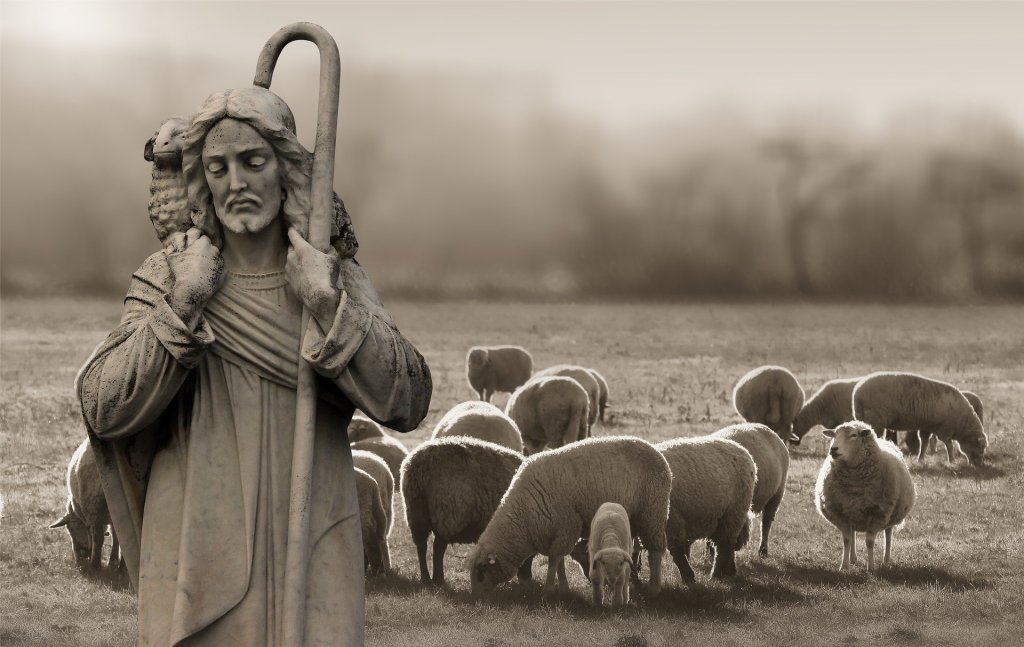

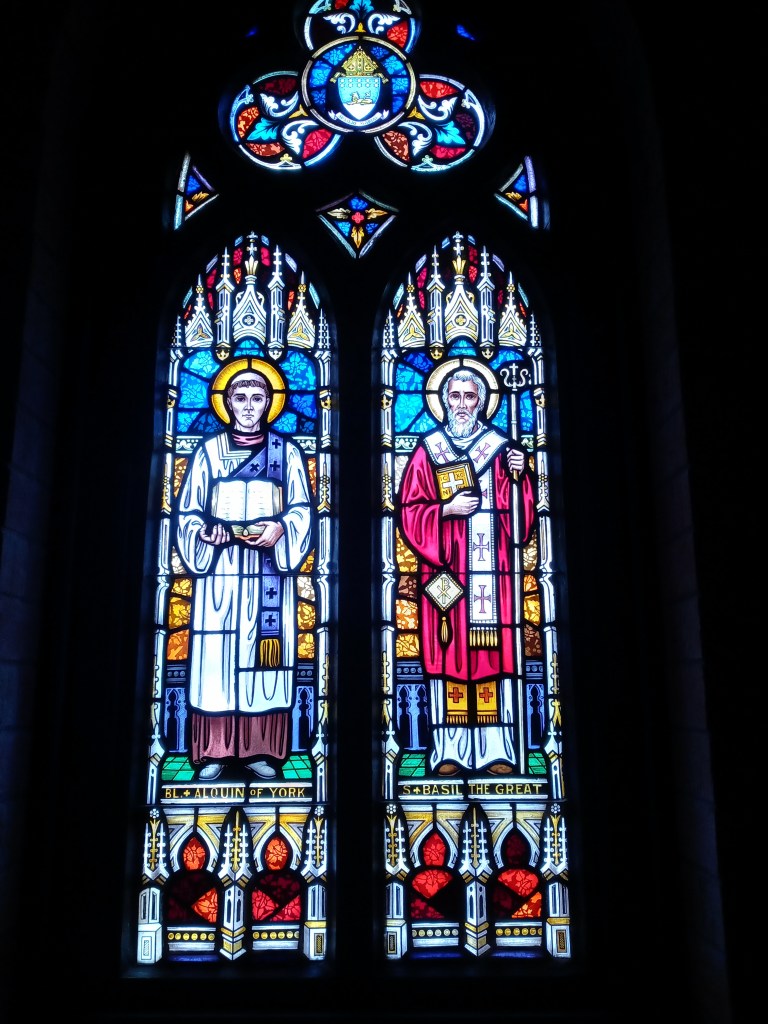


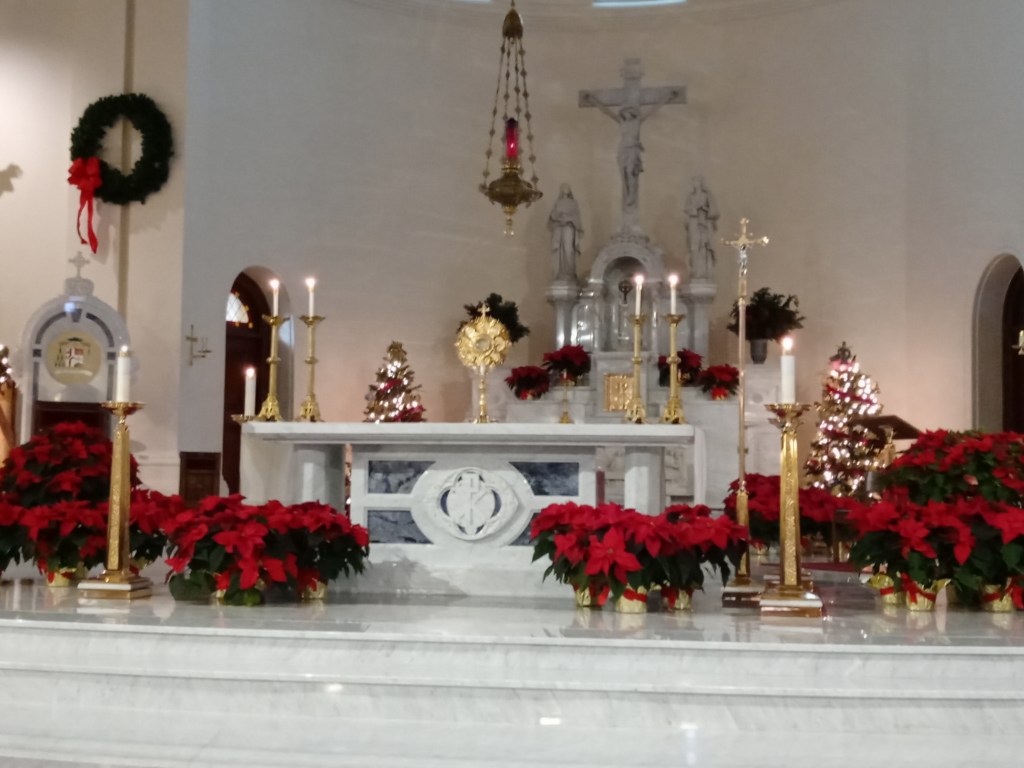
 Flourish Catholic