How do Catholics face temptation?

Let’s clarify a couple of big truths that help us get the “lay of the land” about the Catholic approach to temptations to sin.

First, temptation itself is not a sin! We are human beings—a complicated and mysterious collection of impulses, thoughts, feelings and desires, over which, sometimes, we have little control. And temptations do not only arise from our own weaknesses and vulnerabilities—they can also originate from the Evil One seeking to distract, delay or derail us. Even Jesus, Himself, was tempted in every way we are, though He did not sin. So experiencing temptation does not mean that one is a hopeless sinner bound for hell.

Second, temptation is not harmless and must be resisted! Just because temptation isn’t itself sinful, that doesn’t give us leave to seek, welcome or court temptation—as we allow temptations to gain a foothold in our hearts and minds, temptation moves to choice, thought leads to desire which leads to the engaging of the will. Allowing temptations free rein in our thoughts and hearts is an unwise strategy. It’s playing with fire.

Third, we experience temptation in the depths of our hearts, in our thoughts, in our own desires—but we are not fighting this battle alone! God is not somewhere far off, aloof, waiting to see if we’ll fail. He is beside us, within us, loving us with a power, an eagerness and a vision that we cannot begin to comprehend. God intends good for us—the greatest good. He is not the source of our temptations. The Bible is clear about that—God does not sin and He tempts no one to sin. But He allows us to struggle with temptation for His good purposes—for our greatest good. No matter what temptations we struggle with—God is with us and giving us every help we need to overcome the temptation. We may, through God’s divine Providence, end up with greater virtue, greater graces, than if we hadn’t faced that temptation in the first place. In fact, I think God often allows us to struggle against the most shameful temptations to destroy our pride and grow in humility.

These are the three basic realities Catholics start with: ONE, temptations aren’t in themselves sinful (so don’t despise yourself); TWO, temptations are dangerous to ignore (so don’t excuse yourself); and THREE, God is with you: He is not the source of temptation and He is eager to help you in your struggles (so don’t lose hope).

“Temptation to a certain sin, to any sin whatsoever, might last throughout our whole life, yet it can never make us displeasing to God’s majesty provided we do not take pleasure in it and give consent to it.”

St. Francis de Sales

Now that we have those ideas firmly in mind, let’s talk about how to face and overcome the temptations that come our way. I’ll share two stories to help you remember these tips and techniques.

The first story comes out of my passionate love for Arabian horses. Growing up a middle-class kid in the suburbs, I never had a chance to own the horse of my dreams—or any horse! But that didn’t keep me from pouring over the Arabian Horse World magazine that came to my house every month. When I was a teenager (so, a long time ago!), I read an interview of one of the old-time breeders of top notch Arabians down in California. This man, John Rogers, had acquired one of the most beautiful Arabian stallions in the world—Serafix—from a famous stable in England. Rogers knew that his farm would become even busier with Serafix on the property, so he had recently hired a man to be his new stable manager, Murrel Lacey. Rogers was giving Lacey the tour of the place and began commenting on what he wanted done.

My pencil drawing of the beautiful Serafix from a photograph taken by Johnny Johnston.

He walked by Serafix’s stall and grumped to Lacey, “There’s that damn rooster! He sits there like he owns the place, and crows and drops feathers and craps all over that stall door. I want something done about that rooster, it’s driving me crazy!” Rogers relates that after he finished his grousing, Murrel strode over to the stall in his cowboy boots, reached out his hands, grabbed that rooster and wrung its neck. Problem solved!

Okay, that’s a bit shocking to visualize, I know—but there’s a really great lesson here for us about the Catholic approach to temptation: just kill the damn rooster! If there’s some evil temptation that is, symbolically, acting like it owns your heart, raising a ruckus in your life and making messes everywhere—just get rid of it! Stop talking and complaining and thinking about it and take action. It’s amazing how many days, weeks, months, even years go by as we fuss and dislike a recurring temptation, but we never do anything about it!

God has given you a share of His authority—you have the choice and the capacity to not let your temptations run rough shod over your life. But you can’t be a bystander and a complainer about your own life—you need to act.

Renounce evil. Resist temptation. The Bible reminds us that sin speaks to our hearts, but we can resist it—stand up to the devil, and he will flee from you. Have the heart of a warrior—and know that when you resist temptation and reject the devil, you have some powerful allies in this battle: St. Michael the Archangel, the heavenly hosts, all the saints in heaven, and the Almighty Lord Himself! Call upon them! When temptations assail you, when they try to beguile you and weaken you—when they crow and crap and try to take over, stride forward, grab that rooster, and … well, you know what!

Now, this doesn’t mean that temptations will immediately disappear when you wade in and resist them. Anyone struggling with a difficult compulsion or addiction knows this isn’t true. But, really, we are all sin addicts, aren’t we? Just let us get a little sleep-deprived, or low in blood sugar, or frazzled, and suddenly we are giving in to temptations to insult, gossip, lie, steal, hurt and worse! Behaviors we thought we vanquished back in middle school can reappear with shocking and distressing frequency! It seems that once we get rid of one rooster, another jumps on that stall door and starts the crowing and messing all over again!

Don’t get discouraged! Our Catholic vision of spiritual battle teaches us that we are not promised success according to our timeline, but we are called to engage! To struggle and try, to call upon reserves we might not even believe we have and refuse to be mastered by anyone or anything but our One True Master—our Loving Father in heaven.

“The greatest danger for a Christian is to underestimate the importance of fighting skirmishes. The refusal to fight the little battles can, little by little, leave him soft, weak and indifferent, insensitive to the accents of God’s voice.”

St. Josemaria Escriva, Christ is Passing By, 77

So, with the story about the rooster, I’ve explained how the Catholic Church encourages us to wade into the battle with hesitation, confident in our authority and our ability, in the name of Jesus Christ, to face and renounce the temptations that come our way. I’ve also encouraged you to persist in the struggle—that just because we choose to resist temptation doesn’t mean that God is going to quickly remove it from our lives. The victory comes through the struggle, in enduring. Victory comes when we surrender to God alone, not to our own expectations of success and especially when we refuse to surrender to temptations. This is how we deal with the temptations that assail us from outside ourselves—from other people, from the Evil One. What about those that originate inside ourselves—from our own weaknesses, thoughts and emotions running wild?

So to address that aspect of temptation, we need to explore another lesson rooted deep in our Catholic culture: the hard work of self-discipline and self-mastery that is the life’s task of every Christian. Once again, I’m going to use an analogy that has to do with horses.

Another thing I love to learn about is the process of training called “natural horsemanship”—it’s a process of learning to speak the language a horse understands, and then asserting yourself as the leader of your horse’s “herd”—in a way that is gentle, perfectly understandable to the horse, and focused on becoming a team. I love watching the amazing process of a trainer entering an arena with a “literally” wild horse and, in the course of a couple of hours, having that horse calm and trusting and willing to submit to being ridden.

In addition to just being cool and exciting with regard to horses, there’s a critical spiritual message here for us about the spiritual struggles we face against temptation: be patient and work with yourself, not fight against yourself. In this analogy, your will or your soul—the part of you that decides and chooses and judges—is the rider. Your emotions, thoughts, impulses and body are like the horse. This is a classic Catholic understanding of the human person—we are created as a hierarchy of components or dimensions—will controlling thoughts and emotions, making decisions about how to respond to impulses and the body’s needs in ways that serve the whole self. Ruling, with gentle and firm dominion, over the “lower” parts of our human nature—so that we can harness that energy, vibrancy, and power on our pilgrimage through life.

Our fallen human nature wants to turn us upside down, so that our bodies’ needs and our emotions rule what we think about, and then our thoughts running wild dictate our judgment about what is right and wrong. This is analogous to the horse grabbing the bit and running away from the rider. It’s a sure way to get nowhere, to be frustrated, and it’s dangerous. The same is true for you—the job of a Christian is to cooperate with God’s design for our humanity. That’s how we journey to heaven—as embodied souls, whole and integrated, with our souls in command and choosing. If your goal is to get to heaven, then you’ve got to take control of the wild horse you’ve been given and work together!

We Catholics do not believe our bodies, emotions, and thoughts are depraved—we are fallen, sinful beings, yes, but still we are made in God’s image and likeness. Each person is a magnificent, unrepeatable, precious creation of God. So, getting control of this wild horse we ride through life should not be the equivalent of bronco-busting! We do not want to break the spirit of this horse. We don’t hate it or reject it or want to beat it down and force submission. This is a recipe for failure, for weakness, for deep sorrow and frustration.

So, the way to resist temptations, then, is not to beat down the self, but to redirect our energies—we need to patiently work with our selves in the same way a good rider can take a fractious, undisciplined colt and turn him into a winner! It’s amazing to watch a good rider begin to teach a young horse how to work together—infinitely patient, asking often, ignoring foolishness and failure, rewarding every instance of cooperation and submission.

What if we treated ourselves this way? What if, instead of doing the equivalent of getting out the riding crop, the painful bit and spurs, the raging anger, we just took a deep breath, recognized the challenge, and tried again? How often, when fighting temptations to sin, we also end up rejecting the God-given gifts of emotions, desires, thoughts and energy. These parts of us have been twisted and misused, yes, and must be corrected and disciplined—but not destroyed!

A good rider understands that a young horse can’t fully comply with his requests—he doesn’t have the ability to concentrate, the presence of mind to submit while retaining impulsion and energy, and he isn’t physically capable either. A good rider is patient, breaks complicated movements into smaller, do-able pieces, and gives his horse confidence to be unsure, to try, without fearing punishment. A great rider looks for long term success, not short term gains that sacrifice true training. Again, what if we treated ourselves this way?

Do you struggle with a temptation that has been controlling you for a long time? Don’t feel up to the challenge? Be patient! Focus on the performance you desire, not the bad behavior you’re getting! Break down the virtue you need into small steps—take them, ask yourself often, ignore bobbles and missteps, and reward effort.

“Don’t let discouragement enter into your apostolate. You haven’t failed, just as Christ didn’t fail on the cross. Take courage! … Keep going against the tide.”

St. Josemaria Escriva, The Way of the Cross, 13th Station

Know that, over time, your will can gain greater control of your body, emotions and thoughts—and then your energies, power and vitality can be harnessed to progress even further in virtue. Life becomes a joy and a great adventure—the way forward to the life Jesus desires for us: “I came that you might have life, and have it to the full.”

Perhaps the worst temptation we can give in to is to feel hopeless, discouraged and alone—that’s the very atmosphere of hell. Our Catholic vision of the human person is that we are designed for greatness, for excellence, by the grace of God and by the support of the communion of saints that surround and inspire us. Never give up on yourself, never consider yourself too far gone, too sinful. Grace is always available to us. God’s mercy is unlimited, unless we refuse to seek it. God’s deepest desire is for you to be whole, vibrant, fully alive and united forever with Him. This is the reason to fight temptation—so that we can embrace the truth about ourselves and our destiny!

Let’s review our two images from my “horse stories.” First, when temptations assail you, don’t let them enter your heart and mind and make a home there—remember that rooster! Second, to discipline yourself to pursue virtue and avoid temptations, remember the image of the horse trainer. Work to exercise the kind of righteous and Godly dominion over yourself that leads to a partnership, a marvelous dance, a union of will, mind, emotions and body that allow you to race toward your goal—with all the beauty and complexity and vitality that God designed a human person to possess.

Our Catholic vision of fighting temptations is not so much about focusing on the temptation at all, really—it’s about focusing on virtue, on Godliness—and in this way, we take out the power of the Evil One from the start. If every time we are tempted by what is unholy and sinful, we turn to the Lord, repent and seek His help, God will be served and we will come out victorious in the end. Do not be afraid! If you endure, victory is assured!

So where is it that we get help to deal with temptations in these ways? From prayer, the Bible, good counsel, but especially in the confessional—the Sacrament of Penance! Whenever you fall into sin, turn to the Lord’s mercy, confess your sins and receive absolution—your sins are removed, destroyed, wiped away! The grace poured out into your soul through a good confession will sustain you, heal you and inspire you. God is, after all, so much greater than the evil that seems to surround us—both the evil coming from outside and the evil inside us.

How do Catholics view faith?

“Therefore I intend always to remind you of these things, though you know them and are established in the truth that you have. … And I will see to it that after my departure you may be able at any time to recall these things.” (2 Peter 1:12,15)

The word faith is used in so many different ways—we can speak of faith as something we cling to or guard or grow or lose. We talk of “losing faith,” or of “practicing the faith,” or of having faith in someone or something. We refer to blind faith and sure faith and lukewarm faith. But what is faith?

Faith is the human response to God’s invitation to be in a relationship with Him. God is always the initiator, the one who begins a relationship with us. This happens through His Divine Revelation—making Himself known to us through Sacred Scripture (the Bible) and Sacred Tradition. Sacred Tradition, some of which was written down in the Bible, is the fullness of the teaching and ‘culture’ of discipleship given by Christ to the Apostles and carried forth to our own day.

God initiates a relationship with us in big, life-changing ways as in a moment of profound conversion. God also uses less dramatic means—a conversation with someone that just won’t be forgotten, a moment of clarity, an experience of true sacrificial love, or an experience of a profound beauty, truth or goodness in God’s created world.

Faith is the term given to the way we say “yes” to God’s presence and God’s revelation. We give our assent—as free, rational beings—to taking on “the yoke” so to speak with Christ: submitting to the truths of faith so as to live by them.

The assent of faith comes from and affects the entire human person. We know the truth, we love the truth, and we choose to live by it—uniting reason, emotion, and will. Catholics do not try to place one of these avenues of response as greater than another—if reason is over-emphasized, faith becomes cold and calculating. If emotion is over-emphasized, faith becomes rootless and changeable. If will is over-emphasized, faith can become an exhausting “to-do” list.

Since faith responds to God’s initiative, it requires action from us. The way God asks us to respond is through Baptism and incorporation into the company of Christians—becoming a member of His family as adopted children. We profess a faith (or parents speak on their child’s behalf) that we did not construct and cannot alter. Faith is incarnational (putting ‘flesh’ on an invisible foundation) and sacramental (using visible signs to point to invisible realities). We practice a faith that depends upon communication with others—a sort of “holy communion” if you will between those who know God in intimate friendship and those who are seeking what they do not yet know.

“Yes, dear friends, God loves us. This is the great truth of our life; it is what makes everything else meaningful. … To abide in his love, then, means living a life rooted in faith, since faith is more than the mere acceptance of certain abstract truths: it is an intimate relationship with Christ.”

Pope Emeritus Benedict XVI, World Youth Day, August 21, 2011

Faith is communicated by introducing a person into a relationship with God—and then by accompanying that person as the relationship forms, deepens and strengthens. Faith is an apprenticeship into a way of life, not an indoctrination into a viewpoint or an offering of “life hacks” to solve problems or enrollment in a vast army of “minions” out to serve the Master as cringing slaves or greedy mercenaries. No, faith is being welcomed into a family—and taught how this particular family “does things” and “see things.”

Catholics profess that faith is personal, but not private—there is an inescapable corporate dimension to faith. How could there not be, if faith is being brought into the family of God? This is why Catholics are encouraged to live their faith in the public sphere—we cannot simply conceal our faith within the confines of our local parish or within our homes. Faith completely changes who we are—the way we go about things and the reason or purpose behind our actions. Faith is nurtured by a community of believers—and faith is meant to be expressed to those who don’t yet believe so that they, too, can come to know their Creator.

That invitation to explore and embrace the faith must respect the freedom and dignity of the seeker. We cannot impose faith on others, only propose faith. We do so with urgency—faith in God is the best thing a person can ever choose! We do so with certainty—God loves every single human being ever created and eagerly wants them to know Him. We do so with patience—God takes the long view and has our ultimate good in mind. He is ready and willing to lead us through the tangled mess of life rather than damage our mind, heart or will by overwhelming us beyond our capacity.

Catholics aren’t noted for being very evangelistic in our behavior—we don’t regularly go door-to-door, stand on street corners, invite strangers to worship or pass out leaflets in the neighborhoods to share our faith. We do, of course, have people who do all things with great love and sacrifice and sometimes to great effect. We Catholics like to evangelize by example—to let our attitudes and actions preach the Gospel to others. This is a great approach, as long as we can and do share the Gospel with our words when asked “the reason for our hope!” (1 Peter 3:15) Our “lived example” approach can be quite effective if we accompany it with the invitation to come and enjoy what we possess—otherwise, we become like zoological exhibits: quaint, interesting and safely “behind bars” for others to watch.

I wish Catholics would be more willing to step out and speak about their faith. We have what everyone needs—the fullness of the faith Jesus Christ came to proclaim and the means to fully live in that faith here on earth! In over three decades of ministry in the Rite of Christian Initiation of Adults, I have observed that almost every one of the hundreds of people who finally made the decision to join the Catholic Church did so at the invitation and support of a family member or close friend. They were invited, welcomed and introduced to the faith by someone they trusted—and then they were given the space and dignity of questioning and searching until they reached a conclusion. This is how we share faith best: within relationships where we know (and join in) the struggles and triumphs of those we are evangelizing. But if the people closest to them never invite them to consider joining the Church, who would they listen to?

Another quality of faith is the way we cling to it—faith is firm and rooted in trust. We respond with complete trust to the God who loved us into existence and is loving us to our eternal destiny. Our faith is firm because we have placed all our trust in a God who is truth and who will not lie. We can trust God’s motives, His methods, and His ultimate plan. We can trust God’s power to achieve what He sets out to achieve for us. We can trust God’s ability to know and to take into account all that will happen to us throughout our lives—for God’s dominion is exercised in such a way as to preserve our free will, not to manipulate or obliviate it.

“To fall in love with God is the greatest romance; to seek Him is the greatest adventure; to find Him, the greatest human achievement.”

St. Augustine of Hippo

Faith is trusting in the vision even when we can’t quite see it. Faith is hoping in the promises even when they haven’t yet been fulfilled. Why is faith reasonable, then? Because it’s rooted in a relationship with God—and because we understand that there is no other god! We have no alternative, really: God is God, we are not. When this God reaches out to touch our hearts, captivate our minds and unite us to Himself, we make the choice to believe—and in choosing to believe, we open ourselves to even greater revelations of His love.

Faith can be strengthened by learning and reason—and I consider it vital to engage the intellect when seeking to grow in faith. But faith cannot be sustained solely upon knowledge. Faith isn’t irrational, it is arational (beyond reason). The statements of our faith provide the structure, the boundaries, the “bones” of faith—but the life of faith is rooted in relationship, not in knowledge. Faith is nourished by and engenders love—not information.

I think about the days and weeks that followed the birth of each of my children. Upon bringing that darling baby home from the hospital, much learning commences! I paid attention to and learned the temperament of each particular baby—what made him comfortable, what helped soothe him, how he would tell me he was hungry or needed a diaper change or just needed to fuss. I spent hours gazing at my sleeping babies, loving them and wondering at their preciousness to me and seeking to do what was best for them. I learned the sound of their different cries and watched in delight as they developed a personality and the ability to communicate with smiles, coos and motions. Parents aren’t “robots” who dispassionately seek data in order to meet needs. We fall in love with our babies, and because we are so madly in love, we want to know all about them and how we can best care for them.

Now, when we think about our love for God, we of course realize that we are in the place of the baby (even farther away from his capacities in fact!). We are completely dependent upon God and can provide nothing God needs—God is God after all. But the fact is, He loves us in a way that makes the powerful love of a mother for her baby pale in comparison. And we, basking in this love, come to love Him back—and because of that love, we want to know Him intimately. And that’s what He wants from us: love. Not because He needs love to feel fulfilled and complete, but because the nature of true love is generous fertility—a creative force that multiplies in exponential growth as it is shared and exercised.

There is nothing we possess that God wants—except our love. God asks for our love because, if we don’t give it to Him, there is no other way for Him to receive it. Our love for God cannot exist without having faith in Him. But faith alone is not enough—even the demons believe that God exists and that there is One God. But, in their pride, they hate the source of love and refuse to submit to Him. Faith, to be salvific, must be united to love. When we love the One in whom we have put our faith, well, that’s when the relationship grows, deepens, stretches out and, ultimately, takes us all the way to heaven.

“O Lord, you first loved us so that we might love you–not because you needed our love, but because we could not be what you created us to be, except by loving you.”

William of St. Thierry, Abbot (from the Liturgy of the Hours, Office of Readings)

Because faith is our free response to God’s invitation to be in relationship with Him, it involves the whole person. Faith in God cannot be put in a little “box” within our lives and divorced from our behavior, our speech and our attitudes. Since we were created as embodied souls—a union of spirit and matter—and destined to live forever in heaven as embodied souls (at the end of time), then it makes sense that the faith of our soul must be embodied as well.

There is, ultimately, no necessary conflict between the faith we hold in our hearts and mind and the faith we express in our actions—the whole faith versus works distinction falls apart when one carefully defines what faith is. If faith is simply an “A-OK” thumbs up response to the truth that God exists and that He can save us, well then works would not be a part of faith. But if faith is an assent to be in relationship with God because one believes everything God has taught us about Himself and about the way to eternal life, then faith is necessarily reflected in our actions.

We don’t think much about people who pay us “lip service” of love, affection, admiration, loyalty and then do no actions to express these things. Watching someone drown, assuring them of our love and belief in them, as they sink under the waves without trying to rescue them surely shows no true love. Faith in God requires a complete handing over of ourselves to the One who IS GOD—and this means faith shines out of the attitudes we express, in the words we say, and in the things we chose to do and not do. Faith without works is a dead faith, a demon faith.

But actions without faith are of little use. Faith’s goal is union with God. When “good” things are done without faith in God, they lead nowhere lasting. When we Christians get too caught up in acting and doing as ends in themselves, we risk weakening the underpinning of our life: seeking union with God in holiness of life. This is why the Church warns us against simply doing works without the explicit love of Christ—we can never settle for being simply one more aid organization, one more NGO, intent on advancing policies that benefit people in their earthly existence. We cannot ignore people’s earthly needs, of course! But let’s be clear about what it is we can and cannot achieve. Poverty, disease, disasters and war are not the ultimate tragedies—eternal life separated from God is the ultimate tragedy! And perhaps, what we must humbly admit, is that the needy, the destitute, the marginalized are often much father along on the journey to heaven than we “privileged” helpers are—it is we, the satiated and insensible and lukewarm, who desperately need to give in order to make room for God in our lives. We, those who are wealthy in the world’s way, are dependent upon those who suffer due to our collective greed and false ambitions.

Christians seek to give humanitarian aid to honor the God who is the giver of all we have and who is present, in a powerful way, in the hearts of those who are poor in spirit, meek and persecuted, the truly blessed. We seek to alleviate suffering out of love for the person—and with a deep respect for the dignity of every human person whom God has loved into existence from the moment of their conception. In faith, then, we recognize each person as a real or potential brother or sister in the Lord—someone destined for eternal glory and with whom we will dwell forever in heaven.

Heaven is the goal of faith—no earthly goal should distract us from this truth. Faith is not “good” for us because it is a way to assure good health, repair broken relationships, send business contacts our way, or build up our wealth. When we focus on impermanent and self-centered purposes of faith, it rapidly becomes a form of economic transaction. We do the right things, “pay our dues,” and expect God to provide us with the things we desire. How many people do we know who have said something like, “I refuse to believe in God anymore. I went to Mass every week, prayed and did all the right things, and still, [fill in the blank] happened. What’s the point of believing?”

It can be so hard to cling to faith when we face crushing defeats, wrenching loss and terrifying situations. This is when the communal aspect of faith becomes so important, as we “bear one another’s burdens” (Gal 6:2) and as we build each other up with encouragement (1 Thessalonians 5:11). Faith, being a sure and certain trust that what God says is true, is a handing over of one’s life to God. Faith is not rooted in economic contracts, but in a covenant of love. We believe because God is truth itself, not because believing gets us what we think is best for us. The gentle, supportive love of fellow believers can help the grieving, suffering person to remember these truths of faith.

Faith, as our assent to God’s invitation to know Him and love Him and serve Him, can be weakened and even lost. Sometimes a person’s faith is lost when they face something that breaks their trust in the goodness or power or love of God—the suffering and death of a loved one, for example. Other times, faith seems to slip away quietly and without fanfare, being relegated to a boring past-time or distasteful “chore” that dampens our enthusiasm and commitment. After a while, we may look up and notice that faith has disappeared out of our lives and we can’t even explain why—or when. It just happened.

Some of our Christian brothers and sisters speak of faith as something that can’t be lost. Once a person is “born again” and professes faith in Jesus Christ as their Lord and Savior, then they are saved—no matter what they do after that point or whether they even keep believing. We Catholics side with St. Paul in this matter, who describes the tragedy of those who make a “shipwreck” of their faith. Since faith is my assent to God’s revelation, I can reject, renounce or revoke it. God, however, is faithful—He will not reject us. But His love cannot penetrate our hearts or have the desired effect if we refuse the gift. Faith’s goal can be lost to us if we refuse God’s offer of eternal life.

Heaven is God’s gift, hell is our choice. Hell may perhaps be populated by those who claimed to be Christians, but who rejected their Baptism, separated themselves from God through unrepented mortal (deadly) sin, and refused to allow the love of God to move their hearts. We do know that all who cry out to God in faith will be saved—for He longs to fulfill His plans for us. He is love and mercy itself.

This is the mystery of faith—the clouded and unclear way in which God’s loving plan for us and all humanity incorporates our free will. In heaven, faith will fall away from us as we encounter faith’s goal—the very face of God, with the veil removed forever. Faith is essential on earth, unneeded in heaven. The Church’s mission, therefore, is to guard and support each person’s faith until it takes us to Gods’ kingdom—where it can be laid down as we are received into the eternal embrace of the Most Holy Trinity. We cling to faith, we guard it as a treasure, and we pass it on to others in the hope that all will be saved and come to the knowledge of the truth. This is the joy of faith: eternal life!

What does the Church mean by “Doctrine”?

One aspect of the Catholic faith that either delights or offends people is the Church’s careful delineation of Divine Revelation—and its implications for everyday life. Doctrinal statements define those truths revealed by God. As such, we are expected to believe them and conform our lives to them—they are, by definition, the shared beliefs of anyone who claims to be Catholic.

“Continue in what you have learned and have firmly believed, knowing from whom you have learned it.” (2 Timothy 3:14)

The term “doctrine” is mostly synonymous with “dogma.” The terms are defined together in the glossary of terms found in the second edition of the Catechism of the Catholic Church. Both terms refer to the formal declarations of the Church that must be held to be revealed by God and therefore true by all who claim membership in that Church. Dogma is the term I notice being used when describing the fact that a teaching is universally held by members of a church. Doctrine is the term usually used when referring to the content, or the definition, of the dogma. So, doctrinal statements define dogmas of the Church.

Doctrine comes directly from the sacred deposit of faith left to the Church from the words and teachings of Jesus Christ. Doctrine, therefore, originates in the Apostolic Tradition preserved in the Church—if a doctrine cannot be traced to antiquity and if it is not universally held within the writings of the Apostles and their immediate successors, it cannot be considered doctrine.

“When we accept the Faith which the Church proposes, we communicate directly with the Apostles… and through them we communicate with Jesus Christ, our first and only Teacher. We go to their school, as it were, and overcome the distance of centuries that separates us from them.”

Saint Pope Paul VI, Address, March 1, 1967

Doctrine, because of its origin in Apostolic Tradition, is usually defined by Biblical statements, but not always. Not everything that Jesus taught the Church can be located verbatim in the Bible—the Bible is one repository of Apostolic Tradition, but not the only source. Jesus taught and did many things that are not recorded in the Gospels—St. John even explicitly says this (John 21:25). Jesus’ great “Bible study” of the Old Testament which he gave to the disciples on the road to Emmaus is another part of Apostolic Tradition that is referenced in the Bible, but not described (Luke 24:27).

The standard that always applies is that doctrine does not contradict Scripture—doctrine is not always directly stated in the Bible, but nothing in the Bible opposes doctrinal statements. A good example of this is our doctrine about Mary’s Assumption to heaven. We hold as truth revealed by God that Mary, at the end of her earthly life, was assumed body and soul into heaven. While we cannot point to any one scripture verse that states this doctrine, there are hints and foreshadowing that tell us this doctrine contradicts nothing in the Bible.

First, there are two other examples of people described as being assumed into heaven—Enoch and Elijah. In the Bible, death and decay are a result of original sin. If someone was born without the stain of original sin on their soul, it logically follows that death and decay would not be part of their experience of entering heaven. There is a vision of Mary as queen of heaven, the “ark of the covenant,” in the Book of Revelation (12:1) that supports our understanding of Mary’s unique place in God’s plan of salvation. We see Mary as the exemplar, the first disciple, the one who receives first from God what is promised to all His disciples—so our doctrine of the Assumption of Mary points to the promise we have all been given regarding the “resurrection of the body.” Mary, because of her irreplaceable role as the Mother of God, has simply received “ahead of time” what we believe will be given to all who enter God’s kingdom of heaven.

This doctrine, then, describes a belief that the Catholic Church solemnly holds as a truth given us by God. It must, therefore, be held by all who profess the Catholic faith. But let’s be clear—the actual doctrinal statement is very brief, and the various ways it can be interpreted (even by saints and popes) are not doctrinal. There is room for creativity and exploration—within the boundaries of the doctrine. This ‘free play’ with limits is typical of a Catholic approach to intellectual freedom. We are free to think, but to think well, to think honestly, to think with excellence and in pursuit of truth. We are not free to misuse this freedom to create doubt, to mock, to propose ideas for the sake of novelty or notoriety, or to be “creative” to justify immoral behaviors.

Doctrinal statements don’t come out of thin air, they don’t arise out of the whim of a Pope or a Council. Doctrinal statements come out of a great deal of reflection, discussion and debate—they are rooted in prayerful reflection and submission to the Holy Spirit. When a pope wishes to declare a doctrine, he must explicitly say that he is ‘speaking from the Chair of Peter’ in union with the Apostolic successors as giving voice to the Magisterium (teaching authority) of the Church. Ecumenical Councils can also define doctrines in their official statements—but still, most of what they produce doesn’t rise to the teaching authority of doctrine. For example, there are no new doctrinal statements even in the most authoritative documents that came out of the Second Vatican Council—but the documents do use updated ways to define and defend dogmatic (doctrinal) statements (i.e. the Dogmatic Constitution on the Church, Lumen Gentium).

[Pope Paul VI cited St. Vincent of Lerins standard about doctrine]: “‘What has been believed everywhere, always, by everyone’ must be preserved as part of the deposit of faith. … The Creed does not change, it does not get out of date. It does not disintegrate.”

Pope Saint Paul VI, General Audience, September 29, 1976

Doctrines are rarely promulgated, because our Apostolic Tradition has already defined the most central and critical elements of our faith within our Creedal statements and in the councils of the early Church’s history. But some wonder why certain doctrinal statements come so late in the game. Why, for example, is our doctrinal statement about the canon of Sacred Scripture not defined until the Council of Trent (beginning in 1545)? Because doctrinal statements are defensive by nature.

I liken it to the way parents “define the dogma” of house rules. As the kids grow up, kids tend to push the boundaries and see what they can get away with. So, the doctrine of curfew, for example, must be more carefully defined. “A curfew of 10pm means you are walking in the door at 10, not that you are calling me by 10 and telling me why you’ll be late.” Parents are faced with defining a house rule when kids try to push past it, use it in ways it’s not meant to be used, or try to “water it down.” The Church defines doctrine in the same way—as long as the beliefs are already shared, used correctly and not “interpreted” in untrue ways, the Church is content with leaving some things “unsaid” because “everyone knows it already.”

The Church’s work in the late 200’s and early 300’s to define the doctrine concerning Jesus Christ is a great example. As false teachings arose about Jesus—that he was simply a human adopted by God as His “son,” or that he was God who only appeared to be human but wasn’t really a human person—the Church needed to carefully and explicitly state her belief about Jesus being truly human and truly divine. She spoke the truths revealed to her by God, held since Apostolic times, and universally confessed by the Church as a whole. But she used new methods to define this ancient doctrine—including newly developed philosophical terms that helped the Church better describe the belief in two natures (human and divine) as a “hypostatic union” within the one person of Jesus Christ. This philosophical language is certainly not found in the New Testament writings, but it is rooted in, doesn’t contradict, and is an expression of the Gospel declaration of who Jesus is.

Doctrinal statements of the Church make use of advances in intellectual and pedagogical theory. Ancient doctrines are reformulated with updated language and insights in books like our Catechism of the Catholic Church. The term “Catechism” refers to an authoritative collection of doctrinal teaching. Our latest universal (for the entire Church, not one written for a particular location or culture) Catechism was released in 1994—the first universal Catechism released since the time of the Counter Reformation in the late 1500’s! The new Catechism of the Catholic Church is an absolute treasure for all Catholics—it incorporates the writings of the Second Vatican Council and extensive Scriptural references in order to explain and illustrate doctrines.

Many seem intimidated by the Catechism, but I highly encourage any person to open it up and read it—it is absolutely accessible to the average adult Catholic, especially with the resources available in the Second Edition which include a very helpful glossary and great index. If you don’t wish to purchase the Catechism, the entire document is available for reference on many Catholic websites, including the Vatican’s website and the U.S. Catholic Bishop’s website.

The Catechism is arranged in such a way as to allow a person to explore topics of interest to them—you do not have to open it at the beginning and read it straight through (that’s fine, to do, of course!). Once the reader gets used to the organization of the Catechism and the style of numbering paragraphs, it is simple to navigate. The Catechism’s organization is instructive in itself—the mystery of our Catholic faith is described in terms of what we profess (our Creed) in Part I, how we celebrate and worship in Part II, how we behave and make moral choices in Part III, and how we communicate with God in prayer in Part IV. This is the same organization found in the ancient Catechisms of the Church.

The Catechism of the Catholic Church contains doctrinal statements, but it also offers instructions and guidance at a lower level of authority. This can frustrate some people who simply want a clear list of the Church’s doctrinal statements and nothing else—no gray areas and no “suggestions.” But the faith is too complex and the Body of Christ is too diverse for this simplistic approach. A human body has systems and organs that are absolutely central to life—the brain, the heart, the lungs. Other parts of the human body might not be essential, but allow a person to live a fuller, more enjoyable life—eyes, arms, and legs, for example. The same might be said of the teachings of the Catholic Church—the doctrinal statements comprise the essential organs necessary for life. The other teachings lead to a fullness of life, expressing vibrancy and capacities far beyond simply “surviving.” I suppose one can be Catholic without praying the Rosary or adopting certain prayer techniques such as Lectio Divina or following the “rules” of our great saints and founders of religious orders. But that kind of Catholicity is impoverished and sterile. Life is richer and faith is more lively when one goes beyond the “bare bones” doctrines.

Teachings that aren’t doctrinal statements (not dogmatic) often apply doctrine to particular situations in the world. A good example is the application of church teachings regarding the dignity of the human person to particular scientific methods of medical research. In these applications, we are expected as Catholics to learn church teachings and to have, as our ‘default mode,’ the willingness to adopt them. But, we can, in good conscience, ascertain a more appropriate alternative to the application of doctrine—one that necessarily still holds to the foundational truths of our faith and yet reaches a different conclusion as to its application in a particular situation.

The Church’s teachings concerning “Just War” theory and pacifism illustrate these efforts to apply doctrine to complex social situations. The Fifth Commandment, “Thou shalt not kill,” includes the doctrine of not destroying innocent human life. Yet, in defense of the common good and when preventing someone from killing innocent victims, the Church holds that it is morally permissible to kill an aggressor if there are no other means available to protect innocent life. It is also morally permissible to choose pacifist means as well. The choice is left open to the individual—as long as one continues to work from within the boundaries of “Thou shall not kill.” We need to remain in creative dialogue with those who interpret and apply doctrine in different ways—to refrain from making judgments and fomenting division. This is one way to observe Jesus’ command to love one another and to be one Body—the tension of varying interpretations can increase strength and mobility in the Body of Christ, just as “resistance training” can help the physical body. Our shared doctrine allows this creative tension to lead us all to search deeper into the mind and heart of God without sundering the Body through schism.

But our shared doctrine is not the essence of our faith—we do not profess our faith IN the creed at our Baptism. We profess our faith in God through the Creed. We are a religion of a relationship with God, Father, Son and Holy Spirit. We are not a religion of a book, a moral code, or even a doctrine. When faith becomes only allegiance to doctrine, it can become fanatical and barren of life—the bones without the flesh. But faith without doctrine has no strength, no structure—only softness and weakness—it’s flesh without the bones.

So, to be Catholic is to declare one’s adherence and obedient submission to the doctrines of the faith. This is repugnant to many modern Catholics, who subscribe to our culture’s relativistic attitude that there are no absolute truths and no objective source of truth, so one is free to make up one’s own truth. It is also repugnant to those who wish to behave in ways forbidden by doctrine—in order to rationalize “sin,” one simply says that the doctrine isn’t doctrinal and therefore one is free to ignore it.

The virtues of humility, obedience and courage are all required to adhere to doctrine. We need others to support us, and we need to support each other. Many could live the truths of the faith if they were admonished and corrected and guided by those who can speak the truth in love. Others need assurance and encouragement so they can find the courage to “swim against the stream” of worldly attitudes that exonerate and even celebrate sin as an exercise of freedom. Our doctrines provide the means and tools necessary for a full and joy-filled and fruitful life—but only if they are learned, remembered, put to use and shared.

Others find it repugnant to adhere to doctrines when some leaders and teachers at the highest levels in the church have failed to obey them or who have sinned grievously even as they claim to belong to and represent the Church. This is a particularly painful reality in the Church—and has been in every age, if we honestly confront our history. We claim to be one, holy, catholic and apostolic Church, founded by Jesus Christ on the Apostles—yet we are filled with sinners and with sinful institutions that protect and justify some sinners. What does this mean for those of us seeking to get to heaven by adhering to the doctrines of this sinful Church?

It means perseverance. It means courage. It means putting first things first and clinging to the truth even when that truth is preserved by the truly sinful. It means allowing no sinner and no sin committed against us or against other innocents to keep us from finding the fullness of life promised to us. It means allowing God to work good out of every situation, and trusting that, in the end, God’s just judgment will prevail. It means, inconceivably, that we pray for the conversion and salvation of those sinning within the Body of Christ—praying as Jesus did on the cross, “Father, forgive them…” It means finding within ourselves the capacity to locate the diamonds of our doctrine even when they’re buried in the mud of human sinfulness—and not mistaking their value because of where they were found.

It’s not easy. But Jesus told us as much: “In the world you have tribulation; but be of good cheer, I have overcome the world” (John 16:13). The Church holds up for us the ideal, the vision, the splendor of the goal—and then patiently and mercifully allows us to grow to our full stature in Christ. We who believe, including our leaders, all fall short of the perfection and holiness to which we are called. I recommend paying more attention to the leadership of Mary, Mother of the Church, and of the saints in heaven than to any crop of leaders current or historical—the “heavenly hierarchy” can sustain, inspire and intercede for us with true power. I recommend seeking the quiet, marginalized, ignored and energetic “nobodies” present in every parish, present throughout the world, who live the faith at a level of perfection and holiness that’s just short of heaven. They are the ones to look to, not the ones parading around in power, seeking an appreciative audience, and sounding more like lawyers in boardrooms or politicians seeking personal gain than shepherds who actually love the sheep they are charged with guiding. If a Catholic leader spends more time promoting or justifying himself than proclaiming Christ crucified and risen, then leave that wolf and find a true shepherd.

To understand the value and truth of Catholic doctrine, look in the places where the Gospel is truly lived and see the Church in her beauty, truth and goodness. Then the hypocrisies and divisions and outright egregious sins of the powerful or popular will be seen for what they are: ephemeral smoke, soon to be cleared by the healing wind of the Holy Spirit, soon to trouble and grieve us no more. Please God, may your Kingdom come, on earth as it is in heaven.

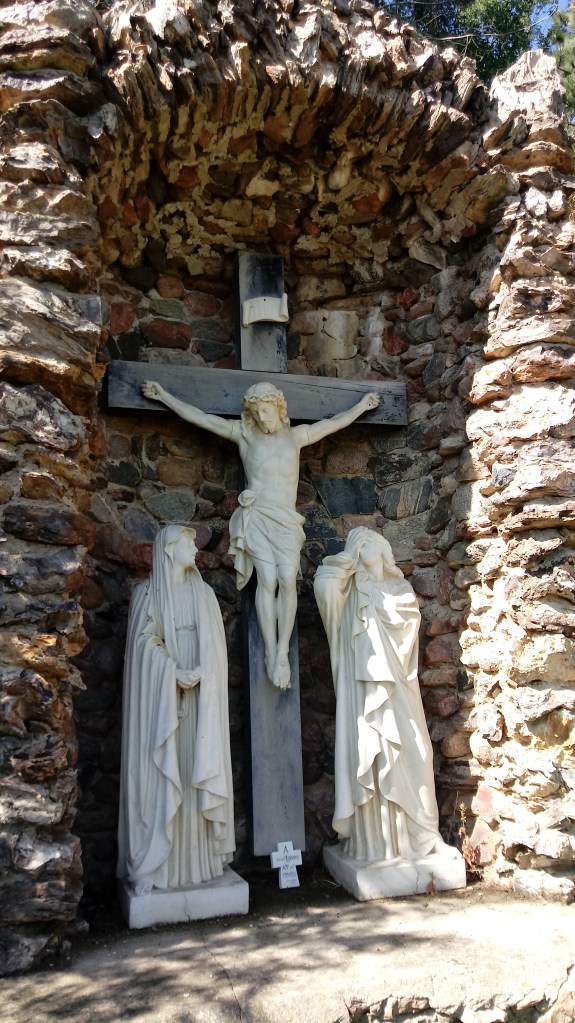
Why do Catholics use a crucifix and not a cross?

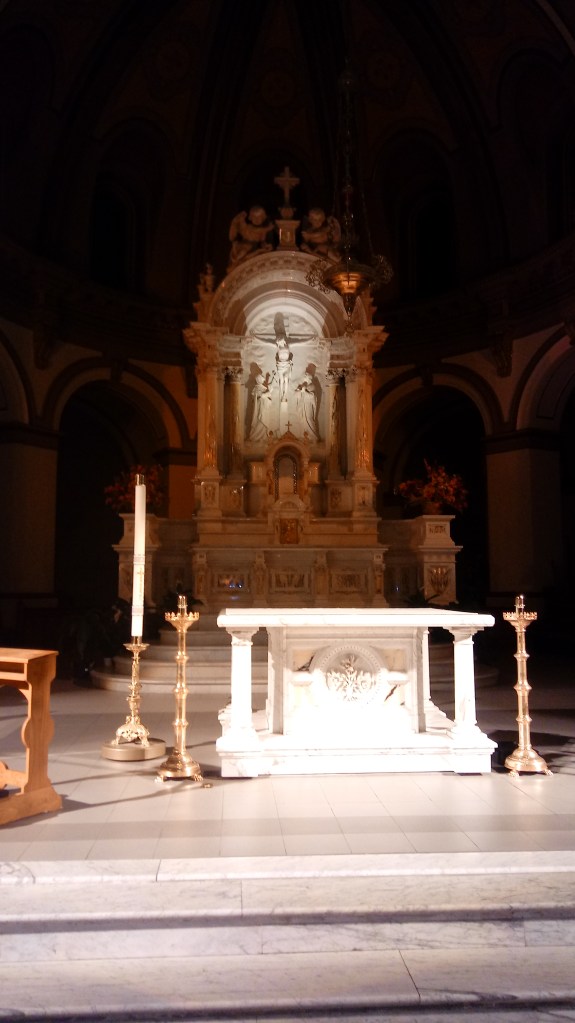
One way to confirm that you have entered a Catholic church is to look for 4 things: a tabernacle that houses the Eucharist, a font for holy water, statues of saints, and a crucifix in the sanctuary. Why a crucifix?

I vividly recall a conversation I had with a couple many years ago. The husband was having serious reservations about his wife learning more about and potentially joining the Catholic Church. One of his objections was the crucifix prominently displayed in our parish’s church.

“Why do you Catholics keep Jesus on the cross in your worship space? I worship Jesus risen from the dead! He did not stay on the cross, and Jesus on the cross should not be our primary focus when we gather for worship. How can I possibly explain to my little boy about the crucifixion—it’s such a horrible, bloody and violent act! I don’t want him to be thinking about Jesus’ suffering and tortured death, but about his glorious resurrection. This whole focus on the crucifixion in your church’s art and architecture just seems to forget the end of the story!”

Addressing his concerns really made me think hard about the crucifix. Why, in heaven’s name, do we Catholics keep “putting Jesus back on the cross”? Why can Catholics talk with each other about how beautiful a particular crucifix is when in reality it depicts the bloodiest, most painful and most humiliating way to kill a person even invented? Why do we see the crucifixion as a source of inspiration and comfort when none of us would ever wear little hangman’s nooses or firing squads or an electric chair around our necks or display them in our home?

I think this man was identifying something unique and critical to our Catholic culture, and it is worth exploring. Displaying a crucifix teaches the truths of our faith visually rather than verbally. But now, with elements of our Catholic culture so often hidden or dismissed even by those who practice it, it makes sense to verbally explain the “sign” of the cross.

When a Catholic gazes upon a crucifix, what do we see? Do we see an innocent man who is dying an agonizing death at the hands of a repressive regime? Do we see a commentary on the failure of good (and weak) individuals to overcome the enormity (and power) of evil? Do we see an indictment on humanity as we gaze upon the way we deal with those who are truly good, truly innocent, and truly pure?

No, those insights or lessons are not what the Church proposes when a crucifix is displayed. To unpack the real message, let’s begin with St. Paul. In his first letter to the Corinthians (1:17-25, 2:1-2), he spoke of the foolishness and weakness of God on display in the Gospel of Jesus Christ crucified. He referred to the “word of the cross.” The cross was meant by the Romans to speak words of warning and terror: don’t “cross” us who are your captors and rulers, or we will “cross” you in this terrible way. But God took those words of terror, of humiliation and suffering, and He spoke a new word with them.

[The cross is] “the living book in which we learn definitively who we are and how we ought to behave. This book is always open before us.”

Pope Saint John Paul II, Address, April 1, 1980

The wounds of Christ crucified do not speak words of failure or condemnation or recrimination. The wounds of Christ do not shout out about how undeserving, thankless and horrible we are. The wounds of Christ do not warn us of impending doom, of God’s uncontrollable wrath, or of His final rejection of all those who sin. The wounds of Christ speak, wordlessly, of unspeakable mercy, of unfathomable compassion, of undying love. Let’s explore four “words” spoken by the crucifix: the word of love, of clarity about sin, about the nature of redemption and sacrifice, and of the expected response of the disciple

What principal word does the crucifixion speak to us? Love. A certain kind of love—sacrificial, redemptive love that seeks good for the other without regard to cost to self. Rescuing love. Redeeming love. Undeserved love. Courageous love. Transformative love. The crucifix is a sign of the mystery of God’s extravagant love for each and every human person. As our Catechism tells us: “There is not, never has been, and never will be a single human being for whom Christ did not suffer” (paragraph #605).

We gaze upon the crucifix and hear the testimony of God whispered in our hearts: “I love you. See how much you’re worth! You are worth saving—you are worth dying for. See how precious you are to me! See what true love is capable of offering for you, my beloved. See how I can take all things—ALL THINGS—and work them for good.” The crucifix speaks, by words of the Spirit, of “Christ the power of God and the wisdom of God” (1 Cor 1:24).

“For every soul is a wonderful treasure … Every single person is worth all the blood of Christ”

St. Josemaria Escriva, Christ is Passing By, 80

In addition to the word of love, the crucifix speaks a word of clarity. Viewing a crucifix, the veil is torn from our eyes, the cloudiness of our judgment is cleared away. We see that all sin is death. All sin is ugly. All sin is used by the devil to lead us away from God. When we gaze upon the crucifix, we see the hard and horrible reality of sin. Our efforts to deceive ourselves about sin being just a minor aberration or a “mistake” are revealed. We can no longer justify or rationalize our sinfulness as being anything other than tinged with death and decay. Sin is revealed as an idolatrous trust in the “un-god” that eventually leads to ultimate, eternal separation from God.Is this good for us to consider? It’s uncomfortable and painful, but yes, yes it is!

In addition to clarity about sin, the crucifix also speaks a word of redemption. As we recognize the hideous truth of sin, we also see revealed the glorious truth of our God. Rather than allow us to receive the full effects of sin that we unleash into our lives, He steps into the breach, He crosses the barrier and places Himself in between us and our sins. He takes the consequences on Himself and, being Love incarnate, He takes it out.

The redemptive death of Jesus on the cross could only happen if He is truly “God in the flesh.” The incarnation, the miracle of the Son of God taking on our humanity without losing His divinity, occurred because God sought to pay the debt of our sin—a debt we could not pay by ourselves. From the moment our sins were revealed and we remained unrepentant in the Garden of Eden, God’s plan of salvation began to unfold—and all those plans depended upon a perfect, pure sacrifice to undo death’s grip on our souls. Why? Because of what sin is. Sin is a negation of truth, a rejection of love and an exaltation of the created over Creator.

The only way to undo these real failures is through a real sacrifice—to offer the best and the purest to God as an act of trusting love. Sacrifice requires action. We can’t think our way out of this dilemma. We can’t feel our way out of this dilemma. We need to act with all the capacities of our humanity—uniting our will with our thoughts, emotions and bodies in a human act of perfect love. But only God can love with enough purity and power to be effective. And only a human can offer the sacrifice to God in reparation for humanity’s sin. This is the point of the incarnation. We need God to act in and through our humanity so that humanity can once again find our way back to God’s heart. Jesus, fully human, can act as the new Adam—the representative of all humanity before the God we have rejected by our sinfulness. Jesus, fully divine, can win the effects of this sacrifice for all humanity by the perfection of His love.

“A God who makes himself flesh and sacrifices himself for the life of the world throws human wisdom into crisis.”

Pope Emeritus Benedict XVI, Corpus Christi 2007

When we gaze upon the crucifix, we are not simply gazing upon a terrible instance of man’s inhumanity to man. That would be devastating, disempowering, discouraging. No one could be saved or healed by that—although we might be inspired to fight to change things if we can avoid being traumatized by it. We don’t keep a crucifix around because of what it is, but because of Who is stuck on it and why—the God-man who came to save, not to condemn.

Jesus’ death on the cross is the perfect sacrifice of the perfect Lamb for our redemption, but how do we receive the effect of this sacrifice? Through the Eucharist. A crucifix is prominently displayed in the sanctuary of a Catholic Church so that at every Mass we can literally see the connection between Christ’s redemptive sacrifice won on the Cross and the Sacrifice of Holy Mass, at which we receive the fruit of that sacrifice.

Jesus taught us this fact at His Last Supper—the meal at which He anticipated and explained the meaning of His great sacrifice. He blessed and broke the bread of the Passover meal and told us that it was now His body, given for us. He told us the cup of wine He held was now His blood-the blood of the covenant sacrifice made between God and each human person. We eat the Body and Blood of Jesus so that the reality and the effects of His sacrificial death are incorporated into our very bodies. The tree upon which Christ was nailed becomes the Tree of Life and we are invited to take the fruit and consume—giving the gift of eternal life to all who partake.

We Catholics embrace the reality, the sensibility, of God’s grace—God continually offers us signs so that we can begin to understand what is truly unfathomable. So that we can receive a gift that is too huge to be comprehended. So that we can become what God designed us to be—and what we cannot become on our own: His beloved children, heirs to the Kingdom and temples of the Holy Spirit.

After reflecting on the words spoken about redemption and sacrifice, we also should consider that the crucifix speaks a cautionary word about the demands of discipleship. It’s easy in our fallen world to seek comfort above all else—to desire the soft, the undefined, the “squishy”—rather than the hard, uncompromising, unsettling real truth. God’s redemptive plan is good, but not comfortable. God’s redemptive plan is life-giving, but not pleasant. God’s sacrifice is effective, but not enjoyable. The crucifix reminds us of these hard truths—and reminds us that God works in the same way in those who become “little Christs” through His Son, Jesus Christ.

Why depict our Savior, Jesus Christ, who now reigns forever in the glory of heaven, at that point in time when He was at His weakest, most vulnerable, and most forsaken state? Why look at a crucifix? Because we, who do not belong to this world, are still in the world—and, wow, are we in deep! We see around us numerous instantiations of the crucifixion, of fallen man’s desire to destroy and demean pure love. But, as Christians, we can look at all these examples and not despair—if we see them through the lens of Jesus’ crucifixion and unite our sacrifices to His.

Those wounds of Christ keep whispering to us: “I have told you that to be my disciple you must die to all that doesn’t lead to me. True love costs something in this fallen world, but don’t give up, don’t despair! This is not the end of the story, death and suffering are the means to a greater end! Unite your sufferings to mine on the cross. Don’t strive to escape or deny or belittle your sufferings—they are, in the hands of Almighty God, the very instruments of your victory. United to my cross, all will prove victorious!” Without these words, the suffering of the innocents among us would be too much to bear.

The final word of the crucifix is one spoken not by Jesus, but by each of Jesus’ followers—it is a word, or more precisely a battle cry, of defiant courage and militant joy. As we display the image of Our Savior’s hideous death, we taunt the powers that seek to freeze us in fear and make us abandon hope. We take up the sign of Jesus’ apparent defeat and raise it up, proudly, as the sign of His true and glorious victory. While we cling, clearheaded and confident, to Christ crucified on the cross, we are under no delusions about the price of discipleship. We are immoveable, unshakeable in the conviction that nothing, nothing, can take us away from the love of God made visible in Jesus Christ. If we can turn the sign of the worst sin ever committed by humans against God into a sign of reverent thanksgiving and devotion, what weapon could possibly defeat us? If we cling to the cross, who can possibly keep us out of heaven?

“He will provide the way and the means, such as you could never have imagined. Leave it all to Him, let go of yourself, lose yourself on the cross, and you will find yourself entirely.”

St. Catherine of Siena

That’s why we prominently display crucifixes in our churches, in our homes, on our bodies and elsewhere. The intent is never to deny the Resurrection, but to remember the miracle before the Resurrection—the miracle of the Father loving us enough to offer the Son for our sake. God’s glorious victory came about precisely through His apparent, utter defeat. Good Friday necessarily comes before Easter Sunday. The crucifixion comes before the empty grave. This side of heaven, we exist in a broken and sinful world. We exist within the realm of the crucifix—living in joyful hope for the empty tomb that awaits us all.

Our Blessed Mother’s example can inspire us. She remained with her Son throughout His Passion and witnessed His death. Her love was strong enough to keep her near her beloved Son—even when she could do nothing to take away His suffering. She was crucified, for her part, with grief: nailed to a cross of compassion and pouring out her life for her Son as He poured out His life for each one of us.

Mary, as the perfect disciple, demonstrates where we need to be when the people around us suffer. Even when we can do nothing to ease their suffering—we stay near the cross. We remain in silent witness to the power of Love: a power revealed through presence. We will not back down, turn away or hide our faces—we will confront evil, death, suffering with the power of love. That power appears weak and ineffective to the world: just look at the crucifix!

But Mary’s silent witness at the crucifixion declares that it is love’s power that defeats all enemies of life and love! It is, in the end, what leads to new life. The crucifix is not only a representation of what Jesus did a long time ago for us. It is also a sign for each disciple to pick up, shoulder the burden and sacrifice himself for the good of others. After all, we confess that the death of Baptism is a participation in the death of Christ (Rom 6:3; Col 3:3).

The crucifix, then, is a word that speaks of the cost of discipleship—just as the empty tomb is a word that speaks of the reward of discipleship. In this fallen world, we live in the realm of the crucifix, afflicted with suffering and sacrifice. And even if we have happened to escape it so far, our brothers and sisters throughout the world are well acquainted with the crucifix! Satan is served when we seek at all costs to avoid suffering and sacrifice—when we run from our crosses and from the crosses of others. We are tempted to see the crucifix as a sign that God’s plans took an unfortunate, unpleasant and unforeseen side trip—one we can’t possibly be expected to emulate.

But the crucifix is no curse nor punishment nor failure nor cruel trick in God’s plan—it was, and is, the means of our redemption! God takes us at our word when we profess our love for Him—a love that is willing to sacrifice all for the sake of the beloved, a love that considers no price too high when compared to the glory as yet to be revealed in heaven. St. Paul challenges us to embrace the crucifix and accept our own crosses as training for carrying the eternal weight of glory that God will offer us in heaven (Rom 8:18; 2 Cor 4:17). We are not alone. Our suffering is not meaningless. Our Lord Jesus Christ is God with us, Emmanuel, and the Holy Spirit gives us every grace we need to endure unto victory.

These reflections took on personal significance at the funeral of my Father in 2010. The night before the funeral, a beloved relative began handing out butterfly pins for us to wear to the funeral. I declined. Hurt and offended by my refusal, she asked why. I explained that my motives had nothing to do with not joining in and being part of the family. My motive for refusing the butterfly had to do with my choice to wear a crucifix—something that I had been doing for decades prior to my Father’s death.

My Father spent the final years of his life in the grips of dementia. His was a brilliant mathematical mind. He was an extremely private person who rarely drew attention to himself. He was a runner and had completed several marathons. He was deeply devoted to the Lord and a lifelong Catholic. Over the course of several years, I watched in grief as his mental faculties left him, in the end, nonverbal and in need of 24-hour nursing care. He remained courteous and grateful until the end, appreciative and respectful of those whose care he didn’t want but couldn’t do without.

The cross God called Him to carry was a difficult burden—one that strikes fear and revulsion in most people. Dad’s union with the cross brought him humiliation, isolation and desolation that I wouldn’t wish on my worst enemy. And yet He died with peace, enfolded in love—and I was blessed to be with him as he died, silently holding his hand and interceding for him. At his death, I looked up at my Mom and told her, “He’s won his last race, he has crossed the finish line. He is victorious.”

The crucifix I hold in my hands when I pray the rosary, the crucifix I wear on my sweater, the crucifix I kneel before in my church—it is not merely a symbol of what happened to my Lord a long time ago. The crucifix is a sign of God suffering with us and in us as we, too, offer the sacrifice of our lives for the sake of love. God doesn’t require this sacrifice to appease Him or to diminish His anger—He asks for this sacrifice so that we can be completely united to His son—and capable of receiving the crown of glory in heaven. The cross strengthens us, stretches us, and focuses us—and gives meaning to the suffering we experience and the suffering we witness. Clinging to the crucifix gave me a lifeline of hope and faith so I wouldn’t drown in the ocean of grief that swept around me. That’s why I needed to wear a crucifix. That’s why I couldn’t wear a butterfly.

Butterflies are beautiful. I enjoy watching them. I appreciate the complexity of their life cycle and the way they fit into the ecology of our landscapes—but I do not worship a God who is like a butterfly. I do not seek to become a butterfly. I wore my crucifix in its usual place on my left shoulder (so I could be on Jesus’ right) during my Father’s funeral—and I hoped and prayed that doing so would not add to the grief of my beloved relative. But I had to live the truth of my faith—and I had to let the crucifix speak for me.

I worship the God who gave His life for my father and for me and for everyone by dying on a cross. I follow my Lord who commands me to pick up my cross and follow Him. I stake all my hope on a Person who won His victory by suffering and dying and rising from the dead. The crucifix is the necessary means for our glorious end.

My father’s cruel decline and death was not in vain; he did not pay too high a price—heaven is worth the cost, even as it demands from us all that we hold dear in this fallen world: power, possessions, affirmation, pleasure, health and wholeness. How can we face all this loss? Because our Lord and Savior, Jesus Christ, went to the crucifix first—and His victory extends to us all.

We Catholics love paradox! We love mystery! The mystery of the cross is the clearest sign of the paradox of God’s loving plan of salvation. We Catholics display the crucifix because it reveals, as nothing else really can, the awesome and terrible value God places upon each and every person—and we can hardly stand to contemplate the price paid for our souls until we simply give in to the truth and revel in the ridiculous love God has for us. The crucifix also reveals to us the truth that every suffering we endure—from the trivial to the cataclysmic—has meaning, purpose and victory when united to the cross of Christ. That’s the point of the crucifix. That’s the reason why every Catholic church and home prominently displays one. I encourage you to go kneel before a crucifix, find the courage to ponder it, and then invite the Lord to speak to you from it—what word of love, of consolation, of challenge, of compassion will He speak to you?