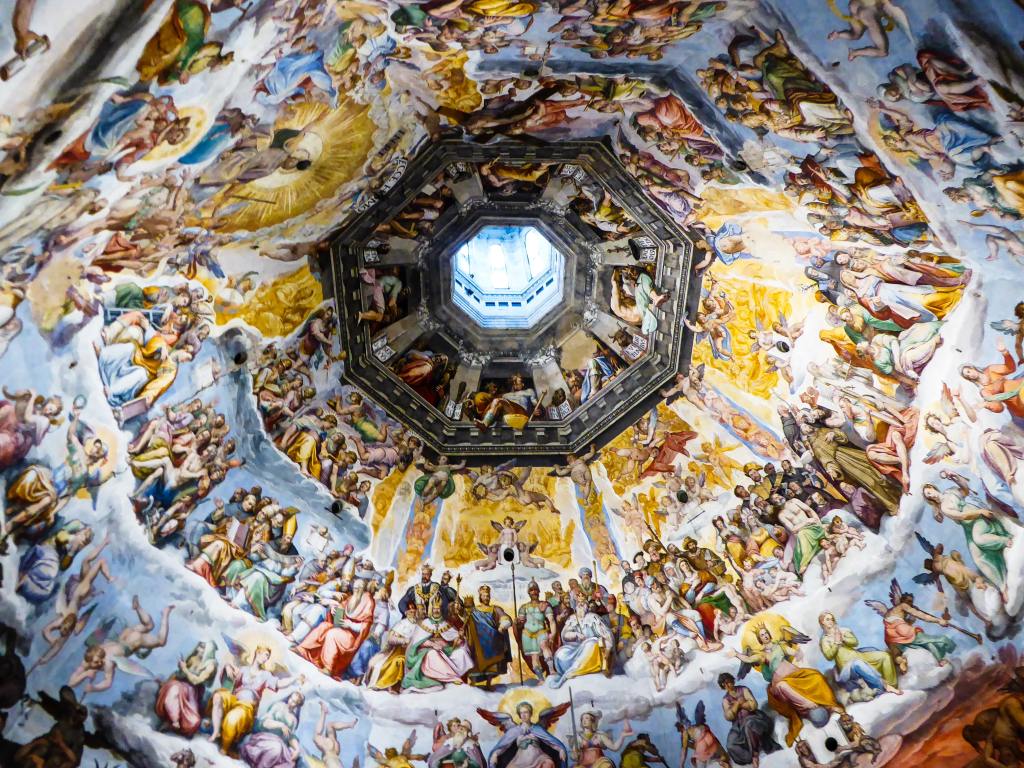
When a person dies, we believe their soul immediately faces God in what’s called the “particular judgment”—they are judged by God as fit for heaven (with perhaps purification in purgatory first) or as fit for hell. At the end of all God’s creation, at the Last Judgment, the particular judgment each person experienced is confirmed and all things are brought to their completion in Jesus Christ. This is called the final or last judgment.
First, let’s address the particular judgment. What does God want from us and for us—and what does God do about it? I suppose the first thing to clarify is to affirm that GOD is the one who judges—we do not “make our selection” at the cosmic vending machine, put in our coins earned by our good behavior, and receive what we have paid for. Neither is judgment like passing an exam or being interviewed for a job. We can do nothing to impress God or bend His will or talk Him into something He’d rather not do.
God is God. We are not. We are subject to God’s judgment—not the other way around. So, when we face God, we are facing the one, the only One, who has the rightful authority to judge as—as our Creator, He and He alone, knows that we started with and how we finished. As the artist, He alone can judge His masterpiece. So, how does our Creator judge us? St. John of the Cross put it most succinctly: “in the evening of our life, we will be judged on love.”
This is why our Catholic theology focuses on our fundamental orientation—is our soul, our heart, our life oriented toward the love of God or away from it? Do we seek to embody that love in our lives? Do we respond to that love as a sunflower orients itself toward the sun? When Catholics speak about loving God, we mean so much more than cultivating loving feelings about God or basking in the fact that God always loves us so we can just relax and float along in a happy daze of mediocrity.
Love is, in our Catholic vision, much more than a feeling. Love of neighbor is an act of our will—of willing the good of another as other. Love of God is also an act of our will where we give ourselves entirely to God seeking union with God in a total giving and submission of self.
In addition to seeing the truth about love as an act of our will, not rooted in our emotions, the Catholic vision also recognizes the nature of this love relationship with God: He is the One leading this dance! God is love. God can do nothing that isn’t an expression of love. In every dealing with you—from His free choice to create you, from His reaching out to you and allowing you to be in relationship with Him, to His ultimate dream for you to spend eternity with Him—God is loving you.
Our love for God is always a response to His love for us. He initiates, we answer. He leads, we follow. He romances, we respond. He gifts, we receive. Every bit of the love we express—even our capacity to love—is a gift from God. We can do nothing real, nothing life-giving, nothing true that isn’t abiding in the love of God. God created us in His very image and likeness—this means that at the core of our being, our nature, is the capacity to give and receive love. Love is the center of our humanity because we are creatures made in the image and likeness of God—and God is love.
The love of God remakes us—re-creates us into a new life, a new creation in Christ. It impacts and affects every aspect of our life—our choices, our attitudes and our actions. This is why we believe that we will be judged on love—on the love we have cultivated, guarded, grown and acted upon for God, for our neighbor, and for ourselves.
To face the love of God in our particular judgment is not going to be a soft, squishy, vague or rationalizing acceptance of our half-hearted allegiance and “good enough” efforts. God’s love is pure and crystal-clear, powerful and demanding, and sacrificial. To be judged by love itself and on whether we love is to face a judgment that will separate us forever from all that is not love.
“For it will be a great thing at the hour of death… to realize that we shall be judged by One whom we have loved above all things.”
St. Teresa of Avila, The Way of Perfection, 40, 8
Think of that: what, right now in your heart, mind and will, is not captivated by love, is not rooted in love, is not seeking love? All those parts of you must be taken out of you in order to enter the pure dominion of God’s love that is heaven. What, honestly, will be left of me when all that is not love is taken away? All that is left will be the truth, the reality, the connecting point of my soul with the source of all love—God Himself.
Will I love this true self that is left, the being God designed me to be? Or will I pine for those parts of me that were self-serving, that arose from a warped and twisted and imperfect love that sought to dominate, to control, to compete? Will I refuse to enter Love’s dominion in order to preserve the false self that I have nurtured and protected during my time on earth? Would I even choose to join the false me, the non-love, the un-me in hell? For that is what hell is—choosing the false self, the self-made self, over God. Choosing unreality, untruth rather than submitting to the real, the true, the beautiful, the good—choosing love of self over love of God is hell.
Our Catholic understanding of God’s particular judgment is rooted in the terrifying and invigorating reality of our choice to love. We have the capacity within ourselves to not only be loved by God but to love God. Everything God created has the capacity to be loved or it wouldn’t exist: from the magnificent horse to the disgusting grub. We humans have the capacity to love God in return. To have the capacity to love requires rationality and freedom—because being able to love necessarily requires the ability to say “no.” Otherwise, we are not talking about a romance, a seduction, a covenant relationship. If we can’t say no, we’re stuck being God’s pet at best, at worst God’s slave or victim or tool. But God seeks beloved sons and daughters when He seeks us out.
Because God is seeking our love, His offer of eternal life is just that—an offer, a gift. We must choose to accept it. He gives us every opportunity, everything we need to say “Yes” has been given us—intellect, emotion, memory, desires, will. Even more, He has given us a chance to become a part of His family—united to Him as an adopted son or daughter. Through our repentance of sin and our radical conversion to His Son, our Lord and Savior Jesus Christ, we are given the greatest gift of all: the Holy Spirit.
The Holy Spirit dwelling in us, abiding in our bodies as His true Temple, gives us the pledge of eternal life with God. We are beings destined for heavenly glory, provided with the resources we need to achieve a greatness and an excellence far beyond our natural capacities as mere creatures. This is the promise God gives us—this is what fills the Christian heart with faith, hope and love! This is what compels us to endure suffering, to claim victory over sin and temptation, to pour ourselves out in an endless waterfall of sacrifice and service. Why? Because these are all things that Jesus, our Lord and Savior, did for us. We seek to become what we adore—to reflect the light of the Son so much that we become what we reflect, sons and daughters of Almighty God.
And the greatest tragedy of a human life? To say no. To refuse to become a saint in heaven—to do it my way rather than God’s way. To believe that we can save ourselves, that we can find a way to fulfillment and peace without God. Rejecting the love of God is the ultimate—and really the only—tragedy a human can experience. We humans are good at rationalizing, at taking the easy way, at just “going along” with what’s comfortable and familiar. Perhaps many who could end up rejecting God and refusing heaven would never see that their life as on this hellish trajectory. They might envision hell as a place full of bitter, horrible haters, not filled with souls like themselves who are backsliding ever-so-gently away from virtue and holiness. People on the road to hell might still cultivate an appearance of being religious (at least when people around them approve of that sort of thing), but they fail to resist the temptations to serve self, to obey self, to worship self as the one, true god. Perhaps most people who refuse the gift of heaven are not filled with intense hatred of all that is good—at least not at first. What if most people refuse the gift of heaven because hell is just “easier,” less “demanding,” more “comfortable and accommodating”? What if fear, confusion, distraction, laziness and discouragement are the most effective tools of those demons seeking to keep us out of heaven?
Jesus spends an inordinate amount of time in the Gospels warning us about the dangers of hell—and the tricks and lies the devil uses to get us to travel that wide, smooth, comfortable road. Jesus uses his harshest words of judgment concerning hypocrisy—when we lie about the filth and evil residing in our hearts even as we appear “squeaky clean” on the outside.
Jesus also warns us about the danger of presumption—of calling out “Lord, Lord!” to Him but refusing to do what the Lord commands. Presumption, the attitude of doing whatever we want and asking for forgiveness later, is one of the devil’s most useful tools—because to presume on the Lord’s mercy is attractive, easy and affirming for our self-centeredness! Jesus is absolutely merciful—that is a great truth of our faith—but the attitude of presumption, in the end, makes us incapable of receiving mercy. When we follow the attitude of presumption to its bitter end, we become souls unwilling to admit to the need for forgiveness. And that is the unforgiveable sin that damns a soul to hell. Our refusal to be forgiven is the one sin God can’t forgive—not because His love has failed but because we refuse to accept the gift of love. As free beings, we must accept and put the gift to us. God’s love cannot enter a hardened heart.
God has designed us with the terrifying ability to damn ourselves: a capacity He does not will and yet allows. Why? Because by doing so, He has designed us with the capacity to be enfolded in, to abide in, to be transformed by His love! That is God’s desire, that is God’s ambition, that is God’s fondest dream for you—for each of His sons and daughters. As St. Augustine put it 1600 years ago, “God created you without your consent, but He will not save you without your consent.” Why? Because He gave you the Godly capacity to be loved and to love—and love requires consent.
These reflections have all been focused on the particular judgment that a soul experiences at the moment of death. To review: for those souls who have cultivated, matured and guarded a fundamental orientation to the love of God, God brings that soul into His Kingdom when they die. This can happen either immediately, or after an experience of purification and purgation called Purgatory.
For those souls who refuse to orient themselves to the love of God, but instead choose to maintain a love of self above God, God gives that person what they have chosen—an eternity separated from the love of God. This is hell. The time for us to make this fundamental choice—toward or away from the love of God—is our time on earth. At the moment of our death, when soul and body undergo their separation, our time for choosing is over. We don’t get a “re-do” or a “do-over.” One and done. That’s why life is so important. That’s why every choice matters—with every choice, every attitude, every act, we are moving one step closer to eternal bliss or eternal distress.
But don’t despair! God’s mercy is eager and able to save any soul that calls to Him—even up to the moment of death. We Catholics have an incredibly optimistic attitude about the possibility of salvation—because God’s love is powerful enough to reach the soul one step away from hell’s gates. And God is eager to exercise His power! God wills all to be saved and to come to the truth—even those who have refused Him up to the final moments of life. As Jesus assures us, all of heaven rejoices at the repentance of even one sinner.
But why put off conversion? Why play loose and fast with our eternal destiny by clinging to sin and cultivating vice? It’s true a person could ask for forgiveness at the moment of death, but will they? Most people die the way they live—orienting ourselves to the love of God takes a lifetime of practice for most of us. Why count on a sudden wrenching away from the chains of sin and vice at the last moment—which might not even happen—and in the meantime throw away a lifetime of joy in serving and loving God? The people in this life that are truly happy, that find real fulfillment and joy and satisfaction, are those who begin living their heaven here on earth—holiness is, in the end, the only means to achieving happiness.
So now that we’ve clarified the particular judgment, how does that relate to the last or final judgment? What happens at the end of time—when God ends His great work of creation and brings all to fulfillment? Do people get “re-judged” and perhaps get a change in circumstances? Does God inform some souls, “Oops! I let you into heaven, but that was a mistake. Off you go to hell, now.”
No, that’s not what the Catholic Church teaches. At the final judgment, the impact of everyone’s life—the good, the evil—will be completed and fully known. The point of everything will be made clear—all will be consummated and brought to fulfillment.
This last judgment has to wait until everyone’s done with the game of life—it’s only at that time that everyone’s effect can be completely understood. Going back to St. Augustine: he died almost 1600 years ago, but his example, his writings, his impact on people is still going strong! At the general judgment, the ripples in the pond will have finally stilled and the far-reaching effects of everyone’s life can be fully known.
When we look at events and people from the perspective of the final judgment, we will be filled with a clarity and joy about the love of God. We will see, ultimately, how every evil act, every perversion and twisting of love, eventually brought about a greater good through the working of Divine calculus. We will see, in a way that we never can on earth, how all the events and people and circumstances of our life—even the horrible and hard parts—were used by God for good. Perhaps we will rejoice as we realize that the sufferings and challenges that we could hardly bear in this life served to stretch and strengthen our capacity to love!
Finally, and eternally, those in heaven will rejoice at the fecundity, creativity and power of God’s love; and those in hell will rage at the impotence of evil. No matter how the hell-bound sought to cause evil and to destroy love, God worked all things for good for those who love Him. For, in the end, those who embrace love of self and reject love of God will have no lasting effect on anyone residing in heaven—there is no hell in heaven. There is no heaven in hell.
God will be all in all—and we will be swept up in an eternity of loving and being loved, of knowing as we are known, of exploring the depths of God in all His fullness. We will enjoy the eternal adventure of being caught up in the very life of the Trinity! Heaven is what we were designed for. It is our true home, our true destiny. Anything less than heaven is not worthy of us. Anything less than heaven will not satisfy.
The joys and bliss we experience on earth are foretastes of heaven—hints and glimpses and dim reflections of what we will experience in God’s Kingdom. God plants these little foretastes of heavenly joy all around us—to rouse our curiosity, to strengthen our resolve, to give us energy to continue to journey. God desires us to know Him and love Him and serve Him in this life so that we can be happy with Him forever in the next—this is why God made you! God wants us to use His gifts of rationality and freedom to cooperate with His dream for us—to claim our God-given dignity and destiny as His beloved children.
Being and non-being. Life and death. Heaven and hell. In the end, and along the way, God urgently cautions us that there are two choices, and only two choices: choose life that you may live!
 Flourish Catholic
Wow, this is a powerful and comprehensive post, and so helpful to me.
I’m going to read this a few more times.
Thanks so much for posting. 🤗⚘
LikeLiked by 1 person
I agree with Sally! Alot to digest and I am going to need to reread this in portions, but truly grateful that you took the time to write it! Hugs to you for sharing your wealth of knowledge and understanding of the Catholic faith with us!! 💕
LikeLike
This answered all my questions. Blessings to you for explaining it so clearly.
LikeLike