Feast Days in the Catholic Church are one way we celebrate God’s Family, the Church.
If you look at a Catholic calendar, you have probably noticed how many days are marked as “feast days.” A special part of living the Catholic faith is how we mark time—since we see the Church as being the family of God, we do what families naturally do—we celebrate “milestones” of family members. That’s what a feast day is—a celebration of a milestone of a saint or of an important day in the life of our family as a whole.
In our earthly families, we celebrate birthdays, weddings, and special events like a graduation. We usually gather for a meal and often include traditions like retelling stories, looking at old photos or videos, or favorite family activities like singing or games.
In the family of God, we celebrate our family’s special events a little bit differently—most of our feast days are “death days”—the day a saint died! For example, we celebrate the feast of St. Augustine on August 28, because that’s the day he died in the year 430. We celebrate the feast of St. Elizabeth Ann Seton on January 4 because that’s the day she died in 1821.
It might seem morbid at first glance, but it is not with regard to a saint—someone we know is in heaven. A saint’s death day is their birthday in heaven!
There are over 5,000 canonized saints in the Catholic Church—we don’t have that many days in a year to celebrate each one! So not all saints have a unique day, or feast, in their honor. We honor all the saints in heaven—canonized or not—on, naturally enough, the Solemnity of All Saints on November 1.
Perhaps you caught that word “solemnity” that I just used in reference to All Saints. This brings up my second point—the different types of feast days that you will experience in the Catholic calendar. We’ll go over them according to their level of importance—
First, we have holy days of obligation. These celebrations are so important that we expect all the family to show up at the family get-together—the Mass! Missing a holy day for our church family is like missing a big event in your family—you better have a really good reason to miss Christmas day with the family, for example!
Every Sunday is a holy day of obligation—because every Sunday is a little Easter: a day we commemorate Jesus’ victory over sin and death by his Resurrection. Every Sunday we are obliged to attend Mass unless we are sick, caring for someone, or some other serious reason (like a pandemic…).
We also have other holy days of obligation throughout the year—these are the days that celebrate the truly central milestones of our family life. They are connected to the life of Jesus, his mother Mary and our entire family, the Church. We are obliged to go to Mass on a holy day of obligation even when it doesn’t fall on a Sunday. These holy days include:
Christmas (December 25),
the Solemnity of Mary, Mother of God (January 1)
the Ascension of Our Lord (40 days after Easter Sunday)
the Assumption of Mary (August 15)
the Solemnity of All Saints (November 1)
the Immaculate Conception of the BVM (December 8)
So Holy Days of Obligation are the primary feasts of the Church’s calendar year—they are the days set aside to gather as a family to celebrate, to remember, to re-commit and to re-charge.
The next level of holy days include other Solemnities. The Holy Days of Obligation are Solemnities, but not all Solemnities are Holy Days of Obligation. Any Solemnity is an important feast day that is celebrated with a special Mass just for that day. Many of these Solemnities have to do with the life of Jesus. For example, we have a Solemnity of Our Lord Jesus Christ, King of the Universe at the end of November. Other Solemnities are dedicated to the saints closest to the Lord during his earthly life—Mary his Mother, Joseph his foster Father, John the Baptist, his cousin. When a Solemnity falls on a Sunday, that Sunday is dedicated to its celebration. When a Solemnity falls on a Friday, the faithful are encouraged to celebrate the Solemnity and not abstain from meat or do other penitential practices. Solemnities are days to celebrate!
The next level of feast days are called “Feasts”—these celebrate canonized saints whose contributions have had a universal impact, such as the 12 Apostles or other great teachers and leaders throughout our history. Some Feast days celebrate a feature in the life of Jesus Christ—for example we celebrate the Feast of the Exaltation of the Holy Cross on September 14 to honor Jesus’ sacrifice on the cross. A priest must use the Mass for Solemnities and Feast days when he celebrates a daily Mass—except Feast Days are not usually celebrated when they fall on a Sunday.
“Feast” days are called feast days because they do often involve special meals and activities for that particular day. For example, the Feast of the Archangels on September 29 is associated with special “harvest” foods and often a roasted goose in some European countries. The Feast of St. Nicholas on December 6 has often included parades, appearances of the fiery bishop and gifts left in stockings. (Well, St. Nicholas used to be named a feast day—now it is an optional memorial for the universal church-more about that in a minute). You can find out more about these traditional celebrations on the website Catholic Culture. There are also great books you can use to reacquaint your family with these feast day celebrations: I recommend “Cooking with the Saints”.
Finally, our calendar is filled with “Memorials” and “Optional Memorials” to honor saints throughout each month. A memorial is a day dedicated to a saint. The Mass for a Memorial includes special mention of the saint (usually a quality of the saint that we ask God to help us emulate). A priest must celebrate a Memorial as the primary daily Mass—unless it’s a Sunday (then the Sunday Mass supersedes it) or for a serious pastoral reason such as a funeral.
An “Optional Memorial” is just that—celebrating that saint or event in the church is an option for a priest at Mass, but not required. Optional Memorials are often connected to saints whose impact is more regional—so, for example, the feast day of St. Juan Diego is an optional memorial on December 9. St. Juan Diego’s vision of Our Blessed Mother as Our Lady of Guadalupe is of great importance to the Church in the Americas (she is named as Patroness of the Americas), but maybe not so much to the world-wide church. Any priest in any country can celebrate an optional memorial—it’s just not required. Many priests choose not to celebrate every optional memorial so that the Daily Masses at their parishes can proceed with the regular schedule of Bible readings and keep some continuity in our progress through the Bible.
Okay, I’ve explained the purpose of feast days in the family of the Catholic Church, and I have given you a brief overview of the different types of feast days: Holy Days of Obligation, Solemnities, Feast Days, Memorials and Optional Memorials. Now it’s time to ask: What’s the point for your spiritual growth?
I encourage you to use the feast days of the Church to mark the passage of time for your family—and to deepen your connection to the Communion of Saints of which you belong! Pick just a few days in the year to start with so that you’re not overwhelmed. Celebrate our heroes, take time to learn about them, find ways to incorporate special foods and activities for the saints most connected to your family—begin with the saints that you are named after, those who most inspire you, those connected to your occupation, ancestry, ethnicity or in some other way.
Embrace the history, heritage and heroism of our saints.
Allow your journey around the sun each year to be impacted by the journey of the Son of God in salvation history! Doing so can enrich and strengthen your spiritual life!
For the Catholic Christian, Sunday is the first and greatest day of the week.
One of the great blessings of our Catholic faith is that it isn’t something we just “add on” to our life—no, it is a different way of grounding life, of founding life, on the person of Jesus Christ and the apprenticeship of discipleship. And one of the ways that our faith in Jesus impacts our life is in how we move through our week. We have certain days that help us commemorate the great truths of our faith—and keep us grounded in what really matters, what is really of first importance.
Let’s consider Sunday. The week begins with Sunday—the Lord’s Day. As a Catholic-Christian, please don’t use calendars that put Monday as the first day of the week and just use Sunday as the final day of the weekend. Sunday commemorates the Resurrection of Jesus Christ from the dead. The Resurrection changes everything—if the Resurrection is real (and it is!), then life is not the same! If the Resurrection is real (and it is!), then Jesus is Lord, life has meaning, suffering and death are not the final word but only a transition to eternal life. We live for Sundays! We exist as disciples of Jesus Christ with a hope that cannot disappoint because of Easter Sunday—and every Sunday is a little Easter.
That’s why the Church insists that we attend Mass on every Sunday. We owe it to God to give Him our worship, praise and thanksgiving. We need that weekly boost, the nourishment of Jesus in the Word and Eucharist, to give our week meaning and put first things first.
That may have you wondering… I’ve just said we have to go to Mass every Sunday, but maybe you’ve been to a Saturday night Mass and that fulfills the Sunday obligation. Why? Because we keep time according to the way the Jews, our elder brothers and sisters of the Covenant, keep time. For the Jew, a day goes from sunset to sunset. So the Sabbath begins Friday night and goes until Saturday night. So, for us Christians, Sunday begins Saturday evening and goes until Sunday evening. That’s why a Saturday vigil Mass fulfills Sunday’s obligation.
Let’s return to the days of the week. Catholics are famous for “fish Fridays.” Why was it once a given that a Catholic would not eat red meat on Fridays? What was that about and is it still the rule? Catholics were (and are!) encouraged to fast from red meat on Fridays to commemorate the day Jesus was crucified and died on the cross. We know it was a Friday—the day before the Sabbath. We know that Jesus suffered for our sake on the cross from the hours of noon-3:00pm. Because of this, every Friday has a solemn character—our Catholic version of “Thank God it’s Friday” has nothing to do with ending the work week, but with thanking God for the sacrifice that redeems us and proves the victory of love over sin and death! Thank God for Good Friday!
Abstaining from red meat is a little penance—a way of offering a sacrifice to the Lord in union with the One Sacrifice that matters. Giving up red meat isn’t a huge sacrifice—may I just suggest that you don’t replace bologna with lobster?—but it is one way that we can offer a penance. Our Catholic bishops removed the obligation to abstain from meat on Fridays (except during Lent), but they did not remove the obligation to perform some act of penance on Fridays—many people still choose to go without meat as their form of penance. Other forms of penance might be to abstain from screen time or to pray a rosary or some other devotion, or to avoid frivolous spending.
In addition to the entire day of Friday being penitential in character, the 3 o’clock hour is of special importance. This is the time of day when Jesus breathed His last and handed over the Spirit to the Father—this is the hour of His death. Jesus also explained that this is the hour of mercy—in a series of visions to St. Faustina, a Polish nun, in the years prior to World War II, Jesus spoke about the urgency of praying for His mercy to be unleashed upon the world—and that He wanted us to pray with special focus during this hour of mercy.
Jesus gave St. Faustina the instructions for how to pray the Chaplet of Divine Mercy. I highly encourage you to stop, if you are able, at 3pm on Fridays or on any day of the week at 3pm, and pray this chaplet. You just need ordinary (or, truthfully, not so ordinary!) Rosary beads and the chaplet prayers—I like to pray along with a recording of the Chaplet. You can find it spoken or sung by searching “Divine Mercy Chaplet” on YouTube.
Saturdays have traditionally been a day to honor Our Blessed Mother, Mary. The day before we honor Jesus resurrected from the dead, we honor His Mother, who made the incarnation possible with her “Yes” to God. Every daily Mass on Saturday morning can be dedicated to Mary and make use of “Votive” Mass prayers that focus on Mary’s contribution to God’s plan of salvation. It is fitting to honor Mary on Saturday, since she is the fulfillment of the holy Women of Israel, the new Ark of the Covenant that housed the living Word of God, and the new Eve who refused Satan’s temptation to seek ways to be like gods apart from the one, true God. Saturday, the Jewish Sabbath, is a perfect day to honor Mary, Mother of God and Mother of the Church.
Catholics also have a tradition of keeping “First Fridays” and “First Saturdays” as well. The “first” refers to the first Friday and Saturday of the month. Based on the instructions of Our Blessed Mother to the three children of Fatima, Catholics attend Mass and go to confession to begin each month—in this way, we not only find ways to dedicate the days of the week, but also to dedicate each month in a special way to the Lord. Beginning each month, we can “take stock” and “balance the check book” of our spiritual bank if you will: this monthly reconciling of accounts and reflecting on our goals for improvement give our lives direction. We are not on an endless wheel of repeating events and never-ending circular challenges: God directs us, our life is a “one way” road to our eternal destiny. Do we strive to improve, or do we simply exist in a somnambulant daze of distractedness?
Another way we can make use of the days of the week is by keeping the weekly cycle of the mysteries of the Rosary. Each time we pray the Rosary, we meditate on a set of mysteries about the life of Jesus Christ, seen and experienced through His Mother. The weekly cycling through the Mysteries of the Rosary can help us focus our days—or at least a part of the day—on the key events in the life of Jesus Christ and the Church.
On Mondays and Saturdays, we pray the Joyful Mysteries that focus on the events of Jesus’ Incarnation. Perhaps these might be days we focus on “incarnating” (putting flesh on) our faith—especially in serving the needy, the hurting, the lost and the rejected. Are there concrete ways you can be the incarnate hands and feet of Christ in our world? Of course, this can and should happen on every day—but sometimes it is helpful to schedule our efforts and commit, otherwise we actually never get around to it…
On Thursdays, we pray the Luminous Mysteries that guide us to think about Jesus’ public ministry—His three years of ministering to the people and forming the Apostles as the leaders of the Church. Thursday can be a special day to commemorate the Lord’s Supper—the gift of the Eucharist for the Church—since the Last Supper was celebrated on the night before he died, hence on a Thursday. This would be a wonderful day to offer special prayers or devotions to our belief in the Real Presence of Jesus in the Eucharist—and in reparation for sins against the Eucharist done by those who reject Him.
On Tuesdays and Fridays, we pray the Sorrowful Mysteries that get us to reflect on the events of Jesus’ Passion—His death for our sake. We’ve already talked about penitential practices on Fridays (you don’t have to add Tuesday penances, don’t worry!).
On Wednesdays and Sundays we reflect on the Glorious Mysteries—the events of Jesus’ Resurrection and the forming of the Church He founded. Sunday is our week’s highlight, of course. We should keep the entire day as the Lord’s Day—making Mass the center of the day, but making sure that we protect the day and spend it in prayer, with family, and doing works of mercy as further ways to honor the Lord’s Day.
Now, I’ve given you a lot of suggestions about keeping the days of the week in explicitly Christian ways—don’t get overwhelmed and think you have to add in a ton to your week! This information is intended to instruct and inspire—not discourage and pressure you. So go slowly, purposefully and joyfully!
Start by focusing on the way you keep Sunday—that’s the most important day of the week and it’s the one day that actually has a commandment associated with it—the 3rd commandment tells us to keep holy the Lord’s Day. Then, when you’re ready, work on keeping Friday as a special commemoration of the Lord’s sacrifice on the cross—maybe avoid red meat on Fridays and try to pray the Divine Mercy Chaplet or shorter prayer at 3:00pm. Add other practices and devotions as they make sense to you and feed your spirit. Seek out traditional ways of keeping time that might come from the nations or ethnic groups to which you belong—perhaps seeking out the feast days of saints from your region, or traditional foods and celebrations connected with the agricultural calendar (rogation days, anyone?), or unique ways of keeping universal feasts in the Church can add richness and depth to your own yearly calendar. You can find many resources, both online and in print to guide you in these endeavors. The new interest in ethnic and regional foods, the “slow food movement” and heritage cooking all make it even easier to locate recipes, traditions and other delightful details from places all over the world.
One more thing about keeping time with Jesus Christ: Do you know what the most important day in the whole year is? TODAY. Today is the acceptable day. NOW is the acceptable hour! Look for the Lord in the present moment—and turn your heart to Him whenever you feel the nudge of the Holy Spirit. All days, all times, past, present and future—are in God’s hands. He is Lord. He is almighty. He is with you—Emmanuel—at every time and in every day of the week.
Catholic churches are called by various names: parishes, cathedrals, basilicas, oratories and more. Understanding the use of these different names leads us to explore the Catholic vision of authority and leadership in the Church—which is a critical issue within our faith.
Let’s begin with some of the terms. A parish is defined by a designated geographic area. The parish is a basic unit of organization within the Catholic church. It used to be the case that Catholics had to register in the parish in which they lived—with very few exceptions. Nowadays in the United States, most Catholics feel free to register at whatever parish they feel best fit their worship style and interests. The pastor is a priest in charge of the people within the geographic boundary of the parish—not just the Catholics who are registered at the parish, but every soul. Being a pastor is a huge responsibility!
A parish church exists within the larger boundaries of a diocese or archdiocese. (An archdiocese is a special designation for some dioceses that are either have a very large number of Catholics or are significant in some historical or cultural way.) A diocese or archdiocese is the area under the leadership of a bishop or archbishop. The bishop is a successor to the apostles who is charged with shepherding the local church. The bishop is ultimately responsible for the sacramental life, the education, the evangelization and the service within the diocese. All who serve in the Diocese do so under his authority; a bishop’s special responsibility is to the priests who are ordained to minister with him to the people of God.
A cathedral is the church in the diocese or archdiocese that contains the cathedra, or chair, of the bishop. As such, it is the “Mother Church” for all the Catholics within the diocese. The cathedral is the location for celebrations of the entire diocese, including special Masses, ordinations and other events. A Cathedral is usually located in the city from which the diocese takes it name (hence, the Archdiocese of Portland in Oregon). The archbishop is the pastor of the Cathedral, but the priest who is actually in charge of the day-to-day work of the Cathedral is given the title “rector.”
Some cathedrals are also called Basilicas. Only the pope can name a church to be a basilica. A basilica is an historically or culturally important church that houses the remains of an important saint (or saints) or is the location of an appearance of Mary or because of some other miraculous or momentous event in the Church. The name “Basilica” originally only referred to the seven main churches of Rome (these are now termed the “major basilicas”). As the Church grew and spread, churches in other countries and continents were designated as basilicas, a term which literally means a “palace” for the king. Our basilicas are special places to honor “King Jesus” all over the world—these basilicas named “minor basilicas” to differentiate them from the 7 original basilicas of Rome. A basilica is a special place of pilgrimage and is often built over the tomb of a martyr. While some cathedrals are also named a minor basilica, not all basilicas are cathedrals (housing the cathedra, or chair, of the bishop). There are almost 1,700 basilicas around the world, and about 85 in the United States. There are other terms used for places of worship, including: chapel, oratory and shrine. These are all places where the faithful gather for worship, but are not a parish church (or, by extension, a cathedral or basilica).
For the Catholic, our liturgical life revolves around our parish church and our diocesan church, the cathedral. Every parish church has a “presider’s chair” where our parish priest (or other priest celebrating the Mass) sits while leading us in liturgical worship. The presider’s chair in every church is a symbol of the priest’s authority to lead us in worship—especially the Mass. The cathedra, or bishop’s chair, in the cathedral is a symbol of the bishop’s authority to teach, worship and govern with the authority of an Apostle.
Just as in the early Church, each diocese is shepherded by one ordained man who can trace their authority all the way back to the 12 men formed by Jesus Christ as the foundation stones of His Church, the Body of Christ. The twelve Apostles, as they preached the Gospel and founded churches throughout the known world, appointed men to be leaders of each local Church and ordained them in what would become known as the Sacrament of Holy Orders. As the original Apostles were martyred, their successors were appointed to continue in perpetuity the leadership set in place by Jesus Christ. Each bishop has the authority to ordain new priests to assist him in serving the people of his diocese, but only the Pope (the Bishop of Rome) can name new bishops.
The cathedra of the bishop is symbolic of the special authority he has received from Jesus Christ. His authority, however, is limited and temporary. The bishop has authority to interpret doctrine and apply doctrinal principles for his people. He does not have special authority to govern in matters not related to doctrine in the Church. For example, the bishop can lay down the principles by which every Catholic voter should judge candidates for election, but the bishop cannot command his people to vote for a particular candidate. In addition, the bishop’s authority does not give him the ability to reject or revise doctrine of the Catholic Church. The bishop is the guardian and servant of the truth of the Church—not its creator or editor.
Only the Bishop of Rome can speak from the fullness of authority symbolized by the cathedra. When the Pope speaks “ex cathedra,” or from the chair of Peter, he is defining a doctrine or declaring an infallible (free from error) interpretation of a doctrine. This charism, or gift, of the Holy Spirit is given to the Church to preserve her from teaching error. Again, it does not mean that the pope is always correct in all of his beliefs, actions or statements. The doctrine of infallibility only applies to a pope (or an ecumenical council of the world’s bishops) who is intending to define or apply doctrine. In these situations, the pope speaks in unity with the entire Body of Christ—with the legacy of the Church through the ages called Apostolic Tradition and with the entire People of God alive on earth who are seeking to know and follow the will of God.
When declaring or defining dogma, the pope announces that he is speaking “from the chair” of St. Peter—with the authority given by Jesus Christ to Peter and his successors for the good of the Church. A proclamation of this sort is a rare occurrence. The last official doctrine defined by a Pope was when Pope Pius XII declared the Assumption of Mary to be a doctrine of the Church in 1954. Saint Pope John Paul II spoke infallibly about applying doctrines regarding taking innocent human life to include the prohibition of abortion and about the interpretation of the doctrine of the priesthood to be for men only. These were not declarations of new doctrines, but affirmations of the church’s age-old ways of interpreting doctrinal matters. These affirmations essentially give the boundaries of discussion and differences of opinion—they declare what opinions or interpretations would be outside the teachings of the Church with regard to abortion and the priesthood, for example.
Why should the lay faithful (those not ordained in Holy Orders or professing vows within a religious community) care about the cathedra and the teaching authority of the bishops? Because they are safeguards meant to protect us and guide us. Knowing that the Holy Spirit is protecting the Church from teaching doctrinal error means that we can relax and trust the teachings of the Church. It does not, of course, mean that our leaders (or us lay faithful) always follow the doctrine and live exemplary holy lives! But the ideal presented to us and the vision of what we strive to uphold is sound—even when many fall short of it. The norm, the standard, doesn’t shift just because it’s hard to achieve—the Church doesn’t “grade on a curve” in matters of morality. We work hard to discern what is the truth from God, and then we stick to it.
The cathedra is a sign of Jesus’ care for the Church. The cathedra is a sign that the mission of Jesus has a foundation and a guidance system. We are being led by those who shepherd under the authority of the One, true Shepherd. They are and will be held accountable to a higher standard because of the authority given them. And we, the lay faithful, are a primary means by which Jesus Christ holds his shepherds accountable. We are not members of the Body of Christ so that we can simply “pray, pay, and obey” our leaders. We are the ones for whom the hierarchy is established—we are the beneficiaries of the gifts of the Holy Spirit given to those who lead. We, the lay faithful, have every right to demand orthodoxy from our leaders, to require them to be faithful to the Gospel they profess, and to be the kind of shepherds who would lay down their lives for their flock.
We are in a dynamic, fruitful and interdependent relationship with our bishops and their assistants, the priests and deacons. The hierarchy is designated as such because of different roles and responsibilities, not in terms of value or “ranking”—remember that in the Church, leadership does not mean “better” or “higher”! Jesus was absolutely clear about that point! He was also absolutely clear on our responsibility to obey our leaders and to pray for them. We exist as one Body of Christ—with complementary and interdependent roles, all striving to follow the lead of our Head, Jesus Christ. We lay people do not have to take on “pseudo-priestly” roles in order to gain more value or importance in the Body of Christ—we are of inestimable value already, by virtue of our great mission to consecrate the entire world to Christ. Our mission, importance, and value does not rest upon us taking on more roles within the Church—in fact, it’s just the opposite! As we bring the faith to the world, we take on an aspect of the Church’s mission that, I would argue, is in many respects more difficult and more vital to the spreading of the Gospel than the work of those ordained to Holy Orders.
It is difficult for us fallen humans existing within a secular culture that exalts independence, pride, rebellion and novelty, to truly develop the virtues of obedience and respect toward our leaders. It is also true that in this age, as in every age of the Church, there are leaders who are neither deserving of respect nor acting in ways we should emulate. Why does the Lord allow this? Perhaps part of the reason is to help us all grow in humility and compassion—and by our crying to God for His justice, to allow the Holy Spirit to penetrate deeply within the Body of Christ to purify, cleanse and heal us all. The endurance and resilience of the lay faithful—either because of or in spite of their leaders—is a sure sign of the work of the Holy Spirit within us who will bring good from all circumstances. We should urgently pray for our bishops, priest and deacons and all who are called to leadership in the Church—Satan works extra hard to seduce, confound and discourage our leaders so as to inflict great harm on the Church. If by destroying the sanctity of one church leader, countless lay people also leave the Church and stop practicing their faith, who is the real winner?
So how can the average lay Catholic foster a healthy and productive relationship with the hierarchy as it impacts their spiritual journey? Register in a parish and become an active member of it! Support and pray for your pastor and let him know of your prayers. Develop and foster relationships within your parish community—prayer, faith-sharing, worship, education—that support your vital work to bring Christ to the world (to your little corner of it).
I encourage all Catholics who live within a reasonable distance, to make a pilgrimage to their diocese’s cathedral—perhaps once a year? Make it a point to pray for your bishop each day and to recommit to living as a loyal son or daughter of the Church who is so wounded, so beautiful, so cherished and so invaluable. Perhaps the greatest gift we can offer the Lord is to love His Bride, “warts and all” this side of heaven, and contribute through our own sanctity to the day when she will be presented to the Bridegroom, as the pure and spotless Bride of the everlasting wedding banquet of heaven.
Mass must appear to be “Catholic calisthenics” to someone visiting a service for the first time! What do all those actions mean and is it all right for a non-Catholic to participate in them? Let’s go through the different actions at Mass—I’ll explain how to do each action in a reverent, prayerful way and then I’ll let you know the meaning of each action. I’ll also let you know the one and only action that you shouldn’t do if you are a non-Catholic joining us for the celebration of Holy Mass.
“Mother Church earnestly desires that all the faithful should be led to that full, conscious, and active participation in liturgical celebrations which is demanded by the very nature of the liturgy.” (Catechism of the Catholic Church, paragraph 1141)
To begin, let’s be clear about WHY Mass involves so many actions on our part—it points to 2 main realities: one about us and one about the Mass.
First, about us: we pray with actions, not just with thoughts or words, because we are created by God as embodied souls. We are a union of spirit and matter—and when God calls us to worship Him we are called to worship as whole beings. We worship God who, for the sake of our salvation, took on our human flesh and did all the things we do—speaking, moving, blessing, reaching out, praying with His body. It’s His Body and Blood, Soul and Divinity that we receive in the Eucharist at Mass—so it makes sense that God would want us to prayer as embodied beings, rejoicing in and putting our bodies to work for the glory of God. At Mass, we worship with the angels, but we don’t worship as if we were angels—we worship as beings with bodies.
Second reason why we are involved in so many actions at Mass is because of what the Mass is—it is the greatest act of worship that re-presents the greatest act of sacrifice ever offered, ever! St. John Henry Cardinal Newman declared that Mass is “the greatest action that can be on earth.” We do not attend Mass to watch Mass. We attend Mass to participate in it—to join our hearts, minds, bodies and wills to the great act of worship and sacrifice that renews and strengthens the covenant bond between God and His people. We are called, as the People of God, to bring our conscious, active and full participation to the Mass. We are not there watching as the priest “does” the Mass—he is leading us in this great prayer. The priest, of course, has a unique role as the one who consecrates the Eucharist—acting in the very person of Christ through his ordination. But all of us, all the baptized, are priests of God as well—and the sacrifice on the altar demands us to offer the sacrifice of our life, our will, our love to God. So, through the priesthood of all the Baptized, we must offer worship and sacrifice at the Mass, too. Hence, all the actions.
Now you know why the Mass includes so many actions that we perform. Now, let’s go through them as we experience them when attending Mass.
The first action occurs when we enter the church. We dip our fingers in the holy water font and make the sign of the cross over our bodies. We do this in recognition or remembrance of our Baptism—it is by virtue of our Baptism that we are brought into the Body of Christ and gain the dignity of being a child of God. Because of our Baptism, we are welcome in the house of God—it’s our house, too! Because of our Baptism, we have the right and responsibility to worship God. Because of our Baptism, we have the authority to bring others before the Lord in supplication and mediation on their behalf.
So all the baptized are encouraged to use holy water upon entering the Church. What if you are not yet baptized? You can use the holy water and bless yourself as a sign of your eagerness and willingness to prepare for Baptism.
After we bless ourselves with Holy Water, we enter the Church and find a pew to sit in during the Mass. Before we enter our pew, Catholics genuflect. This means we lower ourselves onto our right knee while bowing our head—many make the sign of the cross while doing so as well. A genuflection was a medieval action offered to the king when one entered his presence. We offer the same action to our one, true king—Jesus Christ. Where is Jesus? In the Tabernacle. The fancy gold cupboard usually placed near the altar contains the Blessed Sacrament—the Eucharist. Jesus is truly, really and substantially present in the Eucharist—and His Real Presence doesn’t go away when Mass ends. So when the Eucharist is reserved in the Tabernacle, a red candle is lit nearby and we know that Jesus is abiding with us in the Sacramental Presence. We genuflect to our king to show that we acknowledge Him and acknowledge that this Church is His holy Temple.
Let’s go over the postures we use during Mass: we kneel, stand and sit. After we genuflect and enter our pew, we usually kneel for a while to pray—preparing ourselves to worship God with attentiveness, reverence and receptivity. Kneeling is a posture of adoration and supplication. We lower ourselves in order to honor God who is far greater. We kneel at the most important parts of the Mass—for example, we kneel during the Eucharistic Prayer when the words of Jesus at the Last Supper are spoken and the bread and wine become the Body and Blood of Our Lord.
We also stand together: we stand as Mass begins and then in other parts of the Mass (when we hear the Gospel reading or when we pray the Our Father, for example). Standing is a sign of our readiness to pay attention and receive “marching orders” as it were. We stand together to show what we stand for—our precious faith and the God who gives us our faith. We stand to show respect to people we wish to honor—especially Jesus who is proclaimed in the Gospel.
We also sit during the Mass. Sitting is the posture of the disciple—one who sits at the feet of Jesus, drinking in every word.
So throughout the Mass we change our posture to show what is going in the Mass and how we are called to respond—are we called to adore? Then we kneel. Are we called to profess our faith? Then we stand. Are we called to listen and receive? Then we sit.
Since when we come to Mass to become one Body in Christ—we should join in these postures together with the rest of the congregation, unless we are physically unable to do so. If a non-Catholic wishes to participate with us in all these postures and is free to do so according to their own conscience, then they are welcome to join us.
In addition to the changes in posture, there are other actions that belong to different parts of the Mass. Let’s go over them so that you understand their purpose:
During the first part of the Mass, we join together to confess our sinfulness and seek God’s mercy. We pray a prayer called the “Confiteor” that begins, “I confess to almighty God, and to you, my brothers and sisters, that I have greatly sinned, in my thoughts and in my words, in what I have done, and in what I have failed to do, through my fault, through my fault, through my most grievous fault…” While we say that last line, we tap our chest three times. What does this gesture mean? It’s a sign that we take responsibility for making the choice to sin. That we “own up”: rather than pointing fingers, we’re tapping over our hearts and admitting that we need mercy. It’s the humble, penitent action of a person who knows that, without the mercy and compassion of God, I’d be lost.
The next action we make at Mass is right before we hear the Gospel proclaimed to us. We stand to hear the Gospel, because we are hearing the very words of Jesus Christ. When the priest or deacon proclaims, “A reading form the holy Gospel according to Saint Mark (or Matthew, Luke or John),” he traces a big sign of the cross over the book. Then we say “Glory to you, O Lord” and mark three little crosses over our foreheads, our lips and our hearts. Please make sure that you sign yourself with the cross in a reverent, prayerful gesture—no sloppy fly-swatting!
Why are we marking these spots on our bodies with the sign of the cross? We want to consecrate ourselves to the Lord—our thoughts, our words and our hearts. To be a disciple of Jesus means to kill, to “crucify” the fallen, sinful modes of thinking, speaking and choosing that tempt us. We use the sign of the cross to remind ourselves that we die to self in order to live a new life—we crucify sin and are alive in Christ Jesus. We live, now, with the life of Christ in us. So those little crosses are a sign of our readiness to think about the words we are going to hear, to speak them with our lips and to cherish them in our hearts.
After the Gospel and the Homily, we stand to make our profession of faith. We recite the Nicene Creed together as our great and ancient confession of the truths that came to us from God Himself—the Creed is what we “stand for” literally as Catholic Christians. When we confess our faith in Jesus Christ, the Son of God, we say … “and by the Holy Spirit was incarnate of the Virgin Mary, and became man.” When we say these words, we make a profound bow, from the waist. Why? These words declare our faith in what’s called the Incarnation—that the Son of God took on human flesh and became one of us without losing His divinity. He did this to unite together, God and humanity, sundered by sin and to offer the perfect sacrifice that would heal the division caused by sin for all time. We make a profound bow because the fact of the incarnation marks the beginning of our redemption—consummated at Jesus’ crucifixion and affirmed in Jesus’ Resurrection from the dead. We bow at these words to indicate our profound, utter amazement at the mysterious love of a God who would sacrifice a Son in order to save a slave!
As we continue through the Mass, we kneel for quite a while during the Eucharistic Prayer—the great prayer of Thanksgiving where we re-present the sacrifice Jesus offered the Father, anticipated the Last Supper and realized at the crucifixion. We kneel in adoration as Jesus comes to us as true food and true drink—under the appearances of bread and wine that have been utterly changed into the Body and Blood of Jesus.
The one action at Mass that non-Catholics may not participate in is the reception of Holy Communion. But please know that it is our fervent hope that one day, all may be restored to full communion and share at the one Table! The reception of Holy Communion is not something all Catholics are automatically entitled to either. Catholics may only present themselves for Holy Communion if they are in a state of grace (having confessed any serious sins), have kept the communion fast (of one hour), and have participated with attentiveness and devotion in the Mass (good intention).
When we join the communion procession to receive Holy Communion, we are walking forward to renew and strengthen the covenant God has made with us beginning at our Baptism—we receive the sign of His covenant love for us, and we offer Him a sign of our willingness to abide in this covenant. It is a serious matter, an oath of life-or-death consequences—not to be taken lightly, thoughtlessly, or falsely. Love, true love, is costly—look at the crucifix! Oh, don’t misunderstand me—it is absolutely worth the price—but love demands our all. In Holy Communion, we first ask God to empty ourselves of ourselves, and then we are filled with the presence of Jesus Christ—we become what we eat, what we consume changes us—we don’t change Him!
Non-Catholics, even those who profess their faith in the Real Presence of Christ, cannot present themselves for Holy Communion until they become fully united (in communion) with the Catholic Church—otherwise the sign of Holy Communion is at odds with the situation in which one lives—the oath doesn’t match the life.
When we go forward for Holy Communion, we make a profound bow before Jesus present in the Eucharist. We receive Jesus either in our hands or directly on our tongue. We reverently consume the Sacred Host and return to our pew and kneel in thanksgiving. For non-Catholics or Catholics unable to receive, you are welcome to join in the communion procession and receive a blessing from the minister. Simply cross your arms over your chest as a sign of asking for the blessing. You don’t have to come forward: you are also welcome to remain in prayer in your pew if you would prefer.
Okay, final action at Mass: At the end of Mass, Father turns to the congregation and gives us a blessing. He says, “May almighty God bless you, the Father, and the Son, and the Holy Spirit.” As he speaks this blessing, he makes the sign of the cross over us. We make the sign of the cross over ourselves as we cooperate in the blessing of Almighty God coming down upon us. This blessing is offered to ALL the faithful, whether they can receive Holy Communion or not.
What an amazing thought, really, that Almighty God is not only willing to, but eager to bless us as we return to the everyday moments of our lives—the client meeting, the laundry, the baby’s bath, the laughter, tears, challenges and joys of daily life are brought under the blessing, guidance and protection of Almighty God. We’ve worshiped and received the incarnate Son of God at Mass, now it is our responsibility to incarnate the Son of God in our daily lives.
I hope these reflections help you better understand and participate in the Mass—we’ve just scratched the surface, really—the Mass is a treasure that takes a lifetime to unpack!
There are four Greetings and five Processions at every Mass: What’s their purpose?
At every Mass, we exchange four greetings: at the beginning of Mass, before the Gospel is proclaimed; during the opening dialogue of the Eucharistic Prayer and before the Dismissal. Every Mass also has five processions: the Entrance Procession, the Procession of the Gospel, the Procession of the Gifts, the Procession of the Communicants and the Closing Procession. Why so many? What is the point of this repetition?
Repetition serves those who worship. God doesn’t need repetition, but humans do. Humans learn through repetition. Humans “hammer home” in their heads and hearts what is most critical and foundational by repetition. We find comfort and joy in repetition—just observe the way children develop bedtime rituals that require the same storybooks to be read every night! Think of the joyous and affirming repetition of lovemaking within a healthy marriage. Repetition helps us focus on what is most important or central in what we are experiencing. We look for meaning by searching for repetition—in art, in nature, in our life experiences. Similar to the chorus of a song, the four greetings and five processions of Mass signal a key message—this is important! Greetings remind us of who we are and Who is with us. Processions remind us of what we are about and where we are going.
Each formal greeting begins with the priest or deacon declaring, “The Lord be with you.” Then we respond, “And with your spirit.” The greeting at the beginning of Mass can be expanded to use the words from St. Paul’s letter to the Galatians: “The grace of our Lord Jesus Christ, and the love of God, and the communion of the Holy Spirit be with you all.” Our response, whether the greeting is brief or expanded, is the same: “And with your spirit.” Our response acknowledges the function or role of the priest. He is not representing himself when greeting us at Mass, as might happen if we met our pastor running errands about town. The priest is greeting us in the person of Christ, as the presider of God’s family gathered to celebrate a Sacrament. We state this in our response “and with your spirit”—may God fill you with His Spirit so that you can properly and completely fulfill your role. The priest, in the spirit of Christ, comes to serve and guide the flock of God. We recognize this and command him (respectfully of course), to play the priest—to fulfill his ministry.
The greetings of Mass also say something very important about every person in attendance. Our blessing and prayers are needed by the presider. When the congregation is present, the priest doesn’t offer the Mass on his own. We the faithful offer the Mass as well. As baptized members of the Church, we exercise Christ’s priestly mission to intercede on behalf of others and to offer sacrifice. The Church’s ministerial priesthood is at the service of the “kingdom priesthood” of all the believers. Our participation in returning the greeting reminds us our dignity and power as children of God. We are members of the Body of Christ, recipients of gift and grace for the good of the Body. We are essential. We are irreplaceable. We are integral. We are eternal.
Each of the greetings come at a critical point of the Mass—and each greeting reminds us of our identity and destiny as a repeating refrain, a chorus, in this great song of worship. We exchange a greeting as Mass begins, rejoicing that God has summoned us together to worship and serve Him. We are eager to give ourselves to God and for God to give Himself to us. This formal greeting serves to remind us that we are participating in a very distinctive, very essential form of communication at Mass—communicating not just words, but life and love. It is an acknowledgement of the holy work of the Mass—of the distinctive and powerful actions taking place in the Mass. Actions in which we participate, not simply observe.
We exchange a second formal greeting as we prepare to hear the very words spoken by the Word of God, Jesus Christ. This is the one greeting during the Mass that can be said by a deacon, not a priest. If a deacon is serving at Mass, he reads the Gospel—this is his special ministry through his ordination. At this point in the Mass, we are ready to receive the Gospel, the Good News, of Jesus Christ. We stand to exchange the greeting and to hear the Gospel proclaimed. This is what we stand for. These words require an active response. These words we are about to hear were spoken by our Lord and Master, and so we stand with attentiveness and respect.
The third greeting at Mass happens at the beginning of the Eucharistic Prayer, the high point of the Mass. We join the actual moment when Christ offered Himself for our sake to the Father, and we partake of the memorial meal that Christ gave us as a sign of His sacrifice. The formal greeting during the Opening Dialogue of the Eucharistic Prayer reminds us that we are truly participating in this sacrifice of Christ. We can add nothing to the efficacy of Jesus’ Once-for-all Sacrifice, but the humble Lord of the universe welcomes our participation and re-presentation of it. In fact, He commanded us to repeat the memorial of His Sacrifice until His return in glory. So we gather to worship and to unite ourselves to His one offering. We also unite ourselves with the entire Church—those worshiping God in the perfection of heaven, those seeking His healing in purgatory, and those of us still in the world but not of it. The priest, in the Person of Jesus Christ, brings us to the moment of Calvary, anticipated at the Last Supper.
The final greeting of the Mass happens right before we are dismissed. The priest’s sacramental vocation is to serve the community of believers, especially in the celebration of the Sacraments. The priest then turns these Sacred Mysteries over to us—we depart the church as living Gospels and living Tabernacles. It is our task, as lay people, to bring Jesus to the world. The priest greets us and receives our response to acknowledge this “transfer of power” at the end of Mass. We are sent forth to preach the Gospel: by our words, actions and attitudes. We understand that, by virtue of our participation in the Mass, we are not our own—we have been purchased at the price of the Blood poured out for us. We pledge to live in obedience to the command of Jesus Christ to go into all the world and proclaim the Gospel. The greetings at Mass give us a chance to pause, to return to this refrain of truth that runs through the whole Mass: we are God’s beloved come to worship Him in spirit and truth.
The four greetings find their counterpart in the five processions—there is a beautiful rhythm in the Mass where we move from procession to greeting. Why so many processions? For a Christian, life on this earth is best defined as a pilgrimage. We are journeying to our true home, to our Father’s house. Our citizenship is in heaven, and this life is a life in exile—and marked as a journey home to the Father’s heart. A pilgrimage requires the pilgrim to journey on the correct path. The processions at Mass help us comprehend the nature of the choices we need to make as we journey through this time on earth.
Mass begins with an Entrance Procession. The ministers and the Presider process to the Sanctuary, following the crucifix and bringing forward the Book of the Gospels. We follow our crucified Lord and we hang on his every word. We begin Mass with this reminder of Who we follow—and the Greeting that follows reminds us of our essential work in the Body of Christ. We are called, by our Master, to take up our cross and follow Him. No matter that the world sees the cross as foolishness; we know it to reveal the saving power and victory of God over sin and death. We humbly and proudly fall in line behind our crucified Savior and accept the cross He asks us to bear as well.
Later in the Mass, the Book of the Gospels is carried in procession before the reading of the Gospel. We treat the Gospels with such reverence because they contain the words of everlasting life. We are not a religion of the book; we do not worship the Bible. The Bible is not God, but it contains and expresses God’s word. In fact, we say that every word in the Bible points to the one Word of God, Jesus Christ. It is Jesus whom we worship. The procession of the Gospel reminds us that we will stay on the right path on our heavenward journey if we choose to live by every word that comes forth from the mouth of God. For His word is living and effective, it will not return to the Lord until is has accomplished its purpose.
As the Liturgy of the Eucharist begins, the gifts of bread and wine are brought in procession to the altar. Those gifts are symbolic of all the resources God has given us in His beautiful creation. They also evoke all the efforts and ingenuity we humans use to craft the things we need from God’s creation. We bring up bread and wine, not wheat and grapes. We have taken God’s gifts (which represent all of creation) and transformed them by our own efforts: crushing grain and grape, mixing ingredients, and coming up with something new. These offerings represent the union of God and human effort in sustaining life on earth and anticipating our life in heaven.
After the gifts are received and God is thanked, we are offered a greeting by the priest in the Opening Dialogue of the Eucharistic Prayer: The Lord be with you. And with your spirit. Lift up your hearts. We lift them up to the Lord. Let us give God thanks and praise. It is right and just. As the high point of the Mass commences, the Eucharistic Prayer and the Miracle of the Eucharist, our dialogue helps us get in the right frame of mind. We are at Mass to worship God, to offer sacrifice, and to receive grace. We find our true identity through this act of worship. God doesn’t need our praise as if He were some insecure ruler. When we worship God, He blesses us and elevates us so that we become Who we worship.
The movement from procession to greeting gives the Mass a beautiful rhythm—evoking a symphony’s repeating refrain that highlights the central theme of the music. Our processions and greetings speak to us of the essential work we have as humans: we are designed for worship, we are destined for heaven. God created us and redeemed us and considers us worthy of being in a relationship with Him—a relationship based on covenant love, not servile fear or greedy exchanges of goods. The act of processing reminds us of the journey of life; we are “pilgrims” on this earth. We are moving toward our true home of heaven—and each procession at Mass speaks about the form and focus our journey takes. We journey with God’s Son as our guide—hence we follow the crucifix and process the Gospels. We journey to heaven and are given everything we need to sustain our journey—hence the procession of gifts to the altar.
The rhythm of procession and greeting is interrupted at the high point of Mass—our procession forward to receive Holy Communion is not associated with a greeting from the priest. Why would it be? We are about to be greeted by Jesus Himself, present in the consecrated Host! This procession is best described with imagery from the wedding. The procession of the communicant to receive the Eucharist is the procession of the bride coming forward to meet her bridegroom. The communion that happens in the Eucharist is the highest form of intimacy and the best expression of true love—the spiritual embodiment that the marital embrace prefigures. Our procession offers us the opportunity to reflect, to prepare, to consent to this union with our Beloved. He waits for us, with passionate and longing love, as He watches His beloved bride come forward to meet Him. This procession anticipates, as no other procession at Mass does, death’s final journey to the wedding feast of heaven.
As Mass concludes, the greeting is again associated with a final procession. But the final procession does not simply involve the priest and ministers leaving the sanctuary. The procession continues while we move out of the church and into the world—into “mission territory.” We are dismissed from Mass to announce God’s victory, to conquer through love. Actually, we don’t really process at the end of Mass: this is more akin to the dismissal of troops for spiritual battle and conquest!
We go forth from the Mass filled with the Presence of Jesus Christ—ready and eager to conquer through the inexorable power of love, by the weapons of the Spirit. We are dismissed into a world that is enemy territory, fallen and wounded and dying. We seek out the lost, the rejected, and the marginalized. We offer words of comfort and peace. We offer actions of mercy and compassion. We listen with care and we speak with wisdom. In all the trials and challenges we face, we conquer through the love of Jesus Christ—a love that no one or no thing can take from us. With that knowledge, the greetings and processions at Mass are translated into the language of our everyday lives. We speak with the authority of one baptized into the priesthood of Christ, and we declare that the Lord is with us. We process through difficult situations and even to the very gates of hell, assured of victory as we carry the love of Christ made real to us in word and Sacrament.
In the four greetings at Mass, we proclaim four truths about our identity as Christians: we belong as favored children of God; we receive the one Word of God, our Savior Jesus Christ; we give ourselves to God in worship; and we are sent on mission as Jesus’ disciples. In the processions at Mass, we make five assertions about our life’s journey: we will take up our cross and follow Jesus; we will live by every word that comes from the mouth of God; we will offer the gifts we have been given back to the Giver of all gifts; we will live no longer our own life but the life of Christ living in us; and we will spend our lives obeying and serving Christ alone.
An experience I had with the dentist’s chair illustrates how our everyday lives are punctuated by the lessons of these greetings and processions. In college, I needed my wisdom teeth removed, and being a poor college student, I chose the cheaper route without general anesthesia. Terrible idea! The experience traumatized me so badly that I couldn’t drag myself to the dentist even for regular cleaning for years after. Finally, God intervened. I cracked a tooth. I had to go to the dentist. My husband called his dentist’s office and they got me right in. It was only the pain in my mouth that compelled me to walk through the door.
They greeted me kindly and compassionately. After getting settled into the dentist’s chair and having received the numbing shot for the procedure, the hygienist walked out of the room to check on another patient. I sat there, with that stupid bib on my chest and my hands gripping the chair, and a tear rolled down my cheek. “I am so sorry, Lord,” I prayed “I am such a coward. You have saints who were so brave they could face horrible tortures to honor you. And here I am in the dentist’s chair terrified, and it’s for my own good. I am sorry I have failed you.” I bowed my head and felt so dejected and demoralized. Then I heard the Lord whisper to my heart, “Don’t you know that the shadow of my cross reaches out right now to you as well? My cross is not just for those moments you consider huge and heroic. I am here with you.” I leaned back in the chair, and I let my breath out and relaxed. It seemed as if I was leaning back into the arms of Jesus. My fear left me right then, and I haven’t been afraid of the dentist since.
A few years later, it was time to bring our second son to the dentist for his first cleaning. My kindergartner was a sweet, shy boy. Our hygienist was effervescent and outgoing to the extreme. Her animated and loud greeting terrified my little guy, and she saw him shrinking away from her. She trained her lovely smile and bright eyes on me. “Why don’t you hop into the chair first, Mom, and then you can hold Jacob in your lap?” I climbed into the dentists’ chair and snuggled Jacob onto my lap. I felt him relax and press against me. As the hygienist made the chair recline, my own experience with my cracked tooth came back to me with a delightful shock of recognition. Years ago, that chair had become Jesus holding me. In the same way, I now held my son. Jesus had brought me healing and peace—and now I could bring Jesus to my son. Life in Christ is such a sweet blessing of grace upon grace!
Getting to that dentist’s chair and finding healing from my fears was one way I brought the processions and greetings from Mass into my life. I moved into a space of my fears and I followed the victory of Christ’s crucifix into my heart. I was greeted by the Lord Himself as I reached out to Him in prayer, and I spoke that greeting to my son through the way I held him and loved him as I had been loved. I had been recognized and honored, nourished and healed, and sent forth on mission.
Our daily lives give us innumerable times to enact the processions and greetings of Mass. We follow the cross of Christ as we take up our own. We carry His Gospel and speak His words. We bring before the Lord the gifts and resources He has given us, and we offer them to Him. Our everyday greetings, although not as formal as “and with your spirit” at Mass, give us the chance to declare our identity and our mission. When we greet each other as Christians, we call forth out of each other the Holy Spirit of God. We greet and honor their spirit—by our respectful willingness to listen, by offering help, by receiving help, by forgiving, by admonishing and correcting, by consoling and cherishing. Our communication can bring communion through the Spirit dwelling in all of us. Our processions to communion with the Lord might go by way of the changing table, cross country matches, hospital rooms and grocery store aisles. Our greetings might recognize the Lord present in a child, our spouse, a co-worker, a homeless person, the angry or fearful antagonist.
We go to Mass, and then we get sent back into the world—the word “Mass” is derived from the Latin word for “sent.” The repetition of the processions and greetings at Mass remind us of our immense responsibility to bring Jesus with us as we head out into the world. We carry the song, we repeat the chorus, we teach it to others. And this happens not just once in our lives, not even once a week: but every single moment of every single day. We keep it up until the day we will join the symphony and harmony of heaven’s eternal song of love. Until that day, Lord, until the day!
The Sacrament of Penance is a blessed encounter with the mercy of the God.
Part of the answer to that question is to rephrase it. We don’t believe we are confessing our sins only to a priest. We are confessing our sins to Jesus Christ through a Sacramental encounter mediated by a priest. Mediation within a Sacrament is founded on two things: first, Jesus is the one and only mediator between the Father and humanity (actually, all creation) and second, Jesus gave his disciples authority to mediate on his behalf until He returns. So what, in particular, is the function of verbal confession of sins?
Let’s review a bit about the Sacrament of Penance, or “going to Confession.” Also termed the Sacrament of Reconciliation, Penance is a Sacrament of healing. Jesus comes as the Divine Physician of our bodies and our souls. There are many instances documented in the Gospels where Jesus heals a person, drives out a demon, and forgives sins. Jesus’ authority derives from His status as the Father’s Only Begotten Son. He has come into the world to reveal and mediate the Father’s profound merciful love. Jesus’ redemptive death on the cross and His Resurrection to glory prove, beyond any doubt, that God’s love is stronger than sin and death. He eagerly desires us to approach Him and to receive the promise of salvation through our faith in Him and by our incorporation into His Body, the Church. Once united with Him, we live His life—a life poured out in loving obedience to the Father and for others.
After His Resurrection, Jesus passes on His authority to forgive sin. When He appears to the apostles gathered in the upper room in Jerusalem, He breathes upon them (think of God’s breath giving humans life in Genesis 2:7) and tells them “Receive the Holy Spirit. Those who sins you forgive are forgiven. Those whose sins you retain are retained” (John 20:22-23). He sends them out to preach the Gospel, baptize and bring others into the Body of Christ so that they can be saved (Mt 28:19)
Jesus clearly commands His apostles to use the Holy Spirit’s power to forgive sins. But how can they do so? They have power and authority from Jesus, but they do not have His abilities—they cannot read souls (well, some saints could…) and therefore have no way to look at a person and determine if their sins should be forgiven or retained. The only way they can exercise this authority is by hearing a verbal confession of sin. Then they can confirm a person’s awareness of their sin and true contrition for it. Being thus assured, they can offer forgiveness won by Jesus and given by Jesus through their ministry.
And what about the penitent? How does a verbal confession help the one seeking God’s forgiveness? It’s easy for us to “live in our heads” and forget the necessity of action and embodiment—to be incarnational about our faith. Perhaps an illustration can help us see how confession of sin can empower us to take action and incarnate the grace of forgiveness won for us by Jesus on the cross.
During a historic windstorm that blew through our region, our power went out for 6 days. We kept the freezer door closed for the first day, then when I learned that the power would be out for days, I quickly packed packages into our coolers and drug them outside to sit in the near-freezing temperatures.
Taking food out of the freezer and into the coolers was a humbling experience for me. For a couple of years prior to the power outage, I had periodically opened the freezer door in a vain search for inspiration about what to cook for dinner. My eyes would scan the freezer and I would go through a mental checklist—“well, that looks freezer burned, I better not cook that…. What, exactly, is that anyway? I better not get it out in case the kids wouldn’t like it…. That looks like it thawed and refroze because it’s all in one big brick, better not use that….” On it went. Did I actually remove any item and toss what I had repeatedly rejected? Oh no, that would be wasting food!
I had developed the bad habit of casting a quick glance through the freezer when adding another unmarked batch of leftovers, only to pass them all over the next time I needed a quick meal for dinner. It filled me with shame about my lack of housekeeping skills, and I began to loathe opening that door. I knew what was in there, I knew I had to do something about it, but all I did was think about it. What’s wrong with me? Why am I like this?
With the power outage, I had to face up to the truth that most of what was in my freezer was either unusable, unidentifiable or unattractive. I finally chucked all those packages I had been rejecting for months and, even, I am ashamed to say, for years! Now I am committing to actually labeling the food I package and put in the freezer—with contents and date on it so that I’ll never have to go through the “big clean out” again!
What’s that have to do with confession? My failure with the freezer is a perfect example of the difference between shame and true contrition. The power outage? That’s symbolic of the sacramental encounter—it puts everything in perspective and requires action.
Shame is the experience of looking into the freezer and feeling horrible about that food going to waste, beating myself up about my lack of skills as a homemaker, and giving in to the discouragement that things just won’t change (especially when I won’t lift a finger to make anything change in my own freezer!). True contrition is not about recognizing the uselessness and garbage-worthiness of spoiled food, but actually throwing it out instead of just shutting the door and letting it all stay the way it is.
How many times do I open the door to my soul and see stored in there all sorts of “food gone bad?” Attitudes and judgments that spoil relationships; dangerous and disgusting items that just get pushed back and ignored; broken containers that can’t keep anything fresh and useful. And how many times do I give myself a good berating, “tsk-tsk” about my failings, and then just shut the door without doing anything about it? Too many times.
I usually don’t need anyone to point out my faults and failings. I already know the food that’s gone bad. I already know the hidden contents that I don’t want to use and should toss so I can make room for stuff I can use. Going to confession is the act of actually opening up the freezer and getting rid of the garbage—and being done with it and ready to move on. Going to confession gives me the grace to move from shame to contrition—to a heartfelt sorrow about my sins and a firm conviction to make amends and sin no more in that way. The power outage that necessitated my freezer clean-out is like going to confession—it didn’t create the problem, but it creates the situation where action must be taken, where problems must be faced. It’s the catalyst for change, for real change.
We’re just like that, aren’t we, in this fallen world. We put off what is difficult. We ignore what is uncomfortable. We wish away and rationalize our faults because somehow seeing them in us is familiar and predictable and means we have an excuse to fail. Jesus wants to shake all that out of us. He created us for excellence and He wants us to flourish with a living and lively faith. He knows how He designed us to live in the perfection of heaven: if only we’d allow Him to purify us of our imperfections! The actual battle against evil is a thousand times less difficult than the countless imagined and repeated “play fights” that we allow to rattle around in our heads and hearts for days, for weeks, for months or even years.
“God wants your misery to be the throne of his mercy. He desires that your powerlessness be the seat of His omnipotence.”
St. Francis de Sales, Letters, fragment 10
Going to confession helps us face the reality of our sins and make a choice about how to respond rather than simply reacting in ways that diminish and disempower us. The Sacrament of Penance brings us to an encounter with the Lord that echoes the encounter He had with the woman caught in adultery. She stood before Him, after all her accusers left, and waited to be condemned. No condemnation came from Jesus—only assurance of forgiveness and the command to sin no more. The same awaits us in the confessional. We silence the accusations and condemnation spoken by others and by our own guilty conscience as we own up to our sins and present them to the Lord, not to our accusers. The priest is there as an instrument and dispenser of God’s mercy and healing. He acts in the person of Jesus Christ, not as a representative of the stone-throwing mob—and it is through the power of Jesus Christ that our sins are forgiven and we are restored.
Speaking our sins out loud in Sacramental Confession prepares us to receive forgiveness. How can we receive the gift when our hands are clenched and holding onto our guilt? When we speak of our sins, we own up to them and admit to our responsibility—we sinned, we failed to love, we chose to exalt self over God. Once we name our sins in this way, we have done something amazing: we have allowed God to separate us from our sins. We have acknowledged that those sins don’t define us and aren’t a part of our true identity. We join God on the side of reality, of truth—and we reject the lie that is at the heart of every sin: that we are our own gods who have the right to declare what is right and what is wrong.
In confessing our sins, without rationalizing or blaming or defending or despairing, we have given God the space within our hearts to get to work. The divine surgeon can now begin to cut out the cancer, or drain the infection, or repair the brokenness. When all we do is interminably think about our sins—musing and brooding and never acting—we are playing at the interior life and keeping ourselves front and center on-stage rather than giving God the starring role. We rehearse the story, revise the characters, change the scene so often we lose grip on what’s real about our life—it’s exhausting and demoralizing and ineffective.
Going to confession is a powerful corrective to these tendencies we fallen-humans possess. Some worry that confessing our sins rejects or ignores the truth that Jesus already forgave our sins by His sacrifice on the cross—that we are asking over and over again to be forgiven for something he already forgave. I don’t see it like that at all.
Our Catholic faith affirms that Jesus’ sacrificial death is the once-for-all sacrifice that redeems us and wins our salvation. But nowhere in the Gospels—either in Jesus’ public ministry or in the preaching of the Apostles—does it teach us that we just have to lay around and soak up that redemption as if we were some non-sentient sponge. No! The Gospels and the Apostles keep telling us what to do in response to Jesus’ great work of redemption—repent, believe, love, turn away from sin, pray, cling to the teachings of the Apostles, gather together for the breaking of the bread, serve one another, forgive one another, do what is right.
Jesus’ redemption is received, strengthened, affirmed and restored in us continually throughout our lives as His disciples. Jesus’ image of the vine and branches might help us embrace this view. Jesus says that He is the vine and we are the branches—that without Him we can do nothing. A vine continuously supplies the branches with what they need for life—and those branches spend a lifetime growing, setting fruit, changing direction, weathering storms. That’s what our Christian life is like—we are living organisms, not attractive knick-knacks God has lovingly restored and then set on a shelf and left alone. Going to confession is one way God ‘prunes’ us so that we can bear good fruit. It’s how the broken, diseased and unproductive parts of us are taken care of—and it’s essential.
I have expressed how important it is for us to name and give voice to our sins—that this is the way we take responsibility for our actions and then hand them over to God to forgive and remove from our hearts. There is another great reason to confess our sins to a priest: this Sacramental encounter assures us of God’s forgiving, healing mercy—it’s a visible sign of God’s invisible grace. Why do we need that?
How could we not need it? We are human beings, not spiritual beings like the angels. God, when He designed us an embodied soul, wrote this need for physical signs into the very fabric of our nature. Think of how babies learn about their environment—by picking up everything within reach and looking at it…and putting it in their mouths. Think of how you know someone is really in love with you and not just trying to take advantage of you—by what they say and whether they back up their words with actions.
We can—and should!—spend moments in prayer each day in an examination of conscience. We need to speak to the Lord about our choices in attitude, words and action—and whether they showed real love or not. We can express our thanksgiving for the times we aligned ourselves with Him in love, and we can express our contrition and ask for forgiveness for the times when we refused to love and instead exalted self. Going to confession does not replace these moments in prayer—they are a beautiful and profound culmination of them.
When we go into the confessional and speak our sins out loud within that graced, sacramental encounter with the Lord’s mercy, it doesn’t stop with us meekly confessing our sins and then walking out shame-faced and miserable after hearing the priest’s audible gasp or pious finger-waving. No! The confession doesn’t stop with our confession—it concludes with the Lord’s absolution! We celebrate the Sacrament of Penance not because we love talking about our sins (if that were the case, we’d get on social media or sign up to be on a daytime talk show…) but because we love God’s forgiveness!
The Sacrament of the Eucharist is consummated by our reception of the Lord in Holy Communion. The Sacrament of Penance is consummated by our reception of the Lord in Absolution—He rushes into our soul with the healing light of His love, illuminating and then destroying what is ugly and harmful and broken. We are given a taste of the judgment we will face at the end of the age. We are and will be judged by the One who gave His life for us. And so we hear the priest tell us that by the power of God, Father, Son and Holy Spirit, and through the ministry of the Church we are absolved of our sins and can go in peace. The sign of the cross is traced over us in case we have any confusion about what, exactly, was the price of that forgiveness.
We leave the confessional renewed, reborn, revived. Our soul is as beautiful and pure as on the day of our Baptism. We are renewed as a beloved child of God and reconciled with the Body of Christ that has been harmed by our sins. We can take up the weapons of the Spirit (the love of Christ) and engage again in the battle for our souls—not as a passive bystander but as an agent empowered by the Lord Jesus Christ to grasp the prize won for us on the cross at Calvary.
That’s the goal of confession, but it’s hard to drag yourself into that confessional, even when all of this makes sense! Why? Because our fallen human nature and Satan, the enemy of our soul, wants to keep us out of that confessional. Our fallen human nature (“brother ass” as St. Francis called it) doesn’t want our soul in control of our thoughts, emotions and body—that would involve “dying to self” in order to live for Christ! The devil doesn’t want us in there either: he can’t hear what happens in that graced, sacramental moment, and he knows that it is in the confessional that we return to the Lord and reject the ways evil has insinuated itself into our soul.
If you feel reluctance, shame, anxiety or prideful resistance, don’t give in! Going to confession does not cause these things—sin does! Going to confession is not shameful, sinning is shameful. God already knows our sins—in fact, He has a much clearer picture than we do about how sin and vice manipulates, tempts, and uses us. God was with us when we sinned—He saw, better than we did, how that sin harmed our soul and hurt others. He understands with a parent’s sorrow, how our attempts to hide, rationalize or deny our sins harms our relationship with Him. He is ready to forgive. Why doesn’t He just do it apart from the confessional?
Well, of course, He does. We all experience the Lord’s forgiveness in many different ways—through our private prayer and contrition, through our acts of spiritual discipline (especially almsgiving and fasting), through our attempts to seek forgiveness from those we have harmed, and in the Mass (where we are cleansed of venial sins through our worthy reception of the Eucharist). But God isn’t satisfied with ‘good enough’ or ‘the minimum requirements.’ He is love—and His love is lavished on us beloved children to an astonishing, overwhelming level. The Sacrament of Penance isn’t the only way God forgives—but it is the most powerful “weapon” in his arsenal of spiritual healing (apart from Purgatory, I suppose, but that’s another topic).
When you present yourself to your doctor with a physical ailment, there are usually many treatment options. Usually, the doctor begins with the least invasive treatment that has minimal side effects. He saves the “big guns” for those tricky cases that do not respond to the more benign cures. But when he sees that we have a serious, potentially deadly ailment, we don’t want him to fiddle around with the aspirin: bring on the chemo! Jesus Christ, the physician of our souls, has the same approach. Sometimes we need to simply be aware of a pain that signals overuse or misuse. Sometimes we need a wound cleansed so that healing can happen. Sometimes we need the cancer of serious sin cut out. He knows what He is about and He wants to heal us, but we need to be a good patient: to speak openly and honestly about our sin symptoms, to admit to the ways we jeopardize our own spiritual health, and the ways we take care of our souls. He will provide the cure we need, but are we willing to do our part?
The Sacrament of Penance is required of us when we are aware of mortal sin on our souls—we must go to confession before we present ourselves to receive the Eucharist. Why? Because going to Holy Communion means that we are in a state of grace, that our lives are in communion with Christ’s demands for his disciples. If this is not the case, then we eat and drink our own judgment—we are being hypocrites by claiming to be in communion with Christ by receiving the Eucharist but not living that way in our lives.
But going to confession doesn’t have to be reserved for these dramatic and urgent situations! Going to confession can be the spiritual equivalent of the Emergency Room where we are saved from imminent death by the expert treatment of the doctor. But we could also use the confessional as a regular check-up—when we visit the doctor to assess our health, spot potential problems before they become urgent, and receive guidance for how to maintain our good health. In this case, the grace of the Sacrament can lead us to vibrant, flourishing spiritual health: giving us the joy and freedom of running on the path of God’s commandments. We become capable of thriving, not just surviving, in this valley of tears until God calls us to our real home in heaven.
God doesn’t need the confessional to forgive our sins, but we need the confessional—just as we need the altar and sacrifice of the Mass. Because at both the altar of the Mass and at the ‘altar’ of the confessional, we are offering God the beautiful sacrifice of our worship. This worship entails acknowledging God as our Lord and acknowledging us as a child desperate for the gifts He bestows. And as we hold out our hands, bare our souls, and bow our heads, we realize that we are asking the One who is eager to bestow. Why does He wait until we ask? Because He loves us as a son or daughter, not as His pet or slave or hired hand. God wants us to talk with Him, to know His heart, to explore His nature—in a word, to love Him. That’s when His love can be unleashed in our lives. That’s when we can start living the life His Son won for us. That’s the goal of frequent confession. I urge you to make a commitment to celebrate the Sacrament of Penance monthly—once you avail yourself of the grace and peace, the joy and healing, that Jesus offers you, you’ll be amazed at the life that pours into you and out of you.
“For by grace you have been saved through faith; and this is not your own doing, it is the gift of God.” (Ephesians 2:8)
For most non-Catholic Christians, Baptism is seen as a step one takes after confessing Jesus Christ as their personal Lord and Savior—a step that reflects a conversion to the Gospel and a choice to live according to the faith one can now profess. If that’s what Baptism is, then infant Baptism doesn’t make sense. How can an infant know Christ and choose Him? How can an infant request Baptism or pledge to live as a Christian? Baptizing infants reflects a different understanding of what Baptism is in 3 respects: first, regarding the nature of grace; second, the nature of the Church; and third, how Baptism changes us.
Baptism is the foundation of all the Sacraments. No other Sacrament can be received by a Christian until they have been Baptized. Baptism is the gateway to the Christian life, and it profoundly and permanently alters our very identity. Baptism is the first Sacramental encounter we experience with the God who has loved us into being and can’t wait to begin a relationship with us that will culminate in the glory of heaven.
Baptism begins our new life in Christ. The newly baptized are referred to as “neophytes” from the Greek term for new life. Baptism changes who we are, not just what we do or what resources we can use to accomplish our goals. Baptism definitively changes us because we now belong to our Creator as His beloved child, not just as His beloved handiwork. Baptism changes us because we are united, mystically and spiritually and truly, with the death and resurrection of Jesus Christ. We enter the tomb with Him so that we can rise to a new life (see Romans 6:3-5)—touched forever by the same power that raised Jesus Christ from the dead. We receive the very life of God poured into our souls and bodies so that we become “little Christs”—Christians! When God the Father looks at a Baptized Christian, the “Son” gets in His eyes! The Father sees a Person united with His Son, filled with His Holy Spirit—and the Father loves us as He loves His Only-Begotten Son. That love changes us forever and eternally.
“Rising from the waters of the baptismal font, every Christian hears again the voice that was once heard on the banks of the Jordan River: ‘You are my beloved … with you I am well pleased’ (Lk 3:22).”
St. John Paul II (Apostolic Exhortation, Christifideles laici, II, Dec. 30, 1988)
Can anyone truthfully say they deserve to be Baptized and that they have earned these graces from God? Of course not. We all approach the Sacraments as grateful children, not as workers owed their wages or as thieves/con-men seeking to take what is not offered them. Children do not stop to fuss about their worthiness when offered a gift—children just eagerly and gratefully receive! They understand that love prompts the giver to give—and that there is no shame in receiving what one cannot pay for or what one does not deserve. God is our loving Father who is eager to give His children all that they need to enter heaven. God’s gifts are offered for the sake of love—not out of cold calculations about who is most worthy or most useful or most demanding. Our response is to receive them and to give our consent to what they can unleash in us.
Sacraments are powers that come forth from God, but the effect they have in our lives is not automatic—they don’t work like vaccinations that protect us from a disease regardless of whether we desire it or not. Sacraments require our cooperation and free consent—because God is seeking to form us into good children, not useful robots or good pets. From our Catholic perspective, Sacraments in the life of the Christian are the actions of God that initiate movement for us, that give us the “push” needed to travel along God’s narrow path. We cooperate with these applications of spiritual energy—directing our movement and reducing friction—so as to make forward progress. God’s energy moves us—but for most of us, He does not simply pick us up and put us in heaven (I suppose that’s one way to think about the salvation experienced by the souls of infants). For most humans, God wants us to develop, over a lifetime, the capacities to receive His energy and translate it into motion. From the Catholic perspective, conversion is more like the lengthy voyage taken by passengers on the Starship Enterprise rather than the instantaneous trip taken in the “transporter beam.”
Catholics see conversion as a lifelong process: an ever-deepening and ever-widening response to God’s love. Over our lifetime, we allow God’s love to touch and transform every single part of us until we grow into the new life God began at Baptism—the “new man” made in the image of His Only-Begotten Son, Jesus Christ. The conversion of the Sacrament of Baptism, therefore, is the initiating moment, the time that God begins the life of grace in our souls—it does not represent our lifetime’s response to God’s initiative. That response is worked out over the lifetime God gives us. Baptism begins our life of grace—and that beginning is totally and completely a product of God’s grace.
Infant Baptism reflects this Catholic understanding of the nature of grace. We cannot earn God’s grace. We can never deserve it or pay for it. God’s grace is His initiative—a gift of our unearned participation in the very life of God. When we bring a baby forward to be baptized, we are confessing this fundamental truth: we confess that God has loved this child into being and is calling him/her to belong to His family before they can do anything to “earn” it or prove themselves “worthy.” Parents act in hope-filled faith, recognizing and responding to God’s invitation to their child before their child is even aware of it.
But it’s not just true for unaware, incapable babies, is it! We are all, compared to the magnificence and intelligence of God, like babies. Born into the family of God through Baptism, we open our mouths and find nourishment; we cry out and find comfort; we reach out and find loving arms to hold us. If we waited to care for our infants until they could choose to ask for it, what baby would survive? Aren’t we all in the same situation in our spiritual life? We might like to think we’re in charge, fully cognizant of our needs and how to fulfill them, rationally choosing what is best for us, but we’re simply not. We are all like infants in need of spiritual nourishment—and the most saintly among us, who seem so far advanced and mature in their spirituality, are usually the most eager to admit to this state!
Infant baptism, therefore, makes sense according to our understanding of the nature of grace. Infant baptism also accurately reflects our understanding of the nature of the Church. The Church is the family of God—the brothers and sisters of Jesus Christ united in His mystical Body. This family of God is rooted in God’s Chosen People, the Jews. All are brought into the covenant God initiated with Abraham by Jesus Christ. He commanded His apostles to go out to all the nations, preaching and baptizing (Mt 28:19). All peoples, all nations, all tribes were finally able to join Israel in the worship of God in spirit and truth. All peoples, all nations, all tribes are invited to climb God’s holy mountain and enter His Kingdom.
Being more like a family than a club, organization or honorary society, joining the Church is more like getting born into a family than “signing up” or being accepted by a membership committee. When babies are born, they are in the family—they are full members and accepted at once. No grandparent comments, “Well, let’s wait and see how that little baby develops before we accept him into the family.” No! The baby’s in by virtue of his or her parents. We accept “takers” and “givers” in our families—and part of the job of every parent is to help their children become givers, not just takers. But a child who can only “take” is just as much a part of the family as the members who shoulder the burden of extra “giving.” Love, not economic reciprocity or rational calculation of profit, is the foundation of family life.
New “baby” Christians are accepted in the same way. We don’t wait to make sure they’ll contribute monetarily or talent-wise to the Church before we bring them into the family. We don’t even wait until they can properly explain or defend our basic Christian beliefs. By virtue of their Christian parents, they’re in! When a baby is born into a Christian home, they are already members of the “ecclesia domestica”: the domestic church in the home. In the domestic church, babies are already introduced to the Christian way of life and live within its parameters. The Church recognizes the validity of the Christian home and the nearly irreplaceable effect on children born into one. For these reasons, baptizing the infant born into a Christian home is a recognition of the Body of Christ already present within, and guiding, the family.
Because infant baptism depends upon the vitality of the domestic church, a baby can be baptized only when the priest/deacon has assurance that the child will be raised as a Catholic-Christian. Parents and godparents take solemn vows within the Rite of Baptism (the ceremony used for a Baptism) regarding their role: if they cannot testify that they are ready and able to raise their child in the faith, then the baptism of the baby cannot happen. This is not intended as a bothersome “hoop” to jump through—this requirement reflects the very foundations of our understanding of Baptism as the beginning of a solemn covenant relationship with God.
Covenants are lifelong relationships based on mutual promises and the giving of self to one another. Covenants are made by free consent and require active participation. The baptismal covenant is made for the child by the parents because their life as a Christian is the center, the foundation, of everything they are and do. There is no way a child raised in a truly Christian home would not be involved in the family’s covenant with Christ—it would be like saying that the children of a community living high in the mountains could exist in that environment without also developing their parent’s lung capacity to breathe and work in the thin atmosphere. Our children depend upon us for the most foundational building blocks of their own life: certainly in terms of the DNA we pass on to them, but also in terms of the language we speak, the culture we pass on, and so much more. Faith in Jesus Christ is not just one additional attribute—it is the ground beneath them all!
This isn’t a new idea for the Catholic faithful. Household members of new believers were baptized by both St. Peter (Acts 10:44-48) and St. Paul (Acts 16:31-33)—presumably this included children. Why could they include family members after the head of the household professed faith in Jesus Christ? Because all living within the house would be impacted by the Christian life of its leaders. That’s the vision. That’s the ideal. If we are truly living out the radical nature of conversion, we will experience the same truth—no one in our close sphere of relationships is unaffected by our Christian life, even if they choose later not to accept it.
In a Christian home, the grace received at Baptism is given the space, time and nourishment to flourish. Baptismal grace, like the acorn of the oak tree, will take root, mature and grow throughout a lifetime. The life of the oak remains one life from acorn to tremendous tree—the manifestation and capacities of its life change as it matures. The same is true of our baptismal faith. By baptizing infants, the Church is not proclaiming that the child has no role in their faith and that their salvation is assured from that point on (it is assured, however, until the person freely chooses to reject God through mortal sin). They are given the seed of faith—everything they need is given them by God through the mediation of parents and a Church family—and then they are asked to take that seed, guard it, nurture it and guide its growth throughout their lifetime.
Any baptized person can lose the effects of Baptismal grace by being in a state of deadly (mortal) sin—by rejecting the love of God and exalting the love of self. Baptism promises us a great gift: eternal life with God which begins as we strive to be Jesus’ disciples here on earth. But we can choose to leave this gift alone, unopened and unused. We could even choose to return the gift in some definitive rejection not only of the gift but of the Giver Himself. Opening and learning how to use the gift of Baptismal grace takes a very long time for most of us—with false starts, backward and sideways interruptions, and periods of inactivity in our life of faith. But the gift remains available to us this side of eternity.
Every Easter, we are asked to solemnly renew our Baptismal promises—to state, once again, that the grounding and center of our lives is the life of faith. Our response to God’s personal, everlasting and life-giving love is necessary—not just once, but every day, every moment. Infant baptism utterly changes our nature and our destiny, but God then invites our cooperation and hard work for the rest of our lifetime. As St. Augustine explained, “God created you without your consent, but He will not save you without your consent.”
How can the Christian family, the Body of Christ, make it more possible for its new members to offer this consent? By sharing with them the gift of God’s grace that comes through the Sacraments Jesus entrusted to the Church. Jesus gave the Apostles and their successors the authority to share His life with others in a unique, Sacramental way. These Sacramental encounters with the life and love of Jesus Christ are powerful gifts—gifts we are eager to share with those who are ready and able to make use of them. All of fallen humanity needs supernatural grace in order to have a relationship with God—sin gets in the way, clouds our vision, reduces our awareness and increases our resistance. We need God’s help even to get to know Him—all depends on grace!
This understanding of the human person gives us the final reason why the Catholic Church baptizes infants: we need God’s grace at the very outset of our life of faith, we are totally dependent upon God to cleanse us of our sin and fill us with His love. We humans are born into a fallen world. We inherit the effects of Original Sin through our human nature. Original Sin is a state into which we are born—it is not a personal sin for which we are responsible. But original sin still affects us and limits our capacity to come to know, love and serve God in this life and so enter heaven to live with Him forever. In fact, without God’s grace, the life of a Christian is impossible!
Baptizing infants is a reasonable response to this dilemma: we want our children to come to have a personal relationship with Jesus Christ and His Body, the Church, but we know that every human person needs God’s grace to respond to God’s initiative of love. Baptism is a means instituted by God Himself to remove the harmful effects of Original Sin on our souls and to fill us with the supernatural graces—the virtues of faith, hope and love—that enable us to respond to God’s initiative. As Christian parents, we are not “forcing” our children to choose the Christian way of life by Baptizing them, we are making it possible! We are allowing God to eliminate roadblocks and provide signposts at the earliest point in our child’s journey of faith.
We help our children in their life’s journey in all sorts of ways: we do whatever we need to do to keep them healthy, safe and feeling loved. We speak to them way before they can talk, and we foster their intellectual development through our constant interactions. We provide them with boundaries and guidance to navigate social life—even protecting our other children from merciless toddlers! All these efforts and actions are natural for parents to provide for their children. We can’t possibly wait for our children to ask for these things or agree that they need them—they need them before they know they need them. Well, faith is in that category, too!
Christian parents don’t baptize their children solely to remove the effects of Original Sin from their souls—which is a great blessing of Baptism, don’t misunderstand me! But the purpose of removing Original Sin is not to give our children a “clean slate,” but to allow God to fill their souls with His very life. God cleans the vessel in order to fill it with something—not to leave it empty and sterile. The blessings and fruit that can come from having the gift of God’s grace from the very start of one’s life are immeasurable. What an amazing gift from God we parents can accept on behalf of our children—and how amazing it is that God invites us to be His mediators and shepherds of the life He has called into existence! Whether we are parents of biological children or become parents in the spiritual order as godparents, sponsors or mentors, assisting in the faith journey of another human being is one of the greatest blessings God can give us. Let us embrace the role, be thankful for it, and assume the responsibility with courageous joy!
This all became so real to me as my husband and I stood before God and the Church with each of my 5 children at their Baptisms. I understood the enormity of the commitment I was making—to God and to my child. I consider those moments some of the most powerful and influential of my entire life—I assisted with a human soul being reborn as a child of God. Very little in anyone’s life can compare with that!
I also had an experience in 2013 that drove home the importance of my own baptism as an infant. During the Holy Year of Faith, I studied Pope Benedict XVI’s letter about it—and once I learned of his hope that each person would find a way to honor and celebrate their own baptism, I knew what God wanted me to do.
So in the Summer of 2013, I walked a pilgrimage to the parish where I was baptized—90 miles, stopping each night to stay in a parish on the way. I began my pilgrimage in Eugene, Oregon at St. Paul Parish on the feast of St. Peter and St. Paul (June 29), and I finished at St. Joseph Parish in Salem on Independence Day. I renewed my baptismal vows after the noon Mass on July 5. My pilgrimage was a very significant moment in my life.
As I walked the second day toward the little town of Monroe, I saw a huge sprinkler watering crops in a field alongside the road. It was a blistering hot summer day in the Willamette Valley, and I thought about how wonderful it would feel to get some of the cool water on me. So I crossed the road and stood in a wet patch of gravel and waited for the sprinkler to make its way back around. As the water hit me, I staggered back from the force and shock of the drenching I received! I had not counted on the enormous difference in water pressure and volume of an impact-head sprinkler in a farmer’s field compared to the one in my backyard!
I laughed at myself for my own foolishness and enjoyed the water pouring off my hat and back and sides. In my journal that night I reflected on how that experience was a good illustration of my whole pilgrimage. Here I was, seeking some nice, safe, controllable and pleasant way to celebrate my baptism (to get a bit of water to cool me off), and God was aiming a firehose at me! This, to me, is the difference between how we think of the effect of baptism as opposed to what God is really doing for us.
After walking for miles into Salem on a street named “Liberty” on Independence Day, I was exhausted and footsore. I made my way through downtown and saw the doors of St. Joseph ahead of me. As I opened those huge doors and walked into the dark church, I could sense the angels rejoicing with me: “You were born here! Here is where you were given freedom as a daughter of God!” I knelt in thanksgiving and rejoiced in the journey I had taken—a journey to the heart of my life, through the heart of the Valley.
As I stood before the priest and renewed the vows made for me by my parents on November 7, 1965, I understood better the enormity of the change God had made in my life. I knew that all my faults and sins and moments where I had failed to uphold those Baptismal promises could not keep me from God, since I had repented, confessed them and been forgiven. I knew that the times when I strove with all my might to live up to those promises came from the grace of God and from His overwhelming love. Starting from the moment of my Baptism (but, thank God, not ending there!) I was sought, fought for, rescued and healed—because He loves me and for no other reason. I, who had assisted through my 3 decades of parish ministry in the baptisms of hundreds of infants, children and adults, stood before the Lord as one soul: one naked, vulnerable, needy soul. One person, with no works that could earn God’s love and with no abilities that He needed to accomplish His plan—just me: beloved, desired, seduced and won over by my Lord. And I committed to the covenant God made with me so long ago. I spoke my “I do’s” with joy and conviction and peace—I was home, with my God, in the church where I was born unto eternal life and all was well.
When the priest sprinkled me with holy water, it felt as powerful to my soul as that sprinkler had felt on my body on the side of the road! God’s waters of new birth are a constant waterfall of love—never exhausted, full of energy, always renewed within our hearts. It is true! The love of God is poured out into our hearts through the Holy Spirit (Romans 5:5). To God be the glory, to God be the praise—what wondrous love He shows us!
Sacraments are visible signs of invisible grace—they mark moments in our life when God stops our aimless wandering, turns us right-side up, and accompanies us on our journey to heaven. Sacraments are life-giving, life-changing moments where we acknowledge, with trusting joy, that we are not the authors of our life, that we do not determine the meaning and value of our life, and that everything finds its harmony in right relationship to God. The celebration of any Sacrament involves simple actions with everyday objects, and we assert that they produce unexpectedly powerful results: because the simple actions and everyday objects are not the origin of a Sacrament’s power—God is. Sacraments are God-sourced, God-driven, and God-focused. Sacraments are covenant rituals that leave us “playing with fire” so to speak—allowing us to reside in the sacred space of intimate communion with the Creator of all things.
“Sacraments are powers that come forth from the Body of Christ, which is ever-living and life-giving. They are actions of the Holy Spirit at work in his Body, the Church. They are the masterworks of God…” (Catechism of the Catholic Church, paragraph 1116)
Catholics believe there are seven Sacraments instituted by Christ and continued in the Church. Three of these are called Sacraments of Initiation because they begin and sustain our life as Christians: Baptism, Confirmation, Holy Eucharist. Two Sacraments of Healing bring the power of Christ to our sin-sick souls (Penance) and to our diseased bodies/minds (Anointing of the Sick). The two Sacraments of Vocation—Holy Orders and Matrimony—build up the Body of Christ and are oriented toward the salvation of others.
All seven Sacraments are visible signs of God’s invisible grace. These two parts—visible sign, invisible grace—are necessarily connected. One without the other means no Sacrament has occurred. Sacramental encounters with God are called “sacred mysteries” by the Church—which is what the term “sacrament” refers to in Latin. They are mysteries in the sense of being essentially beyond our ability to fully comprehend them—they are not mysteries in the sense of being a puzzle or difficult problem that needs solving. We bask in these mysteries, we relax into the mystery of God’s love because we trust in the Giver even if we cannot completely understand and certainly can’t control the gift.
We confess Sacraments to be instituted by God through the ministry and teaching of Jesus Christ. Every Sacrament has its origins in the actions Jesus took during His public ministry to bring people into covenant relationship with God. Sacraments are the culmination and perfect fulfillment of the ways in which God reached out to His Chosen People as recorded in the Old Testament.
Sacraments continue the mission of Jesus Christ during the time of the Church—that in-between time after Jesus’ Ascension to heaven and before His return in glory at the Last Judgment. Sacraments will end for us after we are received into heaven—we will have no need of signs, we will be in the true Presence of God. We will have no need of infusions of grace, we will be swimming in the ocean of grace that is the very communion of the Most Holy Trinity. Sacraments are Jesus’ gift to the Church until His return in glory at the Second Coming—they are the “life support” that sustains us until we enter into His Kingdom.
Jesus gave the Church the Sacraments so that His work would continue in a real, accessible and sense-able way. How would people born after His Ascension to heaven hear His voice forgiving their sins? How would disciples be united to His redemptive death and glorious Resurrection? How would He sanctify a husband and wife united in marriage? By working through His Apostles and their Successors as His instruments, Jesus continues His ministry and mission. When the Church celebrates a Sacrament, it is Jesus who baptizes, forgives, consecrates, and unites.
In Jesus Christ, Sacraments are not merely reminders and symbols of God’s love, but effective actions that unite us with God. They are rituals taken to renew, re-establish, repair or strengthen the covenant God makes with His people. This covenant is rooted in lifelong and life-changing promises that form a relationship between the parties—what is two becomes one, forever! From the perspective of fallen human beings, establishing a covenant relationship with God requires sacrifice and worship. We must be put right, restored, repaired, realigned. Sacraments are God’s way of incorporating us into a plan and goal that is far beyond our capacities—we are carried, by grace, to heights we could never achieve through our own abilities.
Sacraments are, fundamentally, actions of God—they require human cooperation and action, but the power, the efficacy of a Sacrament is rooted in God’s presence, not in human action. God initiates, we receive; God acts, we respond. When we celebrate a Sacrament we receive what God is doing for us as the initiator, the cause, the source and the goal.
This is what makes Sacramental grace different from magical effects. In magic, the desired effect is only achieved when one says the incantation perfectly with all the correct resources and actions. Magic is under the control of the magician—who is seeking to control, or persuade, spirits to cooperate with his will. Sacraments are not magic. We are not seeking to bend God’s will to our whims, to find a way to please or placate God sufficiently so as to receive our desired ends.
All Christians agree that God’s invisible grace is effective and real and powerful—and necessary. What other Christians don’t agree upon is that God’s invisible grace can come through the visible sign of a Sacrament. Why do Catholics keep this belief when most Protestants jettisoned or weakened it in their doctrinal statements? Because of the reality-changing nature of the Incarnation of the Son of God. Jesus is the visible manifestation of the love of the Father—He is the Sacrament (the visible sign) of God’s redeeming love. The Church, being the Body of Christ, is the Sacrament of Jesus—the visible sign of the saving mission of Jesus to all people. All the Sacraments arise from the fact of the Incarnation—without the Incarnation, Sacraments cannot happen. Without the Incarnation, there is no way to receive the true Presence of God in created matter.
God was still with His people before the Son of God became human, but He was not in created matter—He was not present in the manna, for example. Even the tabernacle and the Holy of Holies did not contain God—God’s presence was manifested in cloud and fire and wind, not in things the Chosen People could touch or receive. Now that God has taken on flesh and walked among us, we are given the possibility of handling God, of touching God, of hearing God, of feeling God.
The Real Presence of Christ in the Eucharist, and in all the Sacraments, is Jesus’ gift to those who live after His Ascension—no Christian need be envious of the Apostles and those first disciples. While the desire to have witnessed things firsthand is understandable, we do not need to say, “It would have been better, my faith would have been stronger, if I could see Jesus and feel His hand on me and listen to His words.” We still do those things! Yes, it is true that these encounters happen behind the veil of Sacramental signs, but they are real encounters with Jesus Christ. The Holy Spirit is the source of these encounters—now that we are filled with the Holy Spirit of God, we can participate in worship as no human could before His coming. We worship God from the inside, so to speak. We worship God who is not just above and beyond us, but within us as well.
Sacraments are actions of Jesus Christ, enacting the will of His Father, by the power of the Holy Spirit. Sacraments depend upon human mediators who are instruments and servants of God’s grace. The effectiveness and power of a Sacramental action is God’s doing, not the doing of the minister of the Sacrament. It is not the minister’s holiness that unites us to Christ’s death in Baptism. It is not the minister’s sacred body that we consume in the Eucharist. It is Jesus. We can trust Him to be present because HE is holy, not because we or the priests are holy.
Why should God’s grace come to us through the mediation of a priest? Why can’t we simply ask for God’s grace and receive it directly? Well, to the Catholic mind, this is not an either-or question: it’s a both-and situation. We do receive, in the intimacy of private prayer and in the unique situation of our life, grace from God. This immediate, or actual, grace, is the source of our spiritual growth as a disciple. The grace of Sacraments works before, behind and with the actual grace—as sanctifying grace that changes the landscape of our soul and creates the path upon which we travel to heaven.
Sanctifying grace from the Sacraments is rooted in God’s covenant love—a love that is both corporate (the Body of Christ, His Chosen People) and individual. It has to be both. God is a communion of love—a unity of divine Persons. God calls us into relationship with Himself—and to be in relationship with God necessarily means we are brought into a relationship with His family. The grace we need on our journey to heaven is mediated because God wrote mediation into the very fabric of all creation and of what it means to be a human being—we don’t give ourselves physical life, that is given to us by our parents and sustained by the efforts of so many! We don’t give ourselves spiritual life either—that comes from God in both direct and indirect ways. The sun is responsible for the light we need whether it shines on us directly or is directed toward us by reflecting off other surfaces.
A relationship with God is impossible without mediation—Jesus Christ mediates our relationship with the Father; the Holy Spirit within us as the Body of Christ mediates our relationship with Jesus. Other people mediate our faith—in sharing the Gospel with us, in supporting and guiding our efforts as disciples, as our advocates who are given the power of the Holy Spirit to intercede on other’s behalf. Mediation doesn’t weaken the power of Jesus Christ, it amplifies it! It concentrates it! Mediation allows us to recognize that everything in God’s creation was designed to point to the Creator—creation exists as a tool to bring us into relationship with the God who called it all into being. To honor the role of created things is to honor the One who made them all—to glorify and praise and thank Him and to receive the gifts He wishes to bestow on us through Creation.
God did create Beings who do not require mediation or the use of created things—they are the angels. The angels’ relationship with God does not depend upon a Sacramental system. Because they are non-corporal spiritual beings, they cannot receive grace through visible, sensate signs. We, however, are embodied souls. We are a union of the spiritual and material world—spirit and matter. And so God designed us with the unique ability to worship and unite with God using both the spiritual and material worlds. God created us in this way. God chose to redeem us in this way—sending His Only Begotten Son to unite His divinity with our humanity and save us by becoming one of us. Jesus didn’t just think sacrificial thoughts to redeem us, He went through with it in His Body—He incarnated His love by truly dying on the cross. The Sacramental system Jesus established continues the effect of the Incarnation into the generations and centuries of the Church’s history—until the time of His return.
“If angels could be jealous of men, they would be so for one reason: Holy Communion.”
St. Maximillian Kolbe
The Church has developed and guarded the Sacramental treasures from the beginning—obeying Jesus’ mandate to go out to all the nations to baptize (Mt 28:19) and to “do this in memory of me (Luke 22:19).” Jesus didn’t leave detailed instructions about how these Sacramental encounters should be celebrated—that was something the Church established based on the wisdom and witness of the Apostles. They had been told by Jesus to carry on the work that the Father had given Him (see John 20:21-23); and the Apostles were trusted with the details of what that would look like.
Therefore, our belief that the Sacraments were instituted by Christ does not mean that Jesus gave us the Liturgical Rite of each Sacrament and that this Rite has remained unchanged from the time of Christ. Since Sacraments are encounters with Christ that come through visible signs, it makes sense that the way the Sacraments are celebrated would change as our “sign language” is refined and deepened over time. The Church’s doctrine, rooted in Jesus Christ and the teaching He handed over to the Apostles, cannot change. But the expression, application and understanding of a doctrine does change over time. For example, the Church’s baptismal rite has always rested on the use of water and the Trinitarian formula (baptizing in the name of the Father, and of the Son, and of the Holy Spirit). But the words used to bless the water used in Baptism have been reworded to more clearly express the doctrine of Baptism—that the sacramental sign of water points to all of salvation history, for example.
The celebration of the Mass and the consecration of the Holy Eucharist is another example. We have, from the time of the Acts of the Apostles, gathered together on the first day of the week (Sunday, the day of the Resurrection) to join together in the Breaking of Bread (see Acts 2:42 and 1 Cor 11:23-29). The structure and sign of the Eucharist have remained the same—even as the setting, the script and the customs of worship have changed over time and across cultures. The bedrock, the foundation, of every Sacrament is the work of God that we receive and the work of worship that we offer—the form and matter of the Sacrament. It is the task of the Church, through the Magisterium, to identify the non-negotiables and the non-essentials—so that the majesty and power of the Sacramental sign can be understood and received. The Church takes this role very seriously. The priest (or bishop or deacon depending upon the Sacrament) who is the celebrant is instructed not to change the script (the Rite of the Sacrament)—but to “say the black” (the text of the Rite) and “do the red” (actions described in the Rite) as it were.
What is our role as recipients or participants in the Sacraments? We form God’s priestly people, the royal priesthood, the family of God. Our role is to worship: to offer the sacrifice of our praise and to unite, with one heart and mind, the Body of Christ in worship of the Head, Jesus Christ. We open ourselves to receive the grace of the Sacrament or to intercede on behalf of those who are receiving. We participate in the Rite, we are not spectators or judges or bystanders.
The worship of God is serious business—in fact, it is the primordial role and privilege of all human beings. When God created Adam and placed Him in the Garden of Eden, Adam served as the primordial priest, the one who worships, sacrifices and serves God in the Temple. Jesus comes as the perfect High Priest, the one Mediator through whom all mediation gains its efficacy. He commands us to worship the Father in His name and to worship as members of His Body united by the Holy Spirit. All Sacraments rest upon this corporate worship—this sacred responsibility tracing all the way back to our life with God in the Garden before sin sundered us.
Sacraments restore the harmony and order that was God’s design for Creation. Sacraments are covenant rituals involving sacrifice, and they are necessary since the Fall. Sacraments are made possible because of the Passion and Resurrection of Jesus Christ—who provides for us the true once-for-all sacrifice of the new covenant between God and humanity. Sacraments require agents, actors who receive and respond to God’s grace, rather than passive or unwitting beings without free will.
“… Three basic truths: God is all-powerful; God has a great love for me; God is faithful to his promises. It is He, the God of mercies, who fills me with confidence. With Him, I do not feel alone, or useless, or abandoned, but involved in a plan of salvation that one day will lead to Paradise.”
Pope John Paul I, Address (September 20, 1978)
The grace given by a Sacrament comes to us by God’s power—and it is imperative that we prepare for that grace and recollect ourselves. For what happens when God’s pure and powerful light vibrates within a vessel scarred and chipped, weakened with cracks and grime? The vessel cannot shine; in fact, the vessel may self-destruct. That’s why St. Paul warned the Church in Corinth about the danger of receiving the Eucharist “without discerning the body” of Our Lord—we would be eating and drinking our own judgment (see 1 Cor 11:27-30).
If a Sacrament were merely a symbolic way to remember Jesus’ actions a long time ago, then there would be no reason for this warning. Some people act as if Sacraments are like children’s games where we pretend to create reality: as if some children lit a candle and pretended that it was a blazing fire. But Sacraments are not like child’s play. Sacraments are God’s playground—where we get immersed in His reality. We get tossed into His furnace, which, out of compassion for our weakness, He usually cloaks and veils to be experienced by us as like a candle’s flame.
Every once in a while, the veil gets lifted from our eyes and we experience, with a mix of terror and joy, the “holy fear” of the saints as they encounter the presence of God. We are shaken to our core, as we realize, as Jacob did, that this Sacrament is a gate to heaven and we did not know it! (Genesis 28:16-17) That happened to me through a dream. I dreamt I was present at a Mass in the beautiful, cavernous St. Joseph Church in downtown Salem (the Church I attended as a child). In my dream, I was distracted at Mass and seemed to be taking on the role of ushering and directing people and spent the greater part of the Mass in whispered conversations, moving about throughout the nave of the Church. Communion time came, and I, at the last minute, realized what was happening and hurried up to join the line and receive the Eucharist. As I approached the priest, I raised my hands to receive the Eucharist and waited. The priest never said, “The Body of Christ.”
I looked up and into his eyes. He was searching me, gazing right into my soul and knew the state of my heart and mind. I watched as he took a step backward away from me and placed his hand over the ciborium, shielding the Eucharist from me. As I realized what he was doing, I fell to my knees and cried out, “Please.” I began sobbing, and at that moment I woke up.
I remember feeling shaken and vulnerable, exposed to the truth of my own hypocrisy and lack of discernment. There were times long ago in my past, I am so sorry to say, that I approached the Eucharist improperly—in a state of mortal sin, with a feeling of entitlement, with a presumptuous and careless attitude of deserving “it” because I wanted it. There have also been so many times where I have gone through the motions—going to Mass and receiving the Eucharist as if it was just one more thing to mark off my “to do” list with little recollection or reverence. That dream revealed the faulty thinking that allowed me to justify “getting” the Eucharist even when I had done nothing to live according to the covenant it embodied.
After that dream, I remember getting on my knees and offering God a prayer of true contrition. I promised God that I would never again jeopardize my worthy reception of the Eucharist. I had received the Eucharist unworthily in my past—my future, I pledged to the Lord, would be different. From that moment on, I sought more awareness about Who I was approaching when I moved forward in the Communion procession. I realized Who was responsible for this encounter, and Who was calling me to communion. I see each communion as a pledge I receive and as a pledge I make—to live as one who lives within the One who gave His life for me.
“Brothers and sisters: I say to you on behalf of the Lord God that He wants to come into your souls and establish His kingdom of peace.”
St. John Avila
That’s the joy, the purpose, the meaning of a Sacramental encounter. Each one is a preparation for that eternal encounter that will require no Sacramental sign, no veil, no “eyes of faith.” Sacraments make us heaven bound, heaven blessed, heaven touched. They are God’s way of bringing heaven to earth, in a way that we can take in now to sustain us. They are God’s “appetizer course” for the wedding banquet of the Kingdom.
Honoring the Blessed Virgin Mary is a distinctive hallmark of the Catholic faith—and one of the parts of Catholicism that sometimes most concerns and troubles non-Catholics. Our doctrines and practices regarding Mary are so critical because of what they declare about Jesus Christ and His Body, the Church. Let’s explore what Catholics really believe about Mary, dispelling misunderstandings and myths, and connecting these doctrines and practices to our own spiritual growth.
First, let’s clarify right away that Catholics do not worship Mary as a goddess. We rightfully give her the title “Mother of God” because of the nature of her Son—the divine Second Person of the Most Holy Trinity who took on human flesh beginning in her womb. We do not use that title to declare Mary’s divinity, only her Son’s.
The honor we give to saints is different from the worship we give to God—even though the two Latin terms are both translated as “pray” in English. We dulia (honor) the saints when we pray to them—which is shorthand for asking a saint to pray with and for us, not to adore them as when we pray to God. The Latin word for praying to God is “latria”—and this worship and adoration is given to God alone. Mary, then, receives our “dulia” as a saint to be honored and venerated, and from whom we humbly seek intercession for our needs and the needs of others. In fact, because Mary is the greatest of all the saints and the Queen of heaven, we give her “hyper-dulia”—the greatest honor given to any human person. It is still qualitatively different from the worship we give to God—idolatry is a line that we cannot and will not cross.
Why is Mary honored so much? Why is she the subject of countless works of art, countless songs, innumerable prayers and multiple pilgrimages? Because Mary is the model of the Christian disciple, the archetype of the Church and the first of all human persons to be given the graces we will all receive at the end of time. God created Mary as the New Eve, the one who would vanquish the serpent by giving birth to the New Adam, the One who would accomplish all things the first Adam refused to do in Eden. Her obedience was the one thing God required to continue with His plan of salvation—the one thing she had to freely give or the Savior could not be born. Her “fiat”—let it be done to me according to Your word—was the “yes” that undid the “no” of Eve.
“The knot of Eve’s disobedience was untied by Mary’s obedience; what the virgin Eve bound through her unbelief, the Virgin Mary loosened by her faith.”
St. Irenaeus
But it wasn’t just a one-time event, this “fiat”—her entire life was a continuing echo, a deepening and strengthening, of that first “fiat.” She continued to give her yes, even as she watched her Son suffer and die for our sins. This greatest of all human beings shows forth the marvelous way God has of turning us fallen human beings “right side up.” In our twisted, upside down way of thinking, the most important and powerful people are the ones with money, influence, fame and admiration. Who really thinks, even now, that a poor Jewish woman was and is the critical human link in Satan’s downfall—that she would be the one person raised to the highest heights of heaven? “The first shall be last, the last shall be first”—I can imagine Jesus giving His mother a smile and wink as He spoke those words in Galilee!
Let’s briefly review the Catholic doctrines regarding Mary—those beliefs we hold as coming from Divine Revelation and therefore true. We profess that Mary is the Mother of God, that she was created free from Original Sin (the Immaculate Conception), that she remained a Virgin, that she was assumed into heaven and was crowned Queen of heaven. We speak of Mary as the first disciple, the Mother of the Church, and Our Blessed Mother, too.
Remember the basic rule of all the Catholic Church’s doctrines about Mary—they are intended to point to and defend our doctrine about Jesus. The way forward with regard to Marian doctrines, therefore, is to relate them to the bedrock—our doctrines about Jesus.
So to use the title “Mother of God” for Mary is to assert something very important about her Son—He is truly God incarnate, the Second Person of the Most Holy Trinity, the Father’s Only-Begotten Son, took on our humanity without losing His divinity. Jesus, born of Mary, was not a divided person, ½ human born of Mary and ½ God born of God. The two natures of Jesus—human and divine—exist in perfect, inseparable unity in the one Person, Jesus Christ. To assert that Mary is the mother of Jesus but not the mother of God is to deny the eternal divinity and the unity of the one Person Jesus who has two natures. Jesus is ONE person with two natures. Mary gave birth to the one person Jesus Christ, but this doctrine does not claim that she is the source of His divinity. This doctrine also does not imply that Mary is the mother of the Most Holy Trinity—God the Father, Son and Holy Spirit is eternal and has no beginning, therefore no mother.
The doctrine of Mary’s Immaculate Conception states that God, by a singular grace, preserved Mary from the stain of original sin and from committing personal sin throughout her life. The miracle of Mary’s Immaculate Conception demonstrates how God prepared her for the greater miracle of the Incarnation. Jesus Christ, truly God and truly human, is the incarnation—the enfleshment—of the God who dwelt in majesty in the Temple. Jesus is like us in all things but sin. He is all holy and perfectly united to the Father. The incarnation required a human mother. Since Jesus is God and God cannot be tainted with sin in any way, Jesus’ mother would need to be created in such as way so that the power of sin and Satan would not be in her. Therefore, God created the mother of Jesus to be immaculate, or free, from sin.
Just as God’s presence in the Temple required a pure vessel perfect and beautiful, so, too, does Jesus Christ—He requires a Tabernacle untouched by sin. Mary was prepared by God to be the new Eve—the woman, the archetype of all womanhood—who would receive the Word of God into her very being and cooperate with God’s loving plan of salvation. God created the first Eve in perfect harmony with His nature—and so God created the new, second Eve in the same way. Mary’s Immaculate Conception, therefore, points to the nature of her Son.
Some people are concerned that this doctrine denies the truth that all men have sinned and fallen short of the glory of God and need a Savior. Well, even that verse requires some interpretation, doesn’t it? We don’t think Paul meant that babies sin, for example, so he doesn’t literally mean “all men” without exception. And babies who die still need a savior: no human being can open heaven’s gates on their own. Mary required salvation by her Son just as we all do—but God anticipated Jesus’ redemptive sacrifice in giving Mary the grace of being unstained by original sin. She admits as much in her prayer we call the Magnificat—where she declares that her soul rejoices in God her savior. Mary, too, was saved by her Son—and prepared even before her birth to be able to play a role in salvation history that no other human being ever played—to literally give birth to God.
“Mary conceived Jesus in her heart before she conceived Him in her womb.”
St. Augustine
It is fitting that God would enable the woman who would be the Mother of the Son of God to avoid the stain and taint of sin; otherwise, how would she be able to say “yes” with complete freedom? How could she cooperate with her Son’s mission and work and sacrifice if the selfishness and weakness of sin inhabited her soul? How could she love her Son and yet be able to completely give Him to the world if sin compromised her? Being created free from sin and given the grace to resist sin throughout her life shows the possibility, the power, the outrageous excellence that God dreams for all us in heaven. Because of Mary’s role in salvation history, she enjoyed that heavenly life here on earth.
One young woman in my 7th grade religious class protested the special treatment of Mary by God. “God doesn’t play favorites,” she told me after class one day, “so He wouldn’t do something for Mary that He didn’t do for anyone else.” “Your idea about God not playing favorites is correct,” I said, “but equal love does not mean equal treatment.” She looked at me puzzled. I went on: “A good father understands how his children need to be loved, and that is very different from child to child. The last thing we would really want from our Father God is equality—if we really think about it, we want Him to know us and love us as individuals with specific needs. God knows what is best for us and always brings it about—but in very different ways with different souls. Mary played an utterly unique role in God’s plan of salvation—so she needed utterly unique gifts from God. God does not love Mary more than you or me—but God’s love is differently expressed because of our different abilities and role in His plan.”
In addition to Mary’s Immaculate Conception, we believe that Mary remained a virgin throughout her life—one of her main titles is the “Blessed Virgin Mary.” Some people mistakenly believe that this doctrine demonstrates the Catholic church’s rejection of marriage and sexual intimacy. No, that’s not the message of this doctrine. Mary’s virginity is in no way meant to be (or ever used by the Church as) a devaluation of sexual intimacy within marriage. Instead, remember the basic rule: Marian doctrines point to doctrines about Jesus.
We confess that Jesus is the bridegroom—and his bride is the new Israel, the Church. He sacrifices himself for his bride and unites himself to her by his Passion and Death. By his resurrection, he wins a home for his bride in his Father’s kingdom. When he returns, the marriage between God and humanity will be consummated as we are brought into the everlasting joy and glory of heaven.
So, if Jesus is the bridegroom and represents the new Adam, what about His mother? She represents the new Eve: Eve’s name literally means “mother of all the living.” Mary is the woman who will be the “mother of all the living” in heaven. As spiritual mother to all who believe in her Son, she has no need for natural-born children. Her Son, Jesus Christ, is her only child, her “firstborn” of many spiritual brothers and sisters. It would make sense that Mary, representing the Tabernacle of the Lord within which the Presence of God resides, would have no other children—the Tabernacle has but ONE presence.
So what about those passages in the Gospels that speak about the brothers and sisters of the Lord—doesn’t that refute the Catholic doctrine of Mary’s perpetual virginity? Catholic commentators point out that the Hebrew language has one term referring to all one’s relations—brothers, sisters, cousins and in-laws. All are “brothers and sisters” from the viewpoint of the Jews of Jesus’ time. This interpretation is consistent with another important clue in the Gospel accounts. At Jesus’ crucifixion, Jesus made a point of giving Mary into the care of his beloved disciple, John. If Mary had other children, this would have been unnecessary: they would have taken Mary into their care and provided for her. Because Jesus was her only child, he had to ensure that there was someone who would care for her after His death, resurrection and ascension into heaven.
Jesus ascended into heaven 40 days after his resurrection from the dead. The apostles, united around Mary, waited in Jerusalem for the outpouring of the Holy Spirit at Pentecost. After some time, Mary went to Ephesus with the Apostle John. But then what? Our doctrine of the Assumption declares our belief that after Mary’s life on earth ended, she was taken body and soul into heaven. The doctrine does not say whether she died or not before she was assumed into heaven: the eastern Church speaks of the end of Mary’s life as a “falling asleep”—a “dormition”—before her assumption.
The terms ascension and assumption are key: Jesus ascended into heaven. As the divine Son of the Father, Jesus had the power within Himself to ascend to heaven. Mary was assumed into heaven—she had no power to go there by herself, but required being taken to heaven by God. Two other people in the Bible were described as being assumed into heaven: Enoch in the book of Genesis and Elijah in the second book of Kings. So the precedent had already been set, by why would Mary be assumed into heaven?
The natural process of death, of body and soul separating until Christ’s Second Coming, is actually not “natural” at all—it is an outcome of sin’s entrance into the world and was not part of God’s original design. God created us to be an eternal union of body and soul. The book of Wisdom declares that God did not create death and wills no one to die. Death is the result of the devil’s envy and of our sins. So, if Mary is sinless, death would not impact her in the same way it does the rest of sinful humanity—death would simply end her time on earth, it would not be a sundering of body and soul. Death would be the process of leaving God’s created world and entering the eternal kingdom of God: assumed body and soul into heaven.
We have historical evidence for Mary’s assumption. There is not now and never has been a church, shrine or pilgrimage site built over the bones of Mary. With all the tombs of our saints and martyrs filling up Rome, Jerusalem and other ancient Christian cities, isn’t it downright impossible to imagine that if Mary had died and was buried, that her tomb wouldn’t have been preserved? That would be the one tomb we would all want to visit to honor the Mother of Our Lord. But there is no such place on earth. Why? Because her body wasn’t buried and didn’t decay in a tomb on earth—her body and soul remain united in heaven.
Mary’s assumption into heaven points to what will happen to all of us at the end of time. We profess our belief in the resurrection of the body—when we will be body and soul again, forming one Person, in the glory of heaven forever. St. Paul reflects on the nature of the resurrected body in heaven—its spiritual capacities and glorious attributes in the 15th chapter of 1st Corinthians. Mary’s experience is not at all something outrageous, since God has promised that we will all have bodies in heaven after the Second Coming. What is beautiful and astonishing is that God provided Mary to us as a model (Mom goes first!)—to fill us with hope and comfort and anticipation even as we confront the loss and sorrow of the death of our loved ones.
“My dear little son, I love you. … I am the ever-virgin Mary, Mother of the true God who gives life and maintains its existence. … I am your merciful Mother, and of all mankind…. Am I not here with you who am your Mother? Are you not under my shadow and protection?
Our Lady of Guadalupe speaking to Juan Diego
After Mary’s assumption into heaven, we confess that she is made Queen of Heaven. Some Protestants grow concerned about this doctrine—thinking it says something weird and perverted about the relationship between Mary and her Son, the King of heaven. Rest assured, no strange incestuous relationship is suggested! We Catholics understand Mary’s Queenship as the perfect fulfilment of the Biblical vision of Queenship. In the age of the Kings and Queens of the Jews, beginning with King Solomon, the Queen of the reigning King was never a wife (of which some kings had many!). The Queen was the King’s mother—granted a throne and authority second only to the king. The Queen’s special role was to be an advocate, an intercessor for the needy, the forgotten, the marginalized among the citizens. And that’s how Mary’s Queenship works in heaven as well—she speaks up for the “little ones” among her spiritual children.
The Queen’s role is to amplify and clarify the commands of the King—to speak on his behalf not to take away his power, but to reflect it. The Queen gives glory to the King by being his special ambassador and by being the most loyal of all the King’s subjects. Because of her special role in the Kingdom, when the Queen speaks, the King listens. It is his joy to grant the queen’s wishes. It does the King great honor and joy when his subjects honor and obey his Queen.
Now that we have briefly covered the Marian doctrines, I want to reflect on some of the various titles and images of Mary. We call her Mother of the Church because of her role as our spiritual mother—as the bride of the Holy Spirit, she gave birth to one biological Son, our Lord and Savior. At His command while dying on the cross, she accepted multitudes of spiritual sons and daughters. I think this is one of the features of Mary that makes me love her most. She participated physically and spiritually in the sacrifice of Christ on the cross—we know, biologically speaking, that a child grows from cells he receives from his parents. Jesus had only one biological parent—all the physical matter that made up his body originated from the Blessed Mother. She was a part of him in a way no other human person ever will be—in a way, we can say that Mary communicated herself to her Son before He communicated Himself to her in the Eucharist.
As she stood by her son who was dying in tortured agony, wouldn’t it be the most reasonable, the most “natural” thing in the world for her to be filled with disgust and hatred at those who caused her Son’s death? How could a mother, knowing that her Son was perfectly innocent and filled only with love, forgive those who caused her Son so much suffering? Yet, she does. She doesn’t simply forgive us, she enfolds us as her children. She is filled with love for each one of us—knowing that our sins caused her Son to go to the cross. Knowing that if we were the only sinner saved by her Son’s death, that He would have died for us—and that our sins required her Son’s death for their redemption. What amazing, perfect love Our Blessed Mother offers us—a reflection of the perfect love of God! And that’s a favorite image of Mary for the Church. We see her as being like the moon. The moon shines bright in our night sky, but it gives off no light of its own. The only light it has is the light reflected from the sun. This is Mary—the light she gives off is solely the light of her Son. It is SON-shine that makes the mother so bright!
We call Mary the Blessed Virgin Mary or Our Blessed Mother—titles of respect and honor that reflect our doctrines. They also reflect the source of Mary’s sanctity: the blessedness of God. It is God’s grace that created the perfect woman, Mary. And by God’s grace, Mary intercedes on our behalf to her Son—and finds such joy in doing so.
Mary’s intercession reflects the generous and inclusive heart of God. He doesn’t need intercessors—there isn’t a chance that God didn’t notice someone or didn’t value someone or is too busy to pay attention to someone. That’s not why God allows (and seems to desire) intercession. Intercessors have the joy of cooperating in the designs and plans of God—and of unleashing God’s power and grace into the world. God doesn’t need the help—but He sure seems to delight in it! Mary’s intercession does nothing to increase God’s power—but Mary’s intercession is used by God to focus and direct His power. Like the power of light to scatter into beams of different colors when shone through a crystal—Mary’s pure and beautiful heart refracts the light of God’s love into thousands of different beams, working their way into the hearts and lives of her spiritual children, all for the glory of God.
Have you noticed that in most Marian icons, Mary is posed with her eyes gazing at the viewer and one of her hands pointing to her Son? Those icons testify to the spiritual role of Mary—she holds our gaze, imploring us to pay attention to her instruction. Then she speaks of her Son—asking us to listen to Him, to look at Him, to love Him and to serve Him. Her last recorded words in the Gospel speak to her role in God’s kingdom. She instructs us to “do whatever my Son tells you” (John 2:5).
And what about the Rosary? Is it truly an effective prayer or is it an idolatrous action? Many people who concede that Mary played an important role in salvation history still resist the Rosary, seeing it as praying to Mary and worshipping her instead of God.
We Catholics are never taught that the Rosary is a prayer TO Mary in that sense—we do not worship Our Blessed Mother even when we ask for her intercession. Instead, the Rosary is an extended meditation on the Gospel events in the life of Jesus Christ, as seen through the eyes of His Mother. As we meditate on the mysteries, we are drawn into contemplation of Jesus Christ. As we recite the prayers that come from the Bible, we speak words spoken by Jesus, words spoken by the Archangel Gabriel, and words that echo the songs of heavenly worship as recorded in the Book of Revelation. The Rosary allows us to slow down the “hamster wheel” in our brain and, through the simplicity and rhythm of the repeated prayers, enter into calmness and peace. It is there that we meet, adore and visit with God.
“By its nature the recitation of the Rosary calls for a quiet rhythm and a lingering pace, helping the individual to meditate on the mysteries of the Lord’s life as seen through the eyes of her who was closest to the Lord. In this way the unfathomable riches of these mysteries are disclosed.”
Pope Paul VI
Mary, our Blessed Mother, isn’t the one being prayed TO, she is the one being prayed WITH. This is shown in the many apparitions of Mary that have happened throughout the ages and in many different places. After a child or adult sees the vision of Mary, it is common for them to pull out a rosary and begin praying it. What does Mary do at that point? She has a rosary and begins praying with the visionary. If the rosary were a prayer to Mary, then she would receive the prayers, not pray along. What god or goddess prays to themselves? If Mary takes up the beads and prays, then she is praying to God, to someone beyond herself. That’s what we’re doing as well.
A final image of Mary refers to her cloak, or mantle. We speak of being “under Mary’s mantle” in reference to her patronage, her protection and guidance, of those seeking her aid. I love that image—as a parent, I know the delight a little child feels when Mommy wraps them up in a blanket and cuddles them. Mary’s mantle can cover us in times of spiritual or physical danger—she becomes not just a powerful symbol of, but a real instrument of God’s care for us. When a child is in danger, they run to Mom—and not because they think God isn’t protecting them, but because they know God’s protection comes through loud and clear when Mom is the chosen instrument! The same is true with our spiritual Mother—her mantle is the means, the instrument, used by God to cloak us in His love, protection, guidance and security. Especially when we face temptations to sin, especially sins against purity, we can call upon Our Blessed Mother to cover us with her mantle and shield us from the temptation we are struggling against. Moms rescue us, protect us, admonish us and empower us to achieve excellence—maybe that’s why it seems a huge majority of Olympic athletes seem to want to say “hi” to their mom when interviewed after their victories!
Moms also show up. When a child is in need, Mom’s move with “momma bear” speed! Our Blessed Mother is no exception! Mary’s apparitions to people (mostly children) are widely documented, as are myriads of miracles worked through her intercession. Mary is eager to take on her role as our Blessed Mother, guiding us, admonishing us, protecting us and encouraging us—always, no matter what, her message is to love and obey her Son. Every mother yearns for her child to be loved and treasured by others as much as she loves and treasures them. What better thing could our Blessed Mother want from us?
Suffering, especially the innocent suffering we observe in others or experience ourselves, is one of the most problematic issues of believing in an all-knowing, all-powerful, and good God. How do we Catholics make sense of the suffering we endure or observe? By seeing it through the lens of faith: in the light of Jesus’ victory won through His suffering of the cross. We come, through a relationship with Jesus Christ, to grasp some aspects of the mystery of suffering. God teaches us that He can bring about good through suffering. In fact, this is how St. Thomas Aquinas approaches the problem of suffering: by asserting that God permits what He does not desire in order to bring about a greater good. If suffering is allowed by our good and loving God, then we need to spend our energies searching for the good He will bring about through it, rather than endlessly mulling over “Why” this might have happened to us or someone we love. But God can’t usually help us understand the “why” of suffering—our minds can’t comprehend the fullness of God’s plan or the intricacies of His ways. The “why” is beyond our capacities.
“Everything comes to us from God. If at first something should happen to us that seem either good or bad, we have only to recall that it has been sent to us, or permitted, by a loving Father… God knows what is good for us.”
Cassian
Let’s confront that harmful way of understanding suffering right away. Once we clear this one out of our heads and hearts, we can begin to enter into the mystery of good coming from suffering. When we suffer, we often turn to God in complaint: “Why do I deserve this? What did I ever do to you?” we might say in prayer. We inherit a tendency to see suffering as God’s punishment for our wicked deeds or, even more depressing, as a sign that God has rejected or dislikes us. Suffering, however, is not a sign of God abandoning us in cold fury or deciding that He doesn’t like us anymore. “Good fortune” as it might be described from a worldly point of view is not a sign of His favor, either. When we give in to jealousy, rivalry and competition, we might look for external signs of God’s favor. If I have a good job, don’t get a dreadful disease, if my kids get good jobs and my home is impeccably decorated, then God loves me. If I suffer illness, conflict, poverty or disdain, then God doesn’t love me.
This comes from a dangerous confusion about God’s intentions and vision for us. Instead of keeping our eyes on God’s desire for our eternal good, we replace it with a “prosperity gospel” pertaining to our lives on this planet. God wants our ultimate good, but we’d rather enjoy the lesser goods of memory foam mattresses, gorgeously sculpted bodies, or sumptuous feasting. Perhaps we do admit that comfort and prosperity shouldn’t be our ultimate goals in life, but we still succumb to the temptation to put these things first even when we say we are Christians. Jesus’ attitude isn’t too encouraging regarding our comfort and prosperity in this life. In fact, it’s easy to find many examples of Jesus teaching us just the opposite. But we fallen humans keep trying to replace heaven with cheap imitations. It trains us, unfortunately, to see any sign of trouble, challenge or suffering as unendurable or meaningless. We fear it, so we avoid it. We allow that fear to control our desires, our energies, our focus and our vision of life.
Jesus understands the fear and insecurity that drives us to avoid suffering and to ascribe meaninglessness to suffering. He understands our fallen human nature with compassion, but He won’t allow that fear to remain in His disciples. The Holy Spirit drives out fear and replaces it with God’s perfect love. The love of God compels us to set aside lesser loves, to see the things in this life that promise comfort, distraction, security and prestige as so much “rubbish” compared to the glory of heaven. The first task, then, of someone facing suffering is to make a conscious choice to “stand firm” in the love of Jesus Christ. The first task we have when witnessing someone suffering is to offer them the love of Jesus Christ in our words, actions and support.
Suffering can obscure our vision and prevent us from seeing the truth. Suffering has a way of closing us in within ourselves as we experience a depth of pain and anguish that threatens to blot out any other emotion or thought. It’s like driving on a cold, wintery morning with a windshield that is all fogged up on the inside. We can do just fine if we are driving away from the sun, but once we turn into the bright sunlight, our vision is obscured as the light shines on that film of moisture inside the windshield. If we focus on the windshield, we can’t see through it! Suffering can momentarily blind us in the same way—the light of Christ might be shining brightest in our lives when we suffer, but until we gather our wits and look through that windshield, all we observe is the pain. So what do we do to refocus on the light of Christ rather than the suffering that obscures our vision? We slow down, collect ourselves, and focus our eyes on the road ahead. We recall our training in the faith and actively seek the mysterious ways God can bring good from all things. So what good can God bring out of suffering? I will describe six ways God can bring good out of suffering, all six coming out of our rich Catholic heritage of Biblical wisdom, Apostolic Tradition and the writings of the saints.
First, suffering can bring about training and discipline for the good of our souls. God is our loving Father. He gives us laws and commandments to guide us to achieve fullness and happiness. He promises us an inheritance and a place in His kingdom. He enters into a covenant relationship with us rooted firmly in love—His eternal, merciful love. God eagerly and joyfully wants our good—our greatest good. When He witnesses His wayward children clinging to lesser goods and falling into habits of sin, He will do whatever it takes to rescue us. Sometimes, this means God allows us to experience the consequences of sin in painful ways that make us suffer.
“The Lord comes to us like a physician to heal the wounds left by our sins.”
St. Augustine, Commentary on the Psalms
I recall a time when I had finally allowed my heart to be convicted about a grievous sin from my past. A sin I had spent years justifying and rationalizing. It had twisted my sense of right and wrong so badly that I saw my decision to disobey God’s law as perfectly compatible with also seeing myself as a good and holy person. In fact, I saw my choice not as a choice to sin, but as a choice to be mature and wise and free. As I gradually came to my senses about the real state of my soul, I experienced a terrible bout of the stomach flu. I didn’t sleep all night, the next day I continued to feel horrible. I curled up in our big papasan chair and waited for the waves of nausea to return. Every time I raced to the bathroom, retching and heaving, my mind went back to images of my sinful past. I wasn’t consciously trying to do so, these memories seemed unbidden by me. That experience taught me, in a most visceral and dramatic way, of the effects of sin in my life. My physical suffering was a window into my soul—and I accepted the truth God, in His mercy, wanted me to accept. My sins were a sickness, a dis-ease of my soul. They were not signs of my maturity, freedom and power—they were sick and debilitating signs of poor spiritual health. I knew what I had to do: ask for forgiveness and get back on God’s path. That bout of suffering led to a very great good—my deepening conversion to the Lord.
God will sometimes choose to reach us through the megaphone of suffering if we turn a deaf ear to the whispers of His guidance. St. Paul suggests as much to the church in Corinth as they endure the sickness and suffering that resulted from their irreverent attitude concerning the Eucharist (1 Cor 11:29-30). However, I don’t think most of the suffering we experience or observe is a natural consequence of our sins. We certainly shouldn’t waste our time trying to figure out if other people’s suffering is due to their sins—this only feeds our prideful and judgmental ego and isn’t our business. But if our own suffering doesn’t seem to be necessary discipline for our sins, then we must search for other ways God brings goodness from it.
The second kind of goodness God can bring from suffering is the purification of our desires and priorities. Choosing to live a holy life amidst suffering helps us purify our hearts of prideful self-love. We express a desire to live for God alone rather than abandon our principles and practices when things get tough. The greatest examples of this kind of purified desire are those martyrs who faced death rather than stop practicing their faith. But God brings about the same kind of good on a less dramatic scale in our lives as well. Every time I suffer from lack of sleep in order to stay up with a sick child, my desire to love others as God loves is purified. Every time I suffer the pain of exclusion and mockery when I refuse to go along with conversations or activities that violate the commandments, my desire for holiness is purified. This kind of purification leads to peace. We relax into the arms of our Savior as we confess to Him, “I truly do love you first in my life. I truly do choose you above all things. I see that now. I thank you for this chance to tell you I love you.”
“He will provide the way and the means, such as you could never have imagined. Leave it all to Him, let go of yourself, lose yourself on the cross and you will find yourself entirely.”
St. Catherine of Siena
The third good God can bring about through our suffering is the strengthening of virtue and a greater awareness of our power. I could tell you that I can dunk a basketball (I really wish I could!). But you would be unwise to believe me unless you saw me do it. I can tell you that I am strong in the virtue of patience, but my actions when faced with obstacles and interruptions will tell you if it is true. Our response to suffering can strengthen our virtues in the same way that resistance training can strengthen our muscles. Muscle fiber is built up when we exercise in ways that actually produce tiny tears in our muscles. The subsequent rebuilding effort after the exercise is what builds up and strengthens muscles. In the same way, the sufferings we face can exercise our “spiritual muscles” and provide them with the opportunity to strengthen.
I won’t know how much courage I have until I face suffering that calls it out of me. Mercy and generosity grow stronger when I have suffered someone sinning against me, and I choose to forgive rather than hold a grudge. The suffering we experience or observe in others invites us to strengthen our virtues in a conscious and focused way. This is a question we can bring to the Lord in prayer: “Lord, what virtue are you calling forth from me through this experience of suffering?”
A friend of mine had her first child a year and a half before my first son was born. About the time of my son’s birth, her daughter suffered a serious illness, and the dangerously high fever she endured damaged her brain and body. She has suffered through years of seizures and other painful complications. Her development was severely limited, and she cannot live on her own. I witnessed my friend facing this catastrophe with peace and power—she saw it as an opportunity to grow in patience and compassion. Rather than blaming God and being filled with jealousy with regard to others whose children were developing and maturing, she grew to treasure the gifts given to her. And her daughter is a true treasure, a gift that is not ‘damaged’ or ‘broken,’ but a beautiful, unique blessing. Allowing God to call forth and strengthen virtues was the way forward for my friend—a way to see the good that could come out of the suffering. My friend discovered a core of strength, a resiliency and endurance she didn’t knew she possessed—and her strength has helped so many others.
That brings me to the fourth way God can bring good out of suffering: by deepening our compassion and leading us to effective responses when we witness the suffering of others. St. Paul speaks about this in the opening of his Second Letter to the Corinthians. He describes God comforting us in our afflictions, thereby allowing us to comfort one another (2 Cor 1:3-6). This is not why God permitted the suffering (remember, “why” is a question we usually can’t have answered), but it is a good that can result from it. The suffering we endure, survive, and grow from is usually similar to something someone else will also suffer. We can provide others with hope and peace, with a joyful certainty that God will not abandon us but is with us through it all. Our survival and recovered vitality can inspire others with the confidence to endure and trust God as well.
“We must always remember that God does everything well, although we may not see the reason of what He does.”
St. Philip Neri
My fourth pregnancy ended in a miscarriage. Besides the physical suffering I endured, the grief I suffered was profoundly overwhelming. God met me in the storm of that grief, holding me tightly as the storm howled, and I emerged with greater trust in God. He had required of me a sacrifice I didn’t know I was capable of offering. I didn’t understand why this sacrifice was necessary, but I grew to trust in the goodness of God’s plan and of His eternal love for me and my child. At the memorial Mass for our baby, my husband and I offered a reflection after Holy Communion to those gathered with us. Enfolded in the love of God and in the tender compassion of our parish and family, we spoke of God’s outpouring of blessings and grace. Of how this little baby had worked a great miracle of reconciliation between me and another person. Of how this little baby had brought an increase in unity and peace and support within our family.
After the Mass, a woman came up to me and thanked me for having the courage to be there and to have had a Mass said for our little baby. She broke down crying and said that after her miscarriage many years ago, she just wanted to pretend it hadn’t happened and never did confront the suffering and grief she felt. No one had shown her another way. I embraced her and assured her that the memorial Mass we had just celebrated was for babies who had been miscarried, including her precious little one. Because I had suffered the same painful loss as she had, we could connect and support one another. This is a great mystery, a great blessing, a painful grace—and the full fruit of the comfort we offer each other will only become evident in heaven.
The fifth good that God can bring about through our suffering is to give us an opportunity to witness to the source and point of our faith and hope and love. It’s easy to be a Christian when life is fine, when the kids are ‘little angels’ and the husband is a pillar of virtue. It’s easy to be Christian when health, bank account and career are good. What about when we encounter suffering? Will we still praise our God, trust in His goodness and mercy, and confess our allegiance to the Creator of the universe when we get no evident benefit from these things? This is when others observe our faith with curiosity and attentiveness. This is when we have the floor—what will our attitudes and response tell others about what we really believe in?
Those who suffer and remain strong in their faith, with a calm trust and joyful attitude, inspire and console those who witness it. We come away nourished and strengthened by their witness. Our own struggles and suffering seem more manageable and we might find in ourselves a bit more strength and resilience that we thought we had. We recognize in these witnesses, that the suffering we endure doesn’t diminish our value and dignity, even as it might take away our abilities, strength and skills.
Suffering gives us an opportunity to confront our humanity—there is so much in life that we cannot control. Facing this truth frees us to claim the power to control what we can control—our choice to love, our choice to trust, our choice to persevere. Facing this truth also frees us to claim the power to reject what must be rejected: the temptation to discouragement and despair; the temptation to lash out at others and to sink into bitterness and envy; the temptation to ignore the love of God and refuse to seek Him. When we accept the fact, the terrible and truthful fact, that we are not gods—then we can relax into the greater truth of being God’s beloved child. What God allows is for our good. What God allows and draws (or drags) us through will make us better, stronger, purer, and more powerful.
An amazing example of the power of witnessing to Christ through suffering was a Deacon from the Archdiocese of Portland in Oregon. Deacon Loris Buccola served at St. Paul Catholic Church in Silverton, Oregon. He was diagnosed with ALS in 2000. His response? The diagnosis, he remarked, is “deadly, but not serious”. He didn’t consider it serious because it couldn’t affect the trajectory of his life, it wouldn’t prevent him from reaching heaven. He wrote and preached and lived his faith throughout his illness. His reflections on the Sunday Gospels, many of them dictated after he lost the use of his hands, were published in a book titled Eternity is the Reality. He died on December 7, 2006. The example of his witness was inspiring and consoling to so many people. If the purpose of life is become a saint in heaven, then suffering does not need to be regarded as a tragedy—it can be the most effective and powerful means to our greatest end. That suffering can also inspire others to find courage, endurance and meaning in their own trials.
“The great Christian revolution has been to convert pain into fruitful suffering. … We have deprived the devil of this weapon; and with it we can conquer eternity.”
St. Josemaria Escriva
Many people who give witness to their faith through suffering, do so because they understand the invitation from God to unite suffering with Jesus’ sacrifice on the cross for His glory, our neighbor’s good, and our salvation. This sixth reason, mystical union with the suffering Christ, is perhaps the most difficult to comprehend and the most powerful of all the ways God can bring good out of suffering. Again, this is not the reason why He allows suffering—but making this kind of an offering gives suffering meaning, value and purpose.
After the attack on our nation by ISIS terrorists on September 11, 2001, I was filled with sorrow and grief and a new awareness of the fragility of human life. Later that month, I miscarried my baby. I was already reeling from the enormity of suffering caused by hatred and evil. Then I faced suffering caused by living in a fallen, imperfect world, and it all seemed so meaningless—this miscarriage was a kind of suffering with no malice, no intentionality, no point to it all. Regardless of its origin, suffering causes pain and confusion within our souls. We grapple for meaning, we struggle to understand, we search for ways to escape, diminish, ignore or end the suffering. Then, God’s grace breaks through and invites us to look at suffering from heaven’s perspective.
Suffering can be the single most powerful way we can bring Christ’s redemptive victory to the world. Through suffering, we don’t just talk about the love of Jesus Christ on display on the cross: we embody it. We incarnate it. We possess it and endure it and offer its fruits for the good of those we love. Or for the good of those we don’t know. Or for our enemies. Some months after the 9/11 attack, I came across a prayer used in an Orthodox church’s Good Friday service. I cut it out and posted it on my bulletin board and have prayed it frequently in the decades since that awful month.
O Lord, remember not only the men and women of good will but also those of ill will. But do not remember all the suffering they have inflicted on us; remember the fruits we have bought, thanks to this suffering—our comradeship, our loyalty, our humility, our courage, our generosity, the greatness of heart which has grown out of all this, and when they come to judgment, let all the fruits which we have borne be their forgiveness. Amen.
This prayer proclaims the great truth of suffering for the Christian. Jesus came into the world to take on our sins, to suffer and die for us in order to break the hold sin and death have on the human soul. But He didn’t come to take away all our suffering—He came to give our suffering a meaning, a purpose and a power. Suffering has a new meaning in Christ—we offer our suffering as an act of sacrificial love for others. Suffering has a new purpose in Christ—our suffering is a way to learn obedience and to become perfect in seeking the will of God. Suffering has a new power in Christ—through the weakness and humiliation and vulnerability we experience when suffering, the power of God’s love is unleashed through us. Jesus Himself told Paul that His power was made perfect in weakness—why, then, should a Christian fear or avoid suffering? It is when we can be most powerful in unleashing the love of Christ.
How can you help a loved one who is suffering? Listen to them. Be with them. Pray for them and find specific ways to support them. Build them up in their faith if they are open to listening to you (be compassionate and avoid preaching). Tell them how you see God working through the ways they are confronting and living through this difficult period. Avoid ascribing your own meaning to their suffering—give them the dignity of telling you what God is doing in their heart and life. Avoid asking despairing and bitter “why” questions on their behalf—especially avoid supplying any “why” answers to them. Yet be patient if they have to offer their own “why” and “why me” questions—let them talk out what might poison their heart, and let them come to a point of listening for God’s answers. Don’t tell them you’ll pray for them later, pray with them in that moment—and thank God for your friend’s virtues, resilience, power and faith.
Who is our best role model for how to approach suffering? Jesus’ mother and our Blessed Mother, Mary. She stood at the foot of the cross, witnessing and participating in her Son’s suffering and death. She couldn’t stop it. She didn’t understand it fully. But she stayed. As a silent witness to love—the kind of courageous and powerful love who refuses to leave the beloved. Her powerful witness is a sign to us all. In the face of suffering, we, too, can keep vigil at the cross. For what purpose? For what effect? When we endure Good Friday, we are in the perfect position to rejoice in Easter Sunday—which always comes for the Christian, maybe not in this life, but most assuredly and perfectly and eternally in the life ahead of us.
“Mary is the one who has the deepest knowledge of the mystery of God’s mercy. She knows its price, she knows how great it is.” St. John Paul II (Dives in Misericordia, 8; November 30, 1980)
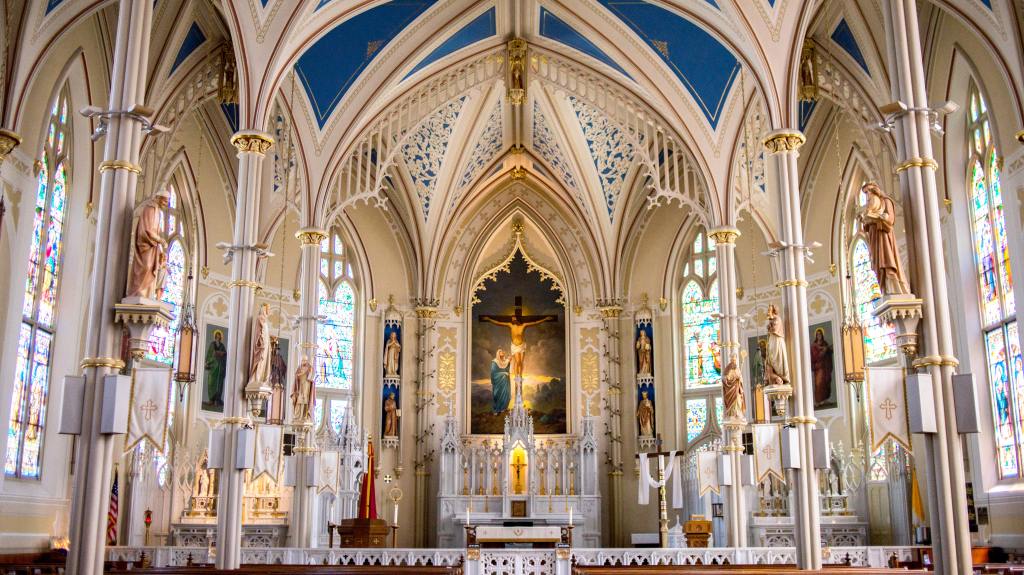
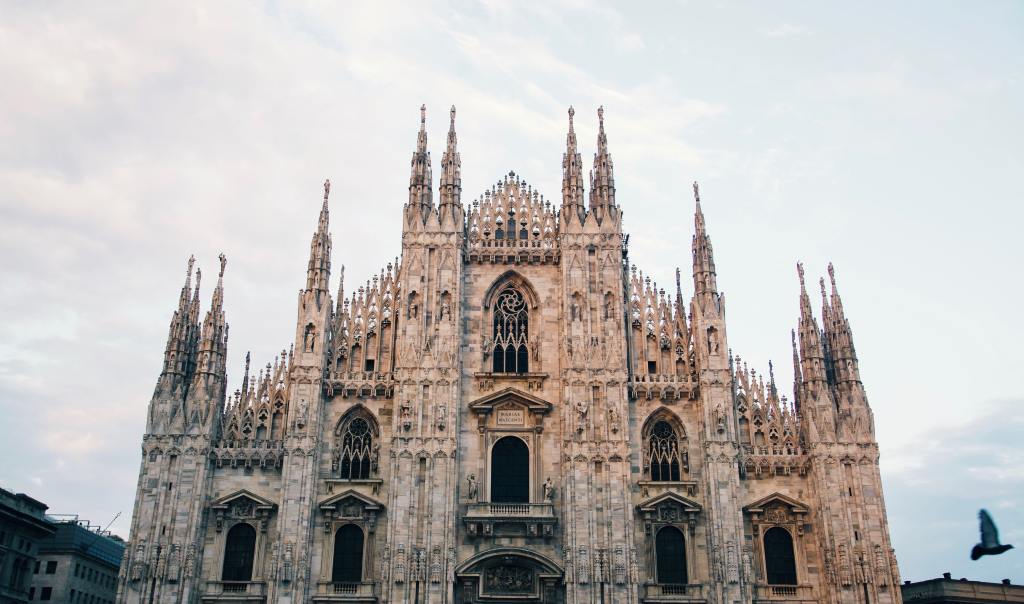
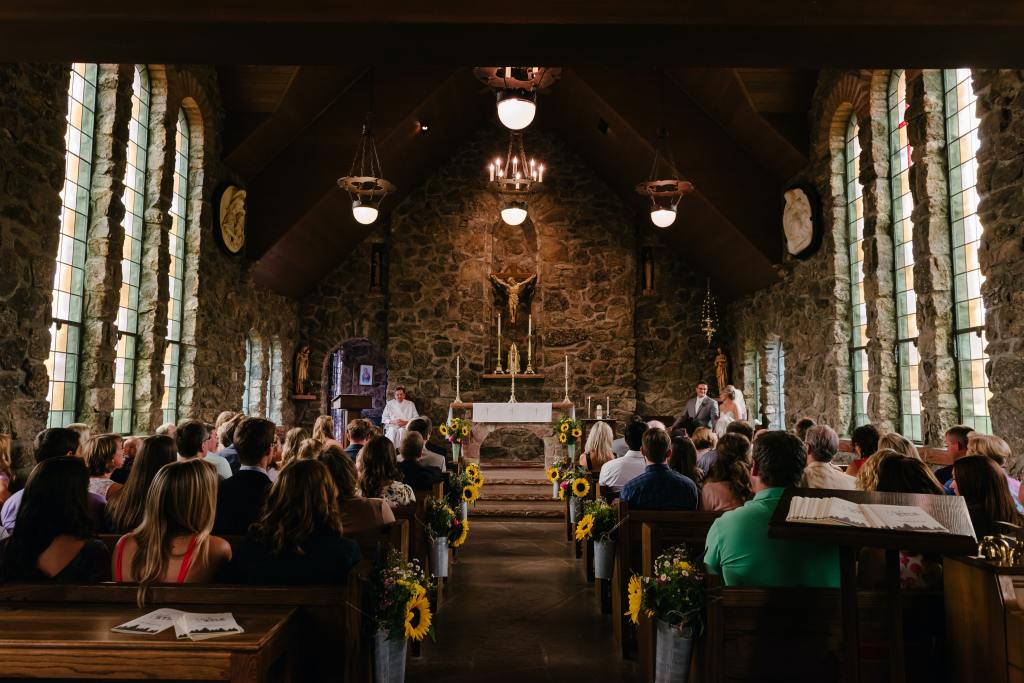
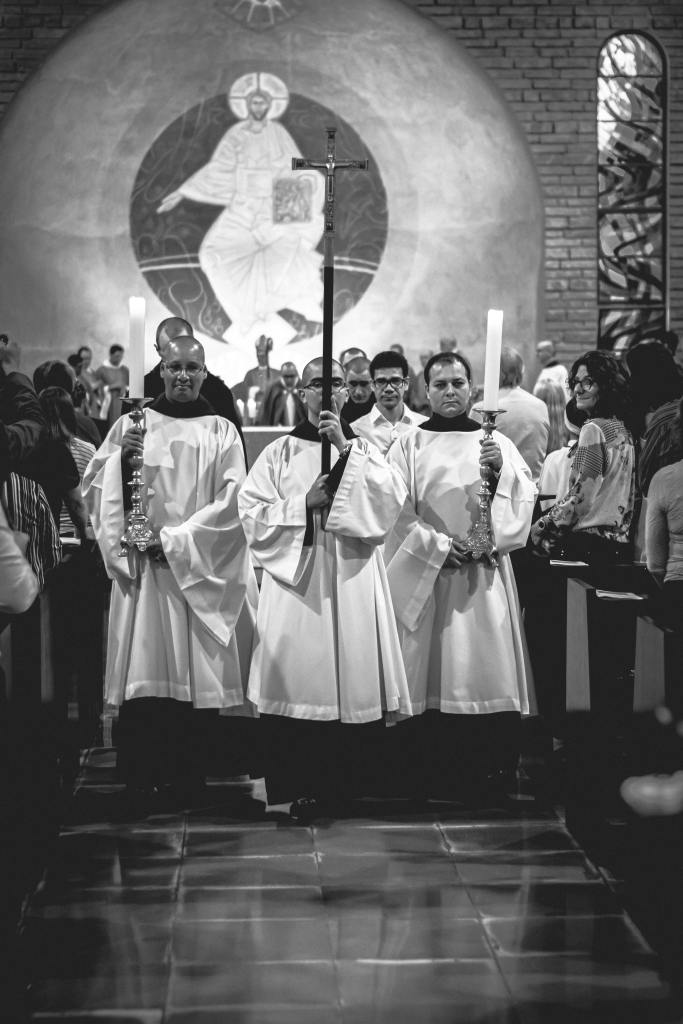

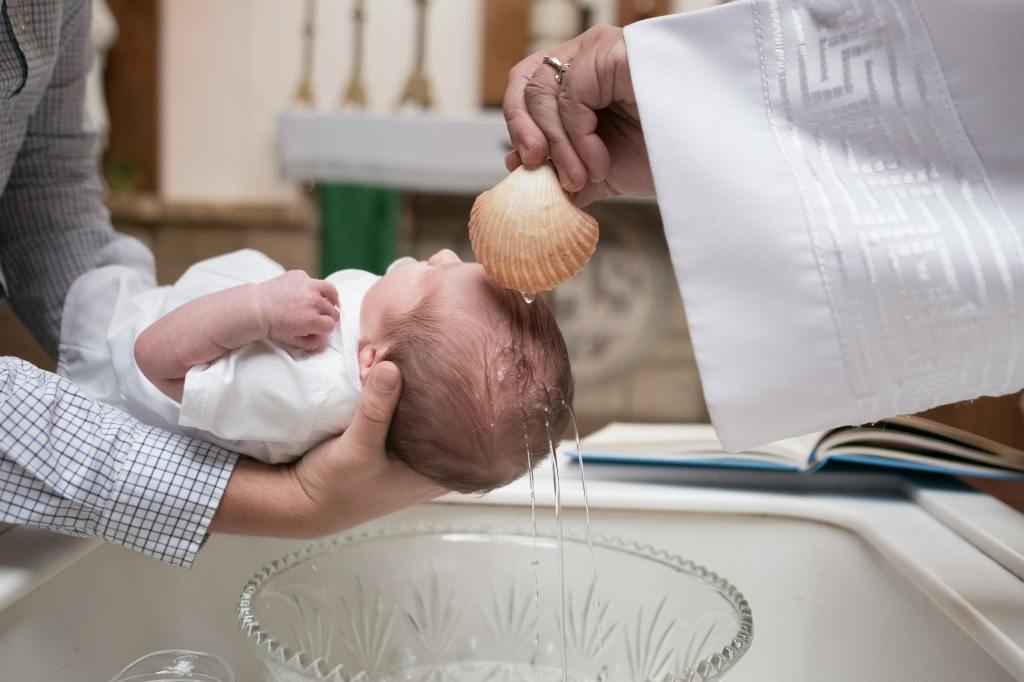
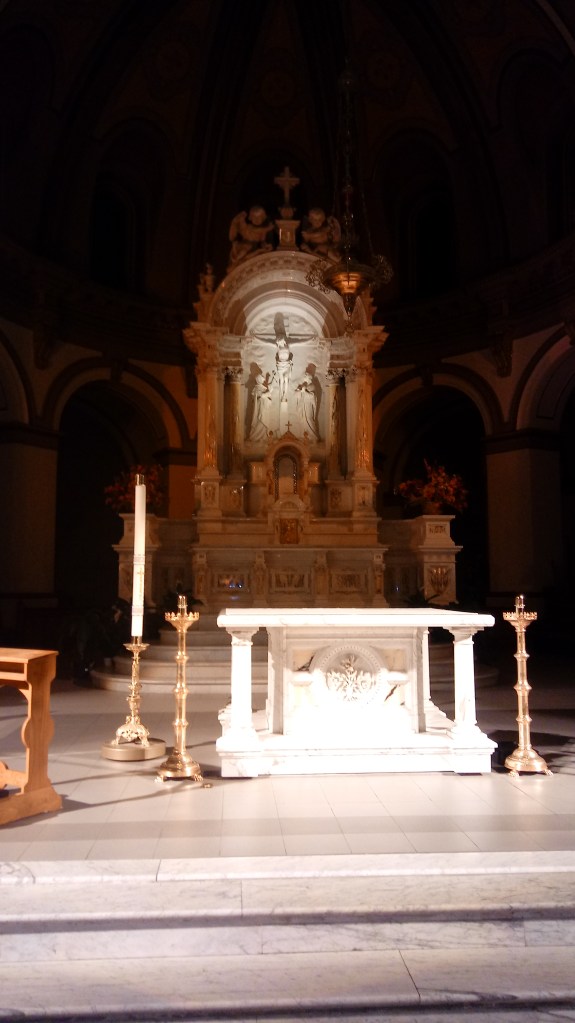
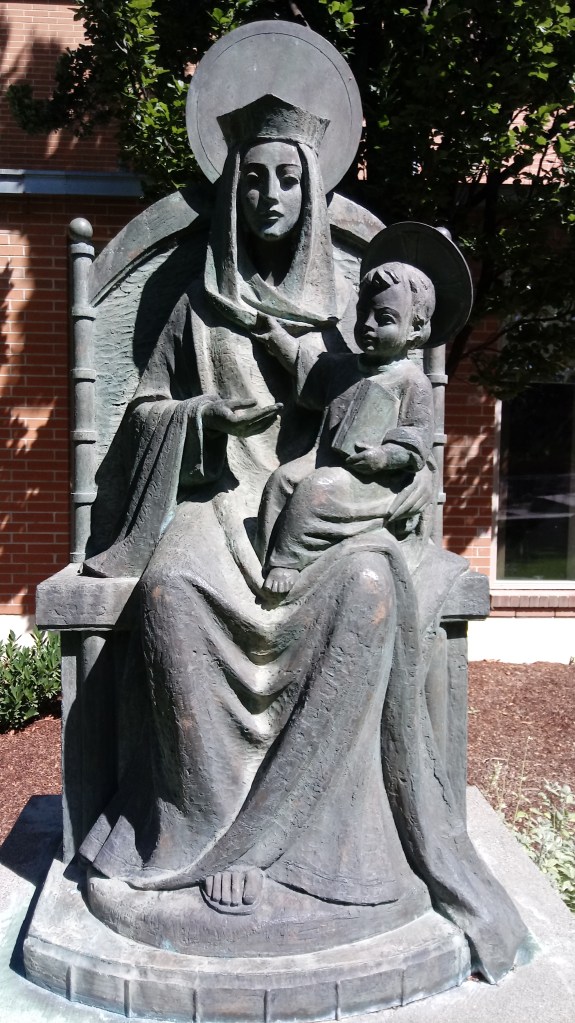
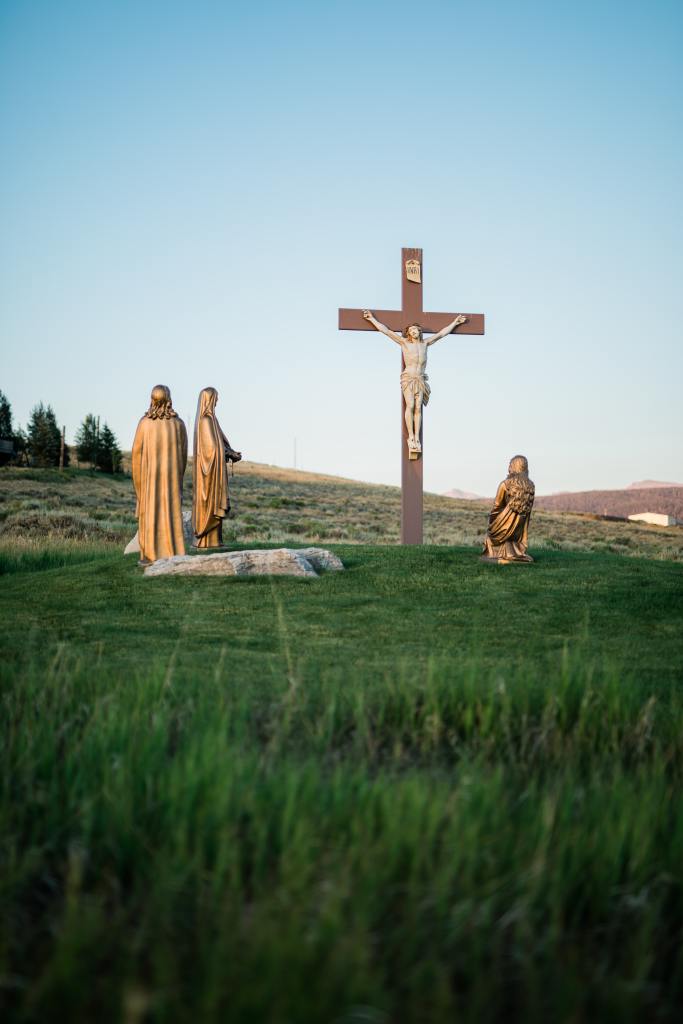
 Flourish Catholic